
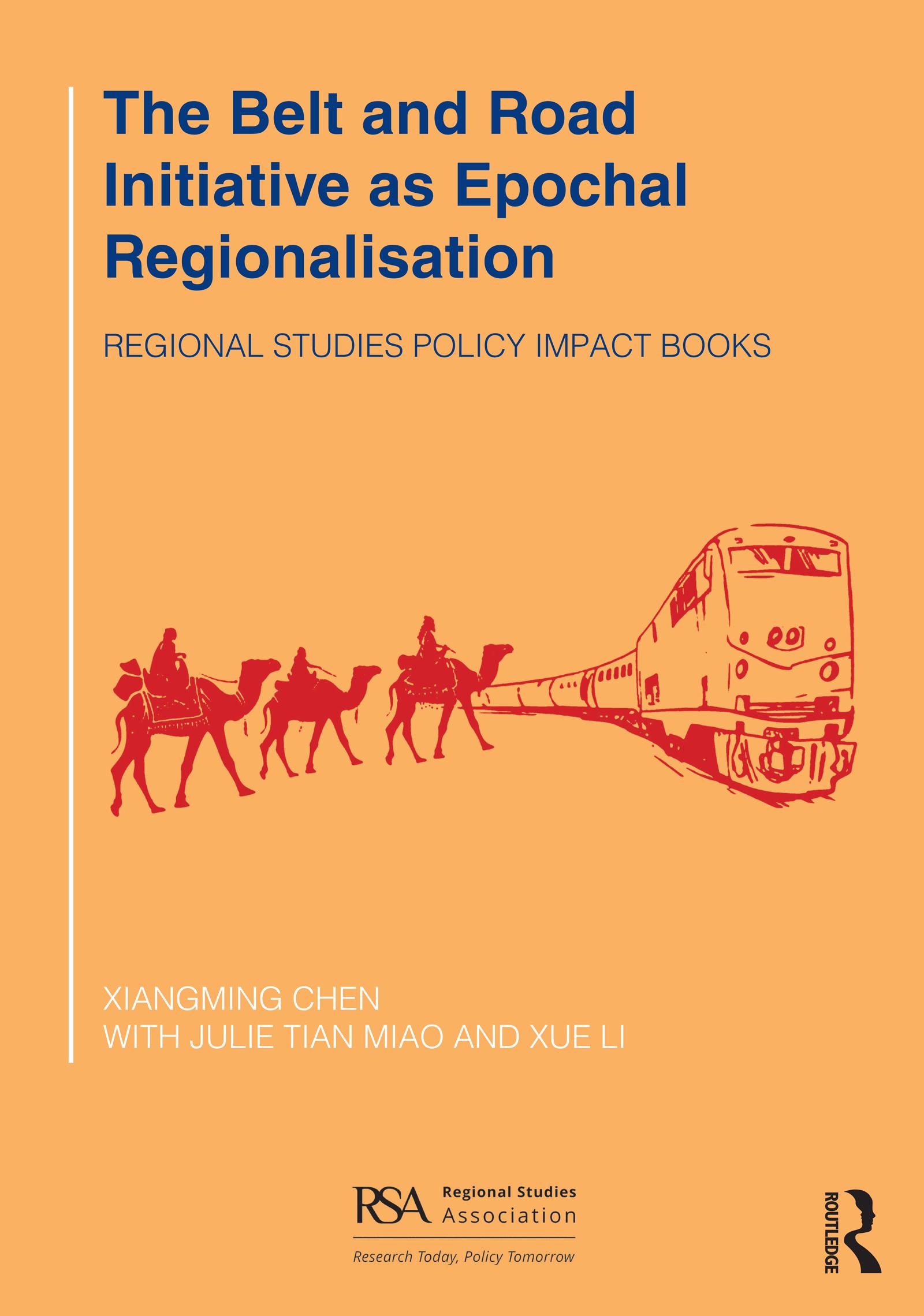
The Belt and Road Initiative (BRI), launched by China in 2013, carries and projects powerful regional dimensions and transformations, with short- and long-term global, national and local consequences. The BRI’s regional significance lies in its designation and creation of several cross-border corridors that originate from inside China and extend out into its neighbouring countries, and those farther afield in Asia, Africa and Europe. Through driving and facilitating new trade and infrastructure connections along and beyond these corridors, the BRI has begun to reshape the master processes of globalisation, urbanisation and development by affecting the economic, social and spatial fortunes of many countries and cities.
This book serves two purposes. First, through a new framework and three case studies, it examines the BRI’s impacts on globalisation, urbanisation and development via the China-Europe Freight Train, the paired construction of a new city and railway across the China-Laos borderland and the port-park-city development corridor between Djibouti and Ethiopia. Second, the comparative analysis and evidence guide the book to advance policy recommendations for targeted stakeholders that can potentially turn the BRI into a global public good with greater benefits and fewer risks.
Betal nemt med kort, Klarna, Apple Pay eller Google Pay. Ikke tilfreds? Du har altid 14 dages fortrydelsesret. Læs mere i vores vilkår. Har du spørgsmål, så send os en mail på hello@memmo.org.
Memmo gør det nemmere at studere – uanset hvor du er i verden. Hos os samler du dine kursusbøger og smarte studieværktøjer ét sted: resuméer, quizzer, podcasts og flashcards. Og så er der Ted, din studieven, der svarer på alt, du undrer dig over. Over 50 000 studerende studerer allerede her – bygget til at hjælpe dig med at lære hurtigere og stresse mindre.