
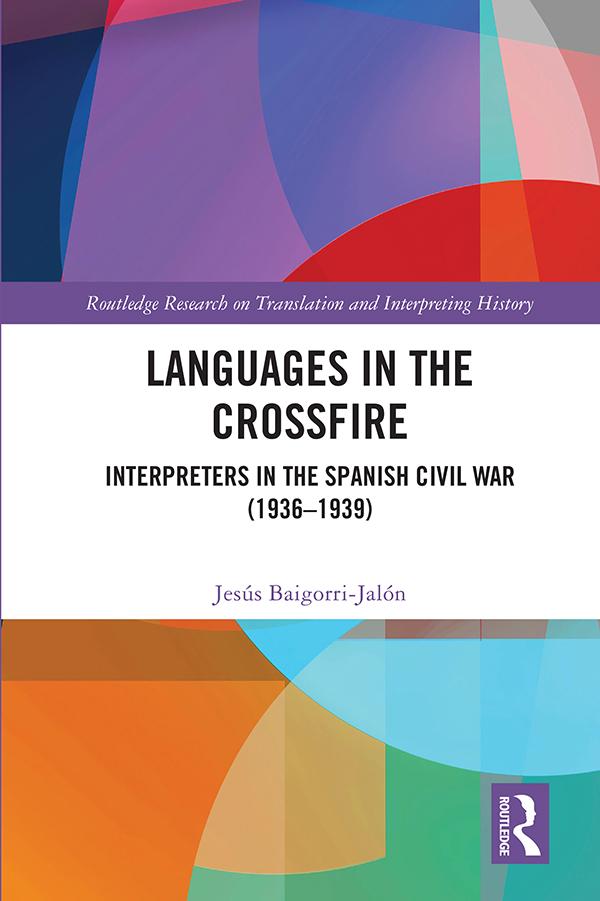
This book sheds light on the important role played by interpreters during the Spanish Civil War, offering a historical overview of the ways in which interpreters on both sides mediated the myriad linguistic, cultural, and ethical difficulties of wartime communication.
Drawing on archives, interpreters’ memoirs, and testimonies from their own children, the volume extends beyond traditional historiographic accounts to demonstrate the significance of interpreters’ work in facilitating communication during the war across a range of settings, including in combat, hospitals, interrogations, detention camps, and propaganda. Baigorri-Jalón showcases the diverse backgrounds of these interpreters through individual and collective portraits, paying special attention to the work of the many women working as interpreters during the conflict. In turning its attention to lessons from the past, the book reaffirms the work of interpreters in present-day international conflicts toward better understanding the ethical dilemmas they face, in wars, humanitarian aid, demobilization tasks, and multilingual criminal proceedings.
This volume, the first book in the Routledge Research on Translation and Interpreting History series, will be of interest to scholars in translation and interpreting studies, particularly those interested in historical and sociological approaches as well as Spanish Civil War scholarship.
Betal nemt med kort, Klarna, Apple Pay eller Google Pay. Ikke tilfreds? Du har altid 14 dages fortrydelsesret. Læs mere i vores vilkår. Har du spørgsmål, så send os en mail på hello@memmo.org.
Memmo gør det nemmere at studere – uanset hvor du er i verden. Hos os samler du dine kursusbøger og smarte studieværktøjer ét sted: resuméer, quizzer, podcasts og flashcards. Og så er der Ted, din studieven, der svarer på alt, du undrer dig over. Over 50 000 studerende studerer allerede her – bygget til at hjælpe dig med at lære hurtigere og stresse mindre.