
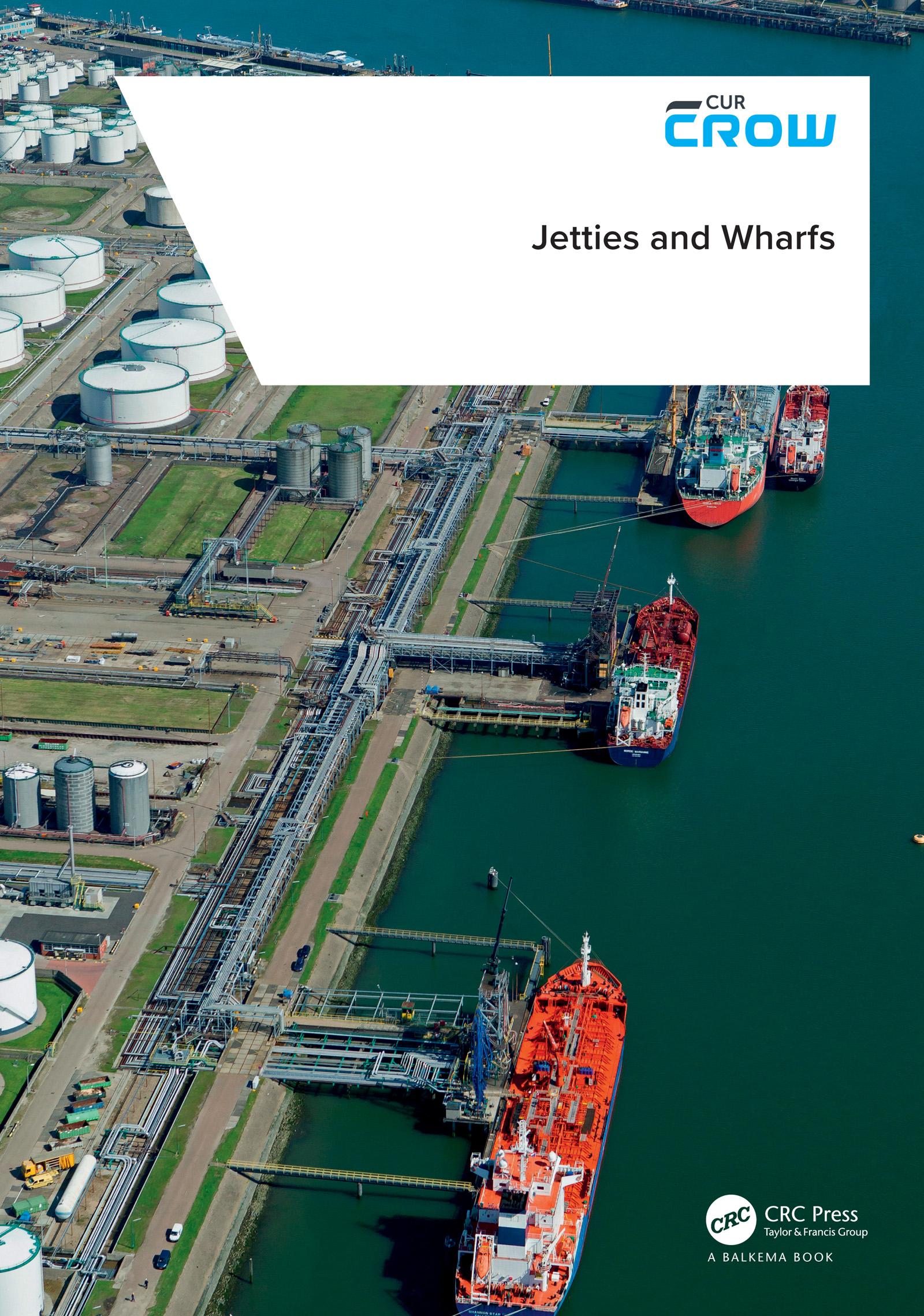
For centuries, jetties and wharfs have been designed and built around the world and play an important role in contemporary ports. The difference in the use of jetties, piers and wharfs is that jetties are frequently used for the transhipment and storage of light materials and ro-ro traffic, while piers are generally used for heavy loads like iron ore. That is why piers are mostly designed and constructed like quay walls (which are beyond the scope of this handbook).
The designs were originally based on trial and error and the insights of those who dared to conquer local conditions, such as wind, waves, currents and soil composition. Design and construction techniques have since evolved into the designs we see on the coast or in river ports and seaports nowadays.
The purpose of this handbook is to provide insight and guidelines regarding aspects that are important in the design of jetties and wharfs. Jetty-specific issues such as loads, interfaces between materials, installations on jetties and wharfs, as well as detailing aspects, are also covered. This handbook is part of a series of Dutch port infrastructure design recommendations that include the Quay Walls handbook and Flexible Dolphins handbook.
Betal nemt med kort, Klarna, Apple Pay eller Google Pay. Ikke tilfreds? Du har altid 14 dages fortrydelsesret. Læs mere i vores vilkår. Har du spørgsmål, så send os en mail på hello@memmo.org.
Memmo gør det nemmere at studere – uanset hvor du er i verden. Hos os samler du dine kursusbøger og smarte studieværktøjer ét sted: resuméer, quizzer, podcasts og flashcards. Og så er der Ted, din studieven, der svarer på alt, du undrer dig over. Over 50 000 studerende studerer allerede her – bygget til at hjælpe dig med at lære hurtigere og stresse mindre.