
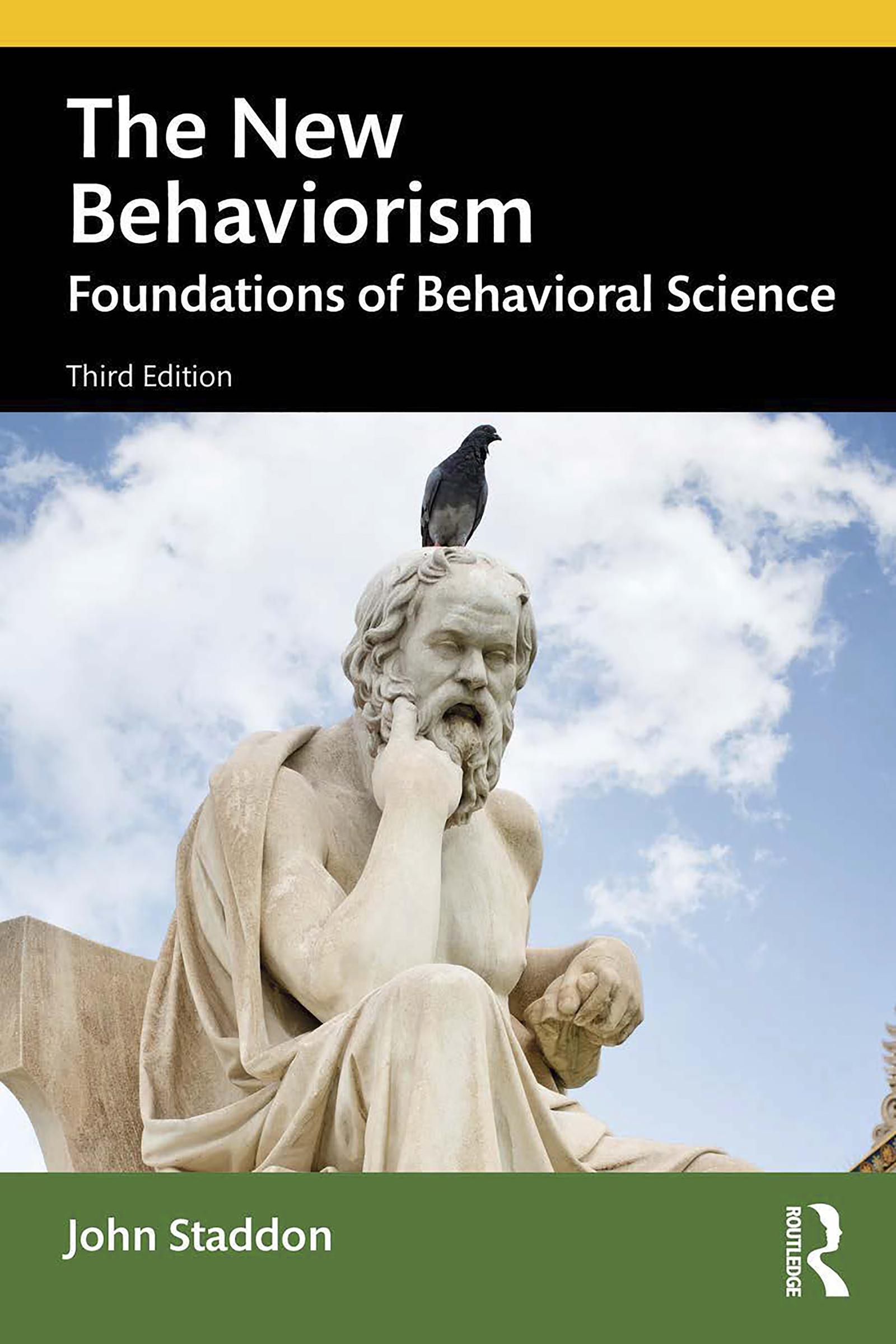
This ground-breaking book presents a brief history of behaviorism, along with a critical analysis of radical behaviorism, its philosophy and its applications to social issues.
This third edition is much expanded and includes a new chapter on experimental method as well as longer sections on the philosophy of behaviorism. It offers experimental and theoretical examples of a new approach to behavioral science. It provides an alternative philosophical and empirical foundation for a psychology that has rather lost its way.
The mission of the book is to help steer experimental psychology away from its current undisciplined indulgence in "mental life" toward the core of science, which is an economical description of nature: parsimony, explain much with little. The elementary philosophical distinction between private and public events, even biology, evolution and animal psychology are all ignored by much contemporary cognitive psychology. The failings of radical behaviorism as well as a philosophically defective cognitive psychology point to the need for a new theoretical behaviorism, which can deal with problems such as "consciousness" that have been either ignored, evaded or muddled by existing approaches.
This new behaviorism provides a unified framework for the science of behavior that can be applied both to the laboratory and to broader practical issues such as law and punishment, the health-care system, and teaching.
Betal nemt med kort, Klarna, Apple Pay eller Google Pay. Ikke tilfreds? Du har altid 14 dages fortrydelsesret. Læs mere i vores vilkår. Har du spørgsmål, så send os en mail på hello@memmo.org.
Memmo gør det nemmere at studere – uanset hvor du er i verden. Hos os samler du dine kursusbøger og smarte studieværktøjer ét sted: resuméer, quizzer, podcasts og flashcards. Og så er der Ted, din studieven, der svarer på alt, du undrer dig over. Over 50 000 studerende studerer allerede her – bygget til at hjælpe dig med at lære hurtigere og stresse mindre.