
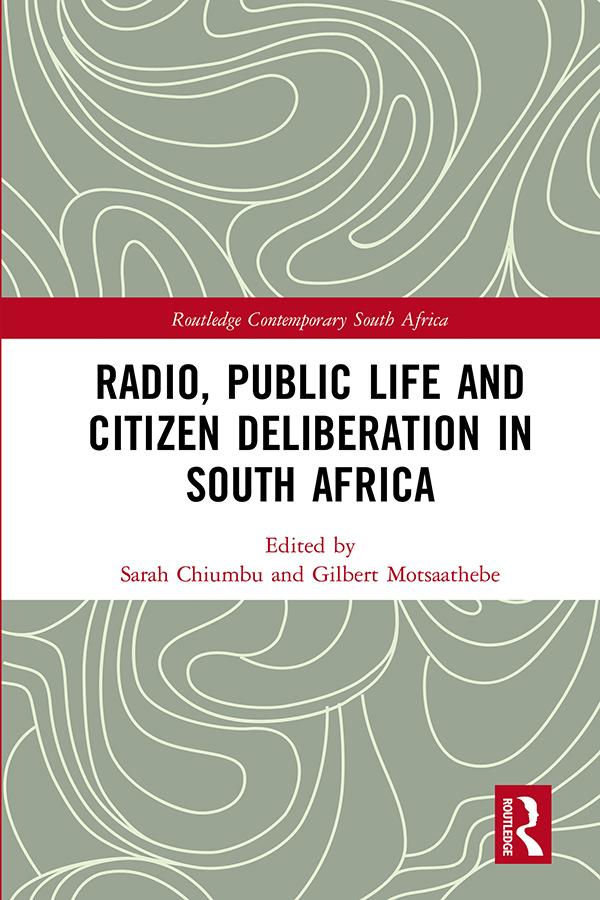
This book critically analyses the important role of radio in public life in post-apartheid South Africa.
As the most widespread and popular form of communication in the country, radio occupies an essential space in the deliberation and the construction of public opinion in South Africa. From just a few state-controlled stations during the apartheid era, there are now more than 100 radio stations, reaching vast swathes of the population and providing an important space for citizens to air their views and take part in significant socio-economic and political issues of the country. The various contributors to this book demonstrate that whilst print and television media often serve elite interests and audiences, the low cost and flexibility of radio has helped it to create a ‘common’ space for national dialogue and deliberation. The book also investigates the ways in which digital technologies have enhanced the consumption of radio and produced a sense of imagined community for citizens, including those in marginalised communities and rural areas.
This book will be of interest to researchers with an interest in media, politics and culture in South Africa specifically, as well as those with an interest in broadcast media more generally.
Betal nemt med kort, Klarna, Apple Pay eller Google Pay. Ikke tilfreds? Du har altid 14 dages fortrydelsesret. Læs mere i vores vilkår. Har du spørgsmål, så send os en mail på hello@memmo.org.
Memmo gør det nemmere at studere – uanset hvor du er i verden. Hos os samler du dine kursusbøger og smarte studieværktøjer ét sted: resuméer, quizzer, podcasts og flashcards. Og så er der Ted, din studieven, der svarer på alt, du undrer dig over. Over 50 000 studerende studerer allerede her – bygget til at hjælpe dig med at lære hurtigere og stresse mindre.