
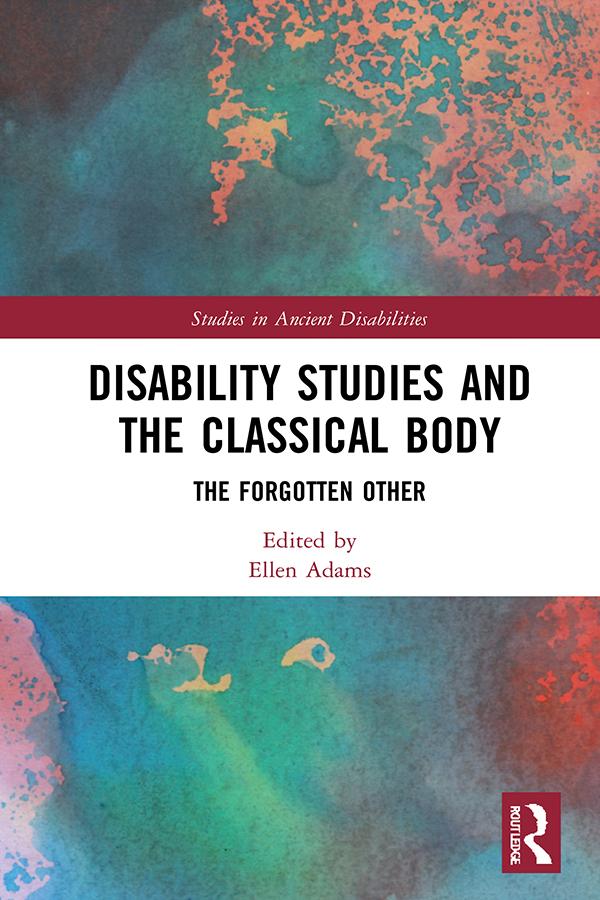
By triangulating the Greco-Roman world, classical reception, and disability studies, this book presents a range of approaches that reassess and reimagine traditional themes, from the narrative voice to sensory studies.
It argues that disability and disabled people are the ‘forgotten other’ of not just Classics, but also the Humanities more widely. Beyond the moral merits of rectifying this neglect, this book also provides a series of approaches and case studies that demonstrate the intellectual value of engaging with disability studies as classicists and exploring the classical legacy in the medical humanities. The book is presented in four parts: ‘Communicating and controlling impairment, illness and pain’; ‘Using, creating and showcasing disability supports and services’; ‘Real bodies and retrieving senses: disability in the ritual record’; and ‘Classical reception as the gateway between Classics and disability studies’. Chapters by scholars from different academic backgrounds are carefully paired in these sections in order to draw out further contrasts and nuances and produce a sum that is more than the parts. The volume also explores how the ancient world and its reception have influenced medical and disability literature, and how engagements with disabled people might lead to reinterpretations of familiar case studies, such as the Parthenon.
This book is primarily intended for classicists interested in disabled people in the Greco-Roman past and in how modern disability studies may offer insights into and reinterpretations of historic case studies. It will also be of interest to those working in medical humanities, sensory studies, and museum studies, and those exploring the wider tension between representation and reality in ancient contexts. As such, it will appeal to people in the wider Humanities who, notwithstanding any interest in how disabled people are represented in literature, art, and cinema, have had less engagement with disability studies and the lived experience of people with impairments.
Betal nemt med kort, Klarna, Apple Pay eller Google Pay. Ikke tilfreds? Du har altid 14 dages fortrydelsesret. Læs mere i vores vilkår. Har du spørgsmål, så send os en mail på hello@memmo.org.
Memmo gør det nemmere at studere – uanset hvor du er i verden. Hos os samler du dine kursusbøger og smarte studieværktøjer ét sted: resuméer, quizzer, podcasts og flashcards. Og så er der Ted, din studieven, der svarer på alt, du undrer dig over. Over 50 000 studerende studerer allerede her – bygget til at hjælpe dig med at lære hurtigere og stresse mindre.