
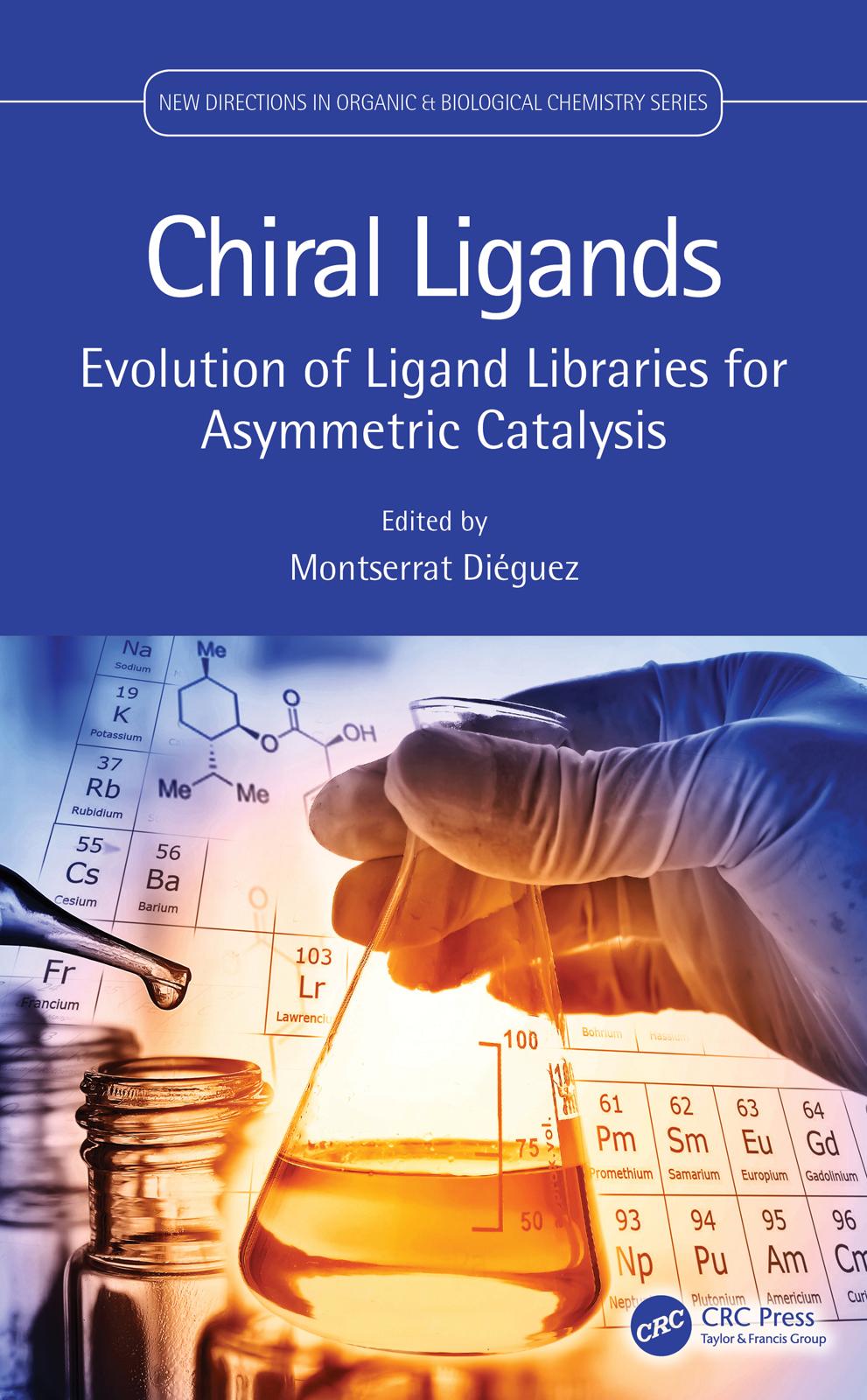
Many new drugs on the market are chiral compounds, that is, they can exist in two non-superimposable mirror-image forms. Asymmetric catalysis encompasses a large variety of processes for obtaining such compounds. The performance of the catalyst in those processes largely depends on the ligand that makes up the catalyst. This book describes the most relevant ligand libraries for some key processes, including an overview of the state of art and the key mechanistic aspects that favor a high catalytic performance.
Key Features:
- The book presents historical content from the time of discovery for each family of ligands.
- Provides a description of the synthetic route and the ligand library's application in various catalytic asymmetric reactions
- Suitable as supplementary reading for courses targeting the design, synthesis and application of chiral catalysts, asymmetric catalysis and sustainable production
- Edited by a distinguished scientist in the field, the book has a diverse audience including research groups in homogeneous catalysis, particularly asymmetric transformations
Betal nemt med kort, Klarna, Apple Pay eller Google Pay. Ikke tilfreds? Du har altid 14 dages fortrydelsesret. Læs mere i vores vilkår. Har du spørgsmål, så send os en mail på hello@memmo.org.
Memmo gør det nemmere at studere – uanset hvor du er i verden. Hos os samler du dine kursusbøger og smarte studieværktøjer ét sted: resuméer, quizzer, podcasts og flashcards. Og så er der Ted, din studieven, der svarer på alt, du undrer dig over. Over 50 000 studerende studerer allerede her – bygget til at hjælpe dig med at lære hurtigere og stresse mindre.