
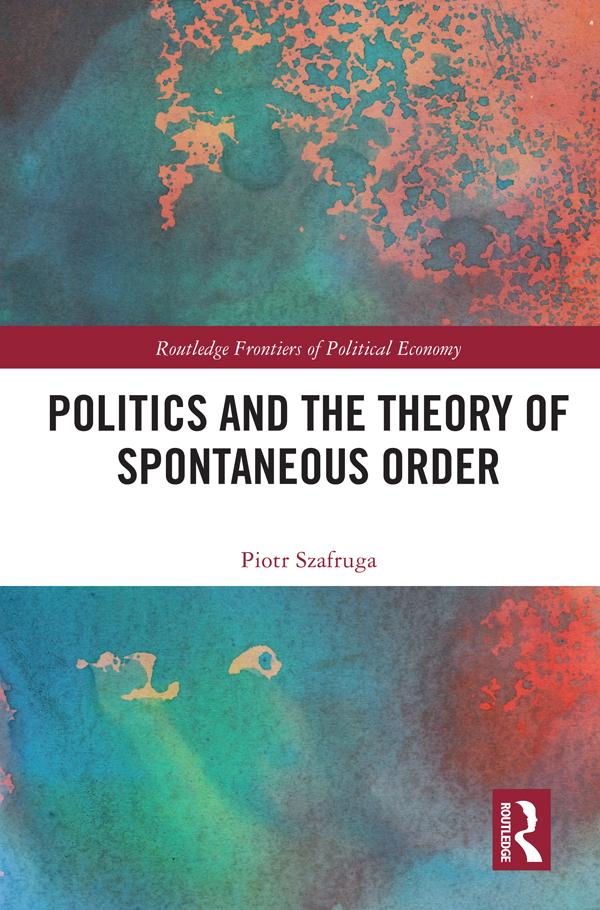
The theory of spontaneous order conceptualises and explains a number of institutional and social phenomena that are not an intended effect of either individual decisions or a collective consensus but an unplanned outcome of interactions between people pursuing their own aims. Drawing on these insights, this book demonstrates the utility of the theory of spontaneous order in explaining many phenomena in political economy and political science.
The book opens with a discussion of the history and development of the theory of spontaneous order, particularly in economics and the Austrian School. The epistemological premises of the theory are then explored including the formulation of the central idea of social individualism. Demonstrating the potential applications of the theory of spontaneous order to politics, core ideas are examined including democracy, fragile states and the concept of the veil of ignorance. Finally, the limitations and constraints of the theory of spontaneous order are also reviewed and discussed.
This book marks a valuable contribution to the literature on political economy, political science, public choice and political philosophy.
Betal nemt med kort, Klarna, Apple Pay eller Google Pay. Ikke tilfreds? Du har altid 14 dages fortrydelsesret. Læs mere i vores vilkår. Har du spørgsmål, så send os en mail på hello@memmo.org.
Memmo gør det nemmere at studere – uanset hvor du er i verden. Hos os samler du dine kursusbøger og smarte studieværktøjer ét sted: resuméer, quizzer, podcasts og flashcards. Og så er der Ted, din studieven, der svarer på alt, du undrer dig over. Over 50 000 studerende studerer allerede her – bygget til at hjælpe dig med at lære hurtigere og stresse mindre.