
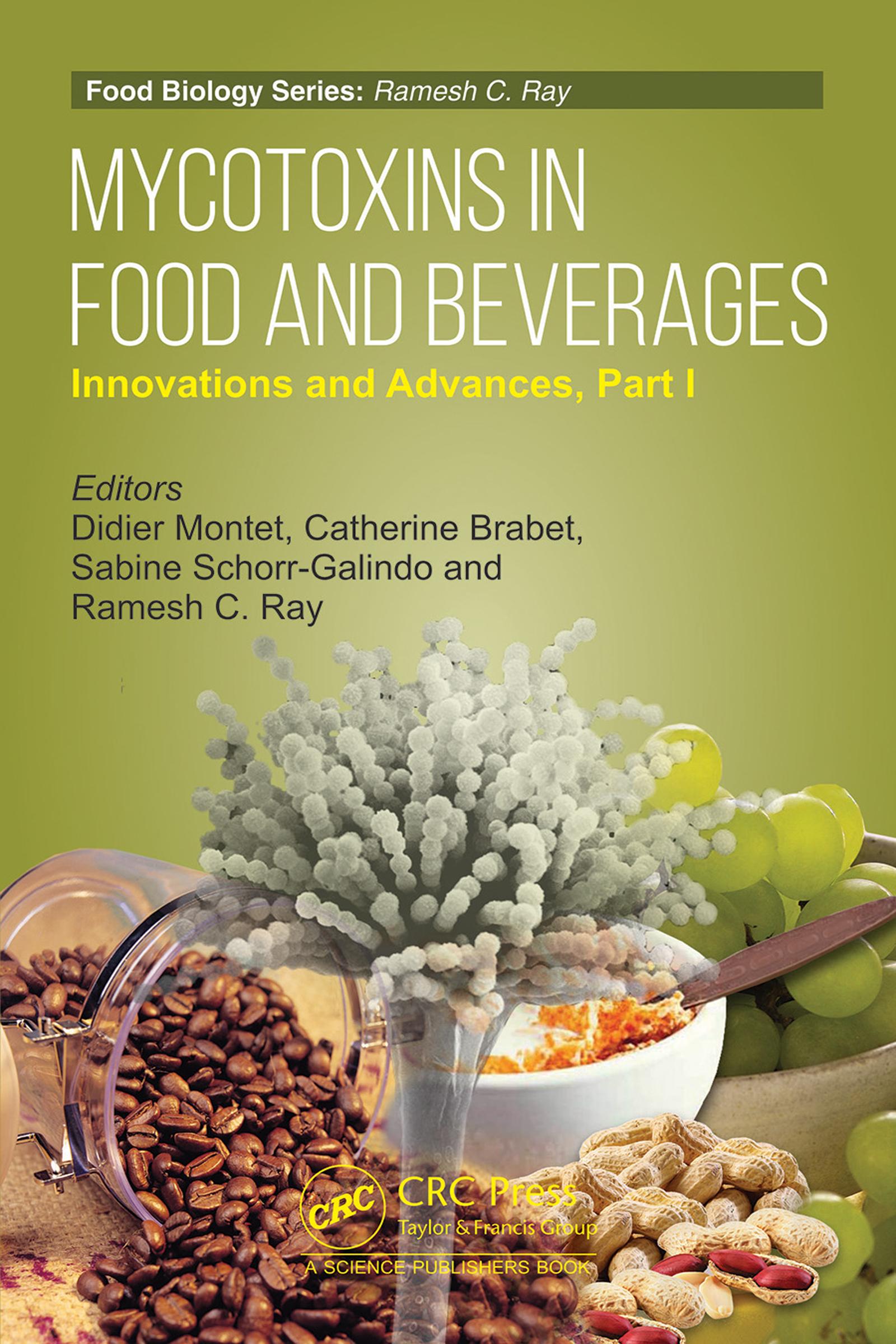
Mycotoxins are secondary metabolites produced by fungi in a wide range of foods (cereals, peanut, tree nuts, dried fruits, coffee, cocoa, grapes, spices…) both in the field and after harvest, particularly during storage. They can also be found in processed foods of plant origin, or by transfer, in food products of animal (milk, eggs, meat and offal). Mycotoxins are of major concern since they can cause acute or chronic intoxications in both humans and animals which are sometimes fatal. Many countries, particularly in Europe, have set maximum acceptable levels for mycotoxins in food and feed.
The book reviews the latest literature and innovations on important aspects of mycotoxins, e.g. mycotoxin producing fungi and the related ecosystems, mycotoxin occurrence, toxicity, analysis and management. Quantitative estimations of impacts of climate change on mycotoxin occurrence have been made recently, using predictive modelling. There is also a growing interest in the occurrence and toxicity of multiple mycotoxins in food and feed, including emerging or modified forms of mycotoxins. Innovative tools were also developed to detect and quantify toxinogenic fungi and their toxins. In order to reduce the use of chemicals that are harmful to the environment and health of consumers, alternative methods of prevention and decontamination of mycotoxins were tested in pre- and post-harvest, using microorganisms, natural substances or radiation treatments.
Betal nemt med kort, Klarna, Apple Pay eller Google Pay. Ikke tilfreds? Du har altid 14 dages fortrydelsesret. Læs mere i vores vilkår. Har du spørgsmål, så send os en mail på hello@memmo.org.
Memmo gør det nemmere at studere – uanset hvor du er i verden. Hos os samler du dine kursusbøger og smarte studieværktøjer ét sted: resuméer, quizzer, podcasts og flashcards. Og så er der Ted, din studieven, der svarer på alt, du undrer dig over. Over 50 000 studerende studerer allerede her – bygget til at hjælpe dig med at lære hurtigere og stresse mindre.