
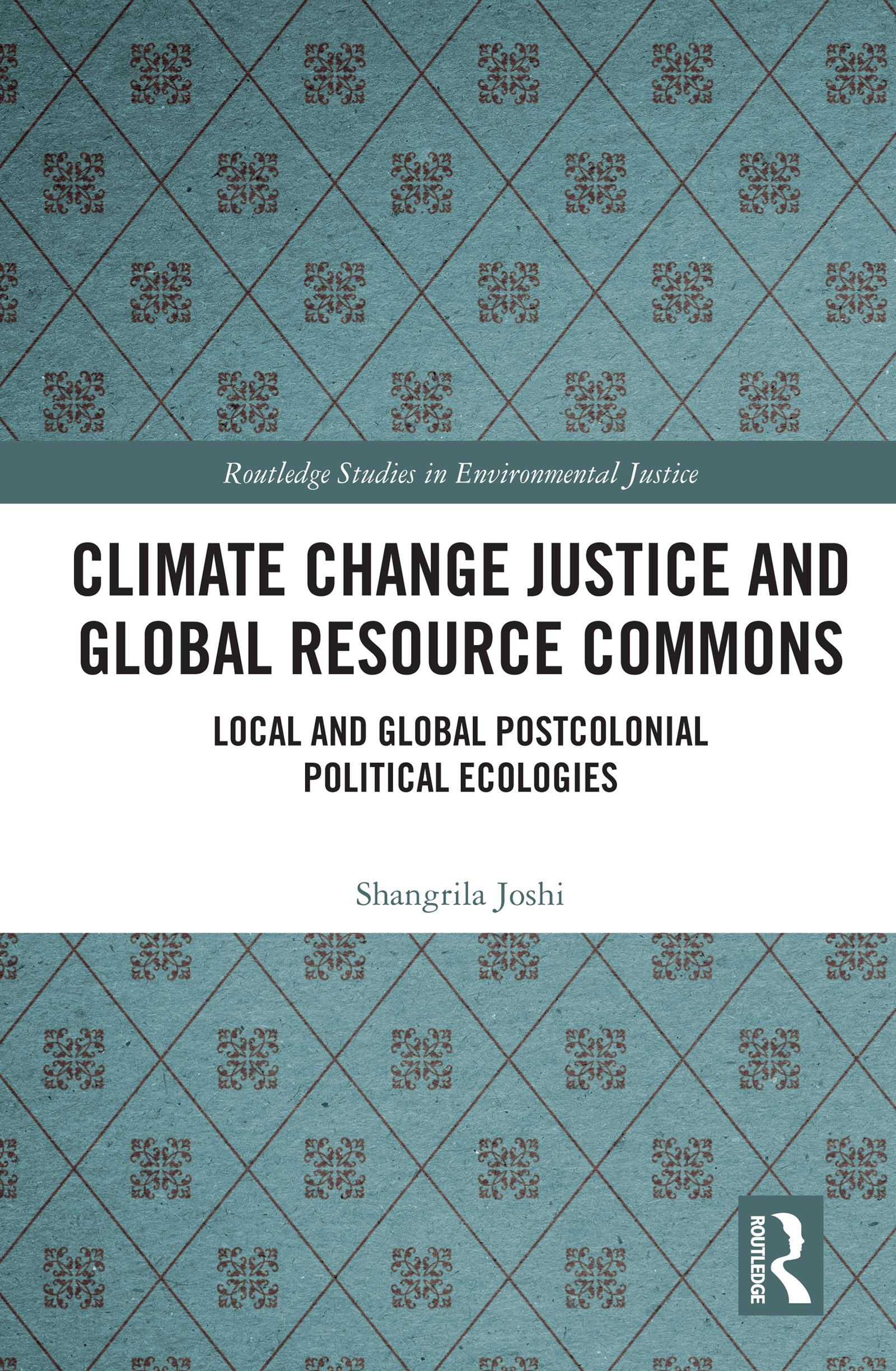
This book examines the multiple scales at which the inequities of climate change are borne out.
Shangrila Joshi engages in a multi-scalar analysis of the myriad ways in which various resource commons – predominantly atmosphere and forests – are implicated in climate governance, with a consistent emphasis throughout on the justice implications for disenfranchised communities. The book starts with an analysis of North-South inequities in responsibility, vulnerability, and capability, as evidenced in global climate treaty negotiations from Rio to Paris. It then moves on to examine the ways in which structural inequalities are built into the conceptualization and operationalization of various neoliberal climate solutions such as Reducing Emissions from Deforestation and Forest Degradation (REDD+) and the Clean Development Mechanism (CDM). Drawing on qualitative interviews conducted in Delhi, Kathmandu, and the Terai region of Nepal, participant observation at the Climate Conference in Copenhagen (COP-15), and textual analysis of official documents, the book articulates a geography of climate justice, considering how ideas of injustice pertaining to colonialism, race, Indigeneity, caste, gender, and global inequality intersect with the politics of scale.
This book will be of great interest to students and scholars of environmental justice, climate justice, climate policy, political ecology, and South Asian studies.
Betal nemt med kort, Klarna, Apple Pay eller Google Pay. Ikke tilfreds? Du har altid 14 dages fortrydelsesret. Læs mere i vores vilkår. Har du spørgsmål, så send os en mail på hello@memmo.org.
Memmo gør det nemmere at studere – uanset hvor du er i verden. Hos os samler du dine kursusbøger og smarte studieværktøjer ét sted: resuméer, quizzer, podcasts og flashcards. Og så er der Ted, din studieven, der svarer på alt, du undrer dig over. Over 50 000 studerende studerer allerede her – bygget til at hjælpe dig med at lære hurtigere og stresse mindre.