
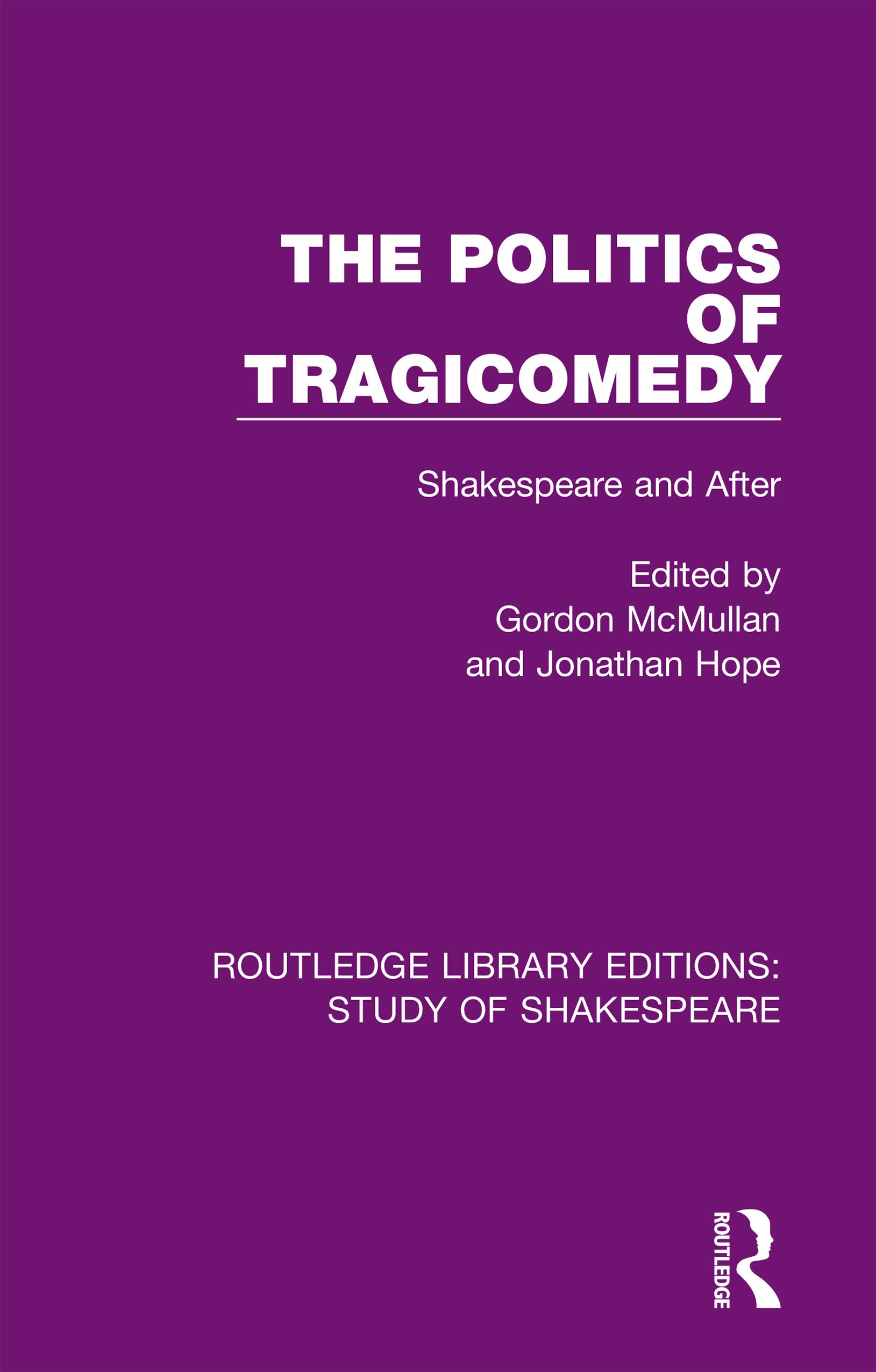
The Politics of Tragicomedy: Shakespeare and After offers a series of sophisticated and powerful readings of tragicomedy from Shakespeare’s late plays to the drama of the Interregnum. Rejecting both the customary chronological span bounded by the years 1603-42 (which presumes dramatic activity stopped with the closing of the theatres) and the negative critical attitudes that have dogged the study of tragicomedy, the essays in this collection examine a series of issues central to the possibility of a politics for the genre.
Individual essays offer important contributions to continuing debates over the role of the drama in the years preceding the Civil War, the colonial contexts of The Tempest, the political character of Jonson’s late plays, and the agency of women as public and theatre actors. The introduction presents a strong challenge to previous definitions of tragicomedy in the English context, and the collection as a whole is characterized by its rejection of absolutist strategies for reading tragicomedy.
This collection will prove essential reading for all with an interest in the politics of Renaissance drama; for specialists in the work of Shakespeare, Fletcher, and Jonson; for those interested in genre and dramatic forms; and for historians of early Stuart England.
Betal nemt med kort, Klarna, Apple Pay eller Google Pay. Ikke tilfreds? Du har altid 14 dages fortrydelsesret. Læs mere i vores vilkår. Har du spørgsmål, så send os en mail på hello@memmo.org.
Memmo gør det nemmere at studere – uanset hvor du er i verden. Hos os samler du dine kursusbøger og smarte studieværktøjer ét sted: resuméer, quizzer, podcasts og flashcards. Og så er der Ted, din studieven, der svarer på alt, du undrer dig over. Over 50 000 studerende studerer allerede her – bygget til at hjælpe dig med at lære hurtigere og stresse mindre.