
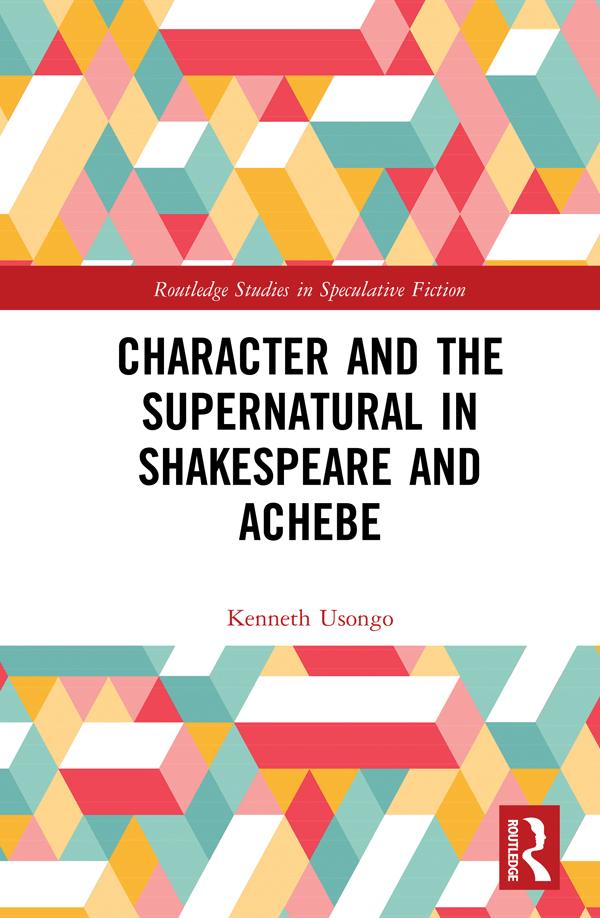
Through mainly a New Historicist critical approach, this book explores how Shakespeare and Achebe employ supernatural devices such as prophecies, dreams, gods/goddesses, beliefs, and divinations to create complex characters. Even though these features indicate the preponderance of the belief in the supernatural by some people of the Elizabethan, Jacobean, and traditional Igbo societies, Shakespeare and Achebe primarily use the supernatural to represent the states of mind of their protagonists. Both writers appropriate supernatural features to mirror tragic flaws such as ambition, arrogance, impulsiveness, and fear that contribute to the downfall of Macbeth, Lear, Okonkwo, and Ezeulu. We relate to some of these characters because they project our inner minds, principal drives that may be hidden within us. Therefore, Shakespeare and Achebe’s preoccupation with the supernatural adds subtlety to their characterization and enhances their readability by situating their art beyond time, place, or particularity.
Betal nemt med kort, Klarna, Apple Pay eller Google Pay. Ikke tilfreds? Du har altid 14 dages fortrydelsesret. Læs mere i vores vilkår. Har du spørgsmål, så send os en mail på hello@memmo.org.
Memmo gør det nemmere at studere – uanset hvor du er i verden. Hos os samler du dine kursusbøger og smarte studieværktøjer ét sted: resuméer, quizzer, podcasts og flashcards. Og så er der Ted, din studieven, der svarer på alt, du undrer dig over. Over 50 000 studerende studerer allerede her – bygget til at hjælpe dig med at lære hurtigere og stresse mindre.