
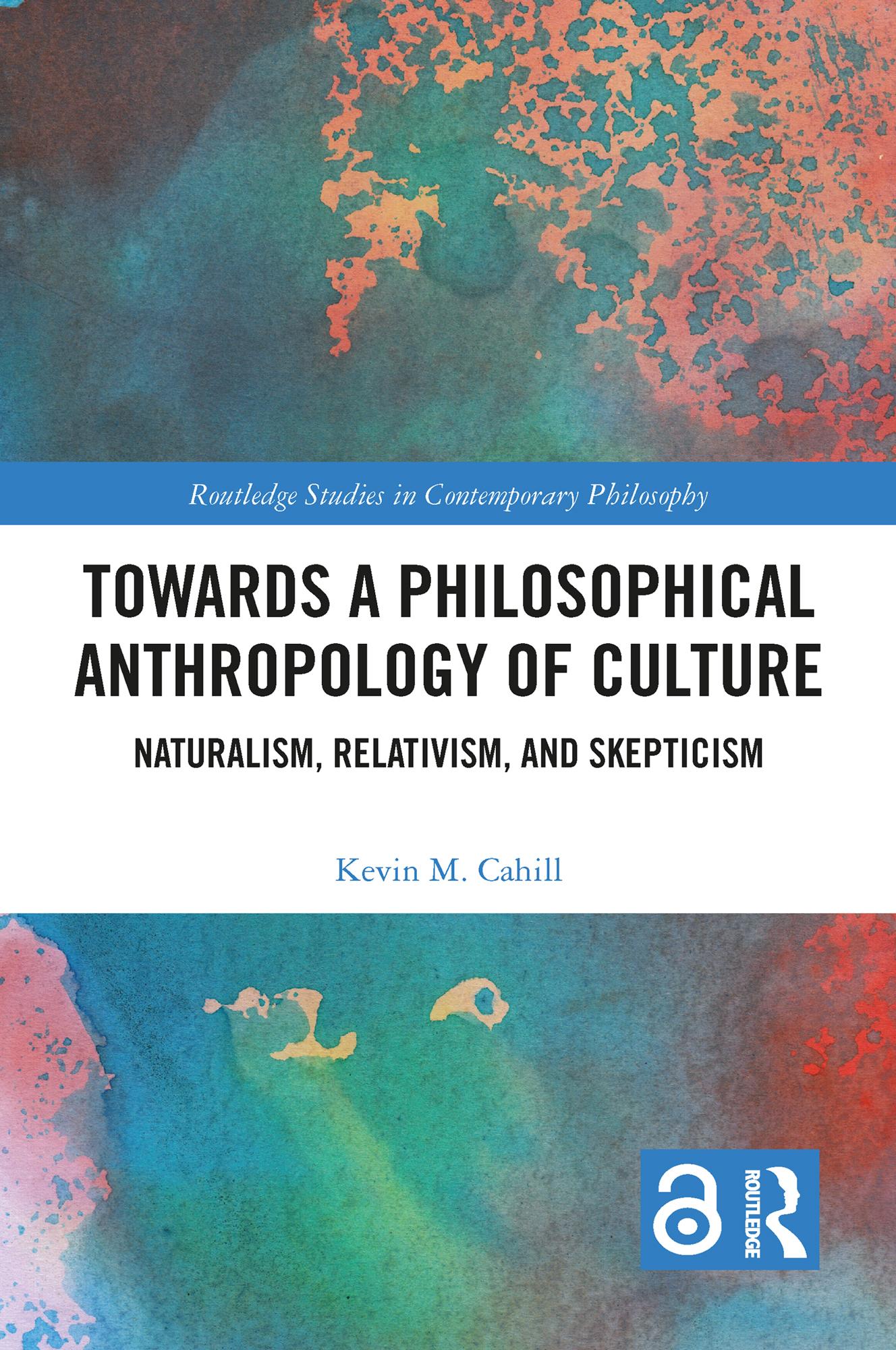
This book explores the question of what it means to be a human being through sustained and original analyses of three important philosophical topics: relativism, skepticism, and naturalism in the social sciences.
Kevin M. Cahill’s approach involves an original employment of historical and ethnographic material that is both conceptual and empirical in order to address relevant philosophical issues. Specifically, while Cahill avoids interpretative debates, he develops an approach to philosophical critique based on Cora Diamond’s and James Conant’s work on the early Wittgenstein. This makes possible the use of a concept of culture that avoids the dogmatism that not only typifies traditional metaphysics but also frequently mars arguments from ordinary language or phenomenology. This is especially crucial for the third part of the book, which involves a cultural-historical critique of the ontology of the self in Stanley Cavell’s work on skepticism. In pursuing this strategy, the book also mounts a novel and timely defense of the interpretivist tradition in the philosophy of the social sciences.
Towards a Philosophical Anthropology of Culture will be of interest to researchers working on the philosophy of the social sciences, Wittgenstein, and philosophical anthropology.
The Open Access version of this book, available at http://www.taylorfrancis.com/books/9780367638238, has been made available under a Creative Commons Attribution-Non Commercial-No Derivatives 4.0 license.
Betal nemt med kort, Klarna, Apple Pay eller Google Pay. Ikke tilfreds? Du har altid 14 dages fortrydelsesret. Læs mere i vores vilkår. Har du spørgsmål, så send os en mail på hello@memmo.org.
Memmo gør det nemmere at studere – uanset hvor du er i verden. Hos os samler du dine kursusbøger og smarte studieværktøjer ét sted: resuméer, quizzer, podcasts og flashcards. Og så er der Ted, din studieven, der svarer på alt, du undrer dig over. Over 50 000 studerende studerer allerede her – bygget til at hjælpe dig med at lære hurtigere og stresse mindre.