
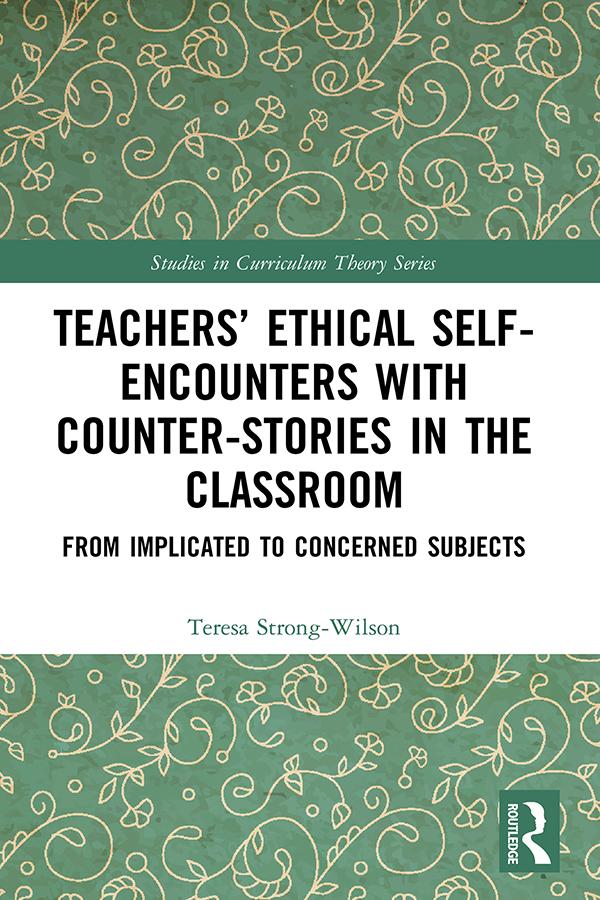
Offering unique theoretical perspectives, autobiographical insights and narrative accounts from elementary and secondary educators, this monograph illustrates the need for teachers to engage critically with counter-stories as they teach to issues including colonization, war, and genocide.
Juxtaposing Pinar’s concept of ethical self-encounters with theories of subjective reconstruction, multidirectional memory, and autobiographical narration, this rich volume considers teachers’ ethical responsibility to interrogate the curriculum via self-reflection and self-formation. Using cases from workshops and classrooms conducted over five years, Strong-Wilson traces teachers’ and students’ movement from "implicated subjects" to "concerned subjects." In doing so, she challenges the neoliberal dynamics which erode teacher agency.
By working at the intersections of pedagogy, literary theory and memory studies, this book introduces timely arguments on subjectivity and ethical responsibility to the field of education in the Global North. It will prove to be an essential resource for post-graduate researchers, scholars and academics working with curriculum theory and pedagogical theory in contemporary education.
Betal nemt med kort, Klarna, Apple Pay eller Google Pay. Ikke tilfreds? Du har altid 14 dages fortrydelsesret. Læs mere i vores vilkår. Har du spørgsmål, så send os en mail på hello@memmo.org.
Memmo gør det nemmere at studere – uanset hvor du er i verden. Hos os samler du dine kursusbøger og smarte studieværktøjer ét sted: resuméer, quizzer, podcasts og flashcards. Og så er der Ted, din studieven, der svarer på alt, du undrer dig over. Over 50 000 studerende studerer allerede her – bygget til at hjælpe dig med at lære hurtigere og stresse mindre.