
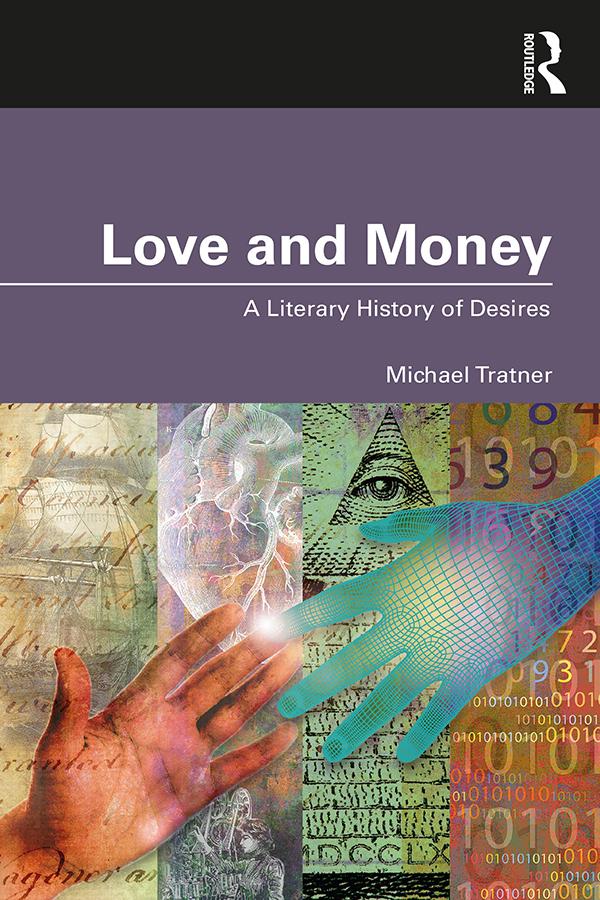
When people speak about love and money, they usually are referring to a conflict: love distorted by the desire for money. Such statements imply that love has a distinct form before economics interferes, but this book aims to show that such a view simplifies what is going on, because people have always been deeply shaped by everything in the social order, including economics. So when people say that money is distorting love, what they are really saying is that the current relationship of love and economics is different from an earlier relationship. This book seeks then to demonstrate the intertwining of the discourses of love and money over a long history by focusing on moments when parallel conceptions appear in economic theories and love stories. The two discourses intersect because both seek to define qualities and behaviors of human beings which are most valuable and hence most desirable. Similar descriptions of valuable behaviors appear at roughly the same time in economic theories of how to acquire wealth and literary stories of how to find ideal lovers.
By tracking mutual expressions of desire, value, and acquisition in economics and love stories, this book argues for the ubiquity of the intertwining of these discourses, while exploring shifts in conceptions of value. It focuses on four eras when economic and romantic conceptions of what is most desirable were actively changing in English discourses: the early modern 17th century, the Victorian 19th, the modernist 20th, and the postmodern present.
Betal nemt med kort, Klarna, Apple Pay eller Google Pay. Ikke tilfreds? Du har altid 14 dages fortrydelsesret. Læs mere i vores vilkår. Har du spørgsmål, så send os en mail på hello@memmo.org.
Memmo gør det nemmere at studere – uanset hvor du er i verden. Hos os samler du dine kursusbøger og smarte studieværktøjer ét sted: resuméer, quizzer, podcasts og flashcards. Og så er der Ted, din studieven, der svarer på alt, du undrer dig over. Over 50 000 studerende studerer allerede her – bygget til at hjælpe dig med at lære hurtigere og stresse mindre.