
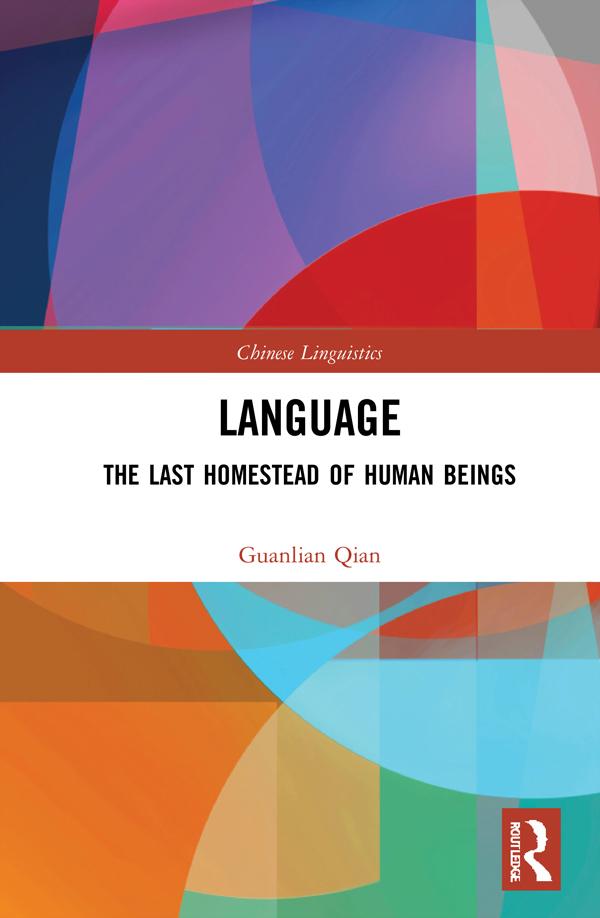
Heidegger characterizes the relationship between language and Being as "language is the house of Being", negating the idea that language is merely a tool ready to be used at hand.
Drawing on this idea, as well as ideas from anthropology, pragmatics, and folklore studies, the author argues that "language is the last homestead of human beings", meaning that mankind lives within language, has to live within language, and lives in formulaic speech events. The author takes Western classic works on the philosophy of language and his own insights of language use, rooted in traditional Chinese culture, in order to develop his own localized theory. In this title, the author explores the philosophical aspect of man’s survival by presenting day-to-day exchange routines such as weddings and fortune-telling dialogues in the Chinese context.
Awarded the first prize for Academic Excellence in Philosophy and Social Sciences in Guangdong Province, and second prize in the second Xu Guozhang Award for Foreign Language Studies, this is a must-read for researchers interested in philosophy of language and pragmatics.
Betal nemt med kort, Klarna, Apple Pay eller Google Pay. Ikke tilfreds? Du har altid 14 dages fortrydelsesret. Læs mere i vores vilkår. Har du spørgsmål, så send os en mail på hello@memmo.org.
Memmo gør det nemmere at studere – uanset hvor du er i verden. Hos os samler du dine kursusbøger og smarte studieværktøjer ét sted: resuméer, quizzer, podcasts og flashcards. Og så er der Ted, din studieven, der svarer på alt, du undrer dig over. Over 50 000 studerende studerer allerede her – bygget til at hjælpe dig med at lære hurtigere og stresse mindre.