
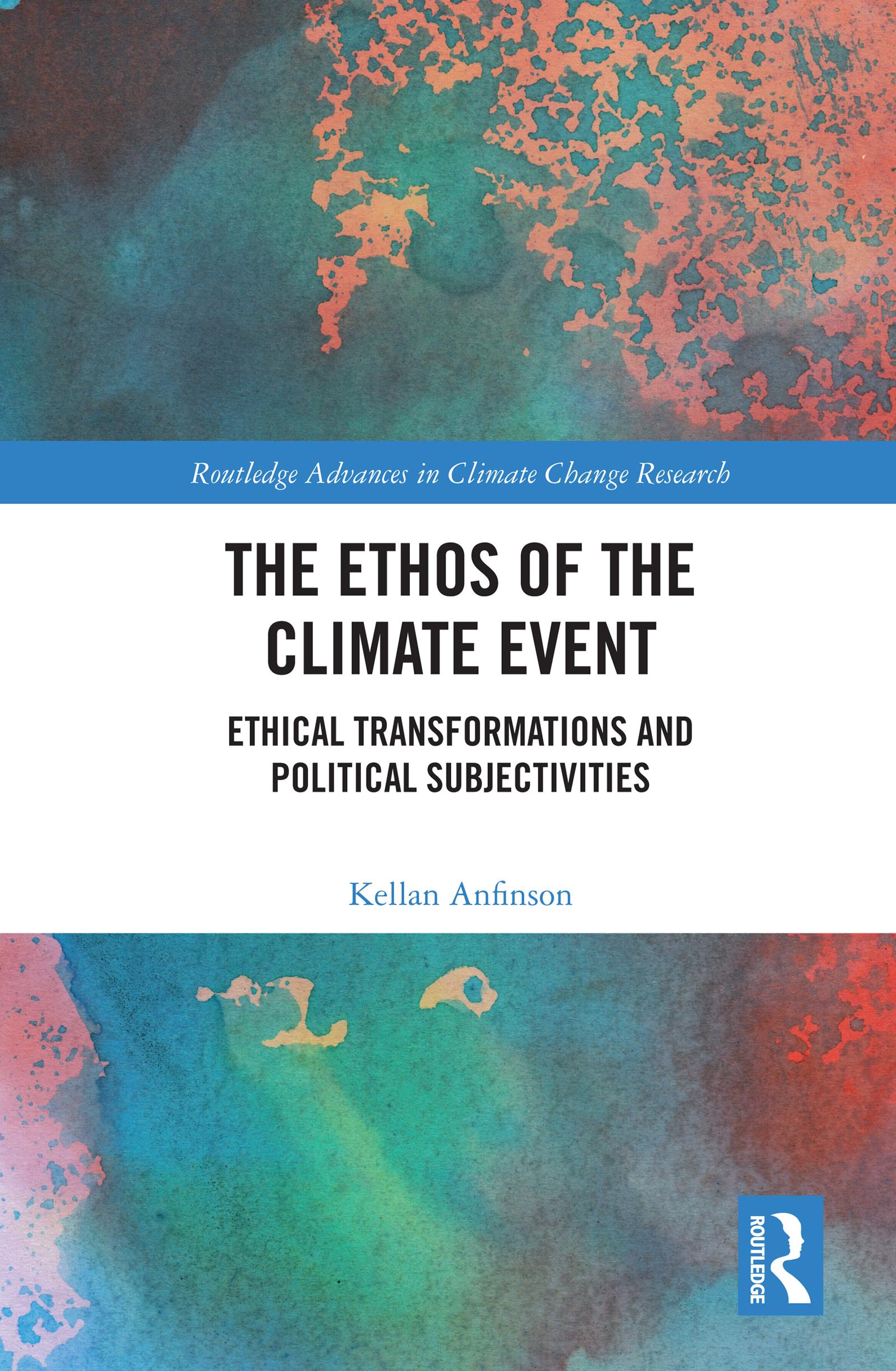
This book develops a politico-ethical response to climate change that accounts for the novelty and uncertainty that it entails.
This volume explores the ethical dimensions of climate change and posits that one must view it as a social construction intimately tied to political issues in order to understand and overcome this environmental challenge. To show how this ethos builds upon the need for new forms of responsiveness, Anfinson analyzes it in terms of four features: commitment, worldly sensitivity, political disposition, and practice. Each of these features is developed by putting four thinkers – Kierkegaard, Nietzsche, Schmitt, and Foucault respectively – in conversation with the literature on climate change. In doing so, this book shows how social habits and norms can be transformed through subjective thought and behavior in the context of a global environmental crisis.
Presenting a multidisciplinary engagement with the politics, philosophy, and science of climate change, this book will be of great interest to students and scholars of climate change, environmental politics, environmental philosophy and environmental humanities.
Betal nemt med kort, Klarna, Apple Pay eller Google Pay. Ikke tilfreds? Du har altid 14 dages fortrydelsesret. Læs mere i vores vilkår. Har du spørgsmål, så send os en mail på hello@memmo.org.
Memmo gør det nemmere at studere – uanset hvor du er i verden. Hos os samler du dine kursusbøger og smarte studieværktøjer ét sted: resuméer, quizzer, podcasts og flashcards. Og så er der Ted, din studieven, der svarer på alt, du undrer dig over. Over 50 000 studerende studerer allerede her – bygget til at hjælpe dig med at lære hurtigere og stresse mindre.