
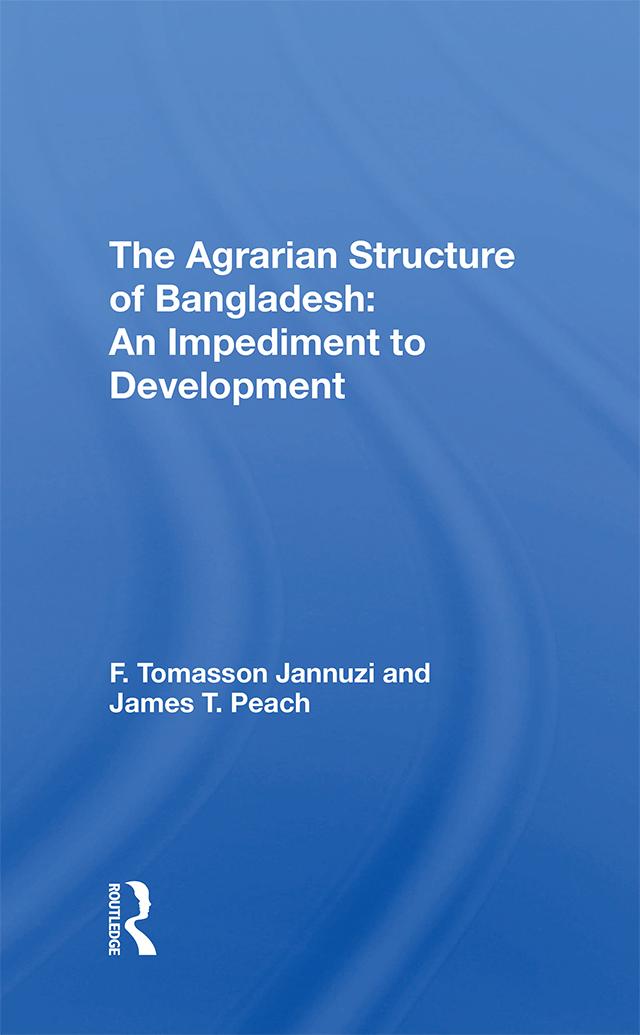
The relationship between the agrarian structure of Bangladesh and its problems of rural development is established in this study based on four years (1975-79) of field research. The authors suggest that the concentration of land in the hands of a rural elite is the principal impediment to the participation of weaker sections of the peasantry in economic progress. Tracing the failure of local attempts to change Bangladesh's agrarian structure by legislative means, they outline a modified program for rural development that is linked to agrarian reform. Agrarian reform, Drs. Jannuzi and Peach argue, is the prerequisite for a rural development strategy that provides for both economic growth and improved income distribution; thus, approaches to rural development in Bangladesh that place reliance on new agricultural technology without first changing the institutions that determine peoples' relationships to the land are not viable. The authors' policy recommendations, grounded in new data on the relative proportions of owners of land, sharecroppers, and the landless, are supplemented by a theoretical analysis of the institution of sharecropping and detailed field work methodology.
Sider: 150
Kategori: Ekonomi & Utveckling
e-ISBN: 9781000314519
Forsendelsesvægt: 1.2 kg
Sendes inden for: 1-2 dage
Betal nemt med kort, Klarna, Apple Pay eller Google Pay. Ikke tilfreds? Du har altid 14 dages fortrydelsesret. Læs mere i vores vilkår. Har du spørgsmål, så send os en mail på hello@memmo.org.
Memmo gør det nemmere at studere – uanset hvor du er i verden. Hos os samler du dine kursusbøger og smarte studieværktøjer ét sted: resuméer, quizzer, podcasts og flashcards. Og så er der Ted, din studieven, der svarer på alt, du undrer dig over. Over 50 000 studerende studerer allerede her – bygget til at hjælpe dig med at lære hurtigere og stresse mindre.
Du kan måske også lide
Køb bogen0