
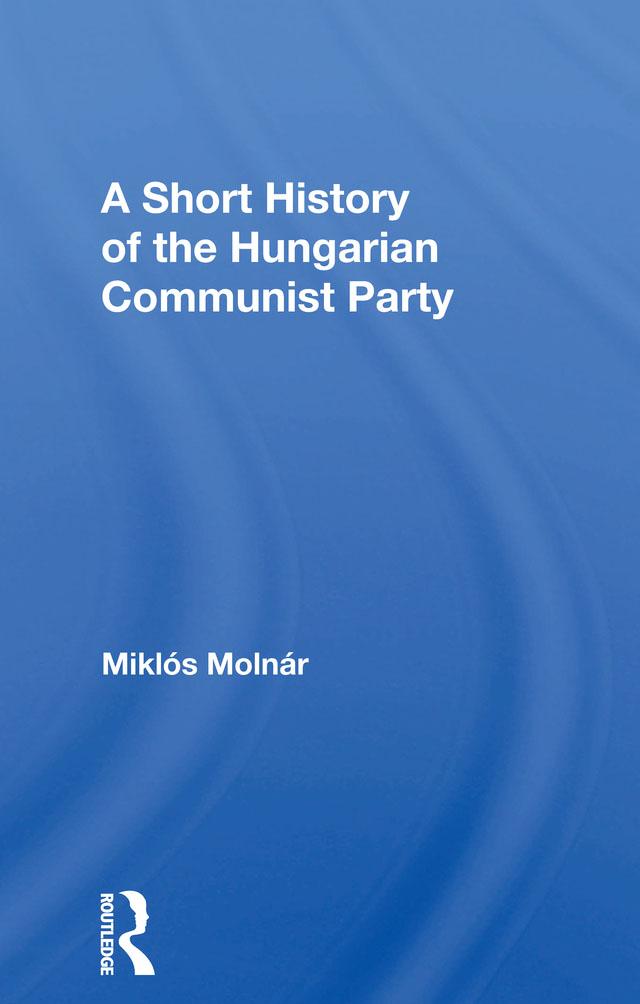
In spite of its small size, the Hungarian Communist party (HCP), founded in the fall of 1918, has played an important role both in Hungary's national history and in the international communist movement. Hungary, which was the only soviet republic other than the ephemeral Bavarian soviet republic to exist outside the USSR, lasted five months during the critical period of the Paris Peace Conference. The "veterans" of the Hungarian soviet republic, like Bela Kun, Georg Lukacs, and Eugen Varga, later held important posts in the Comintern and in the international Communist press. In the Stalinist era, the HCP distinguished itself by excessive zeal in the application of "integral Stalinism" in foreign policy (e.g., anti-Titoism), the economy, and political life (e.g., the Rajk and Kadar trials). However, the 1956 revolution was engineered by the revisionist communist intelligentsia and by such revisionist party leaders as Imre Nagy. Finally, in spite of its repressive role after the revolution, in the 1970s under Janos Kadar the HCP introduced a new system of "liberalism" and economic reform.
Betal nemt med kort, Klarna, Apple Pay eller Google Pay. Ikke tilfreds? Du har altid 14 dages fortrydelsesret. Læs mere i vores vilkår. Har du spørgsmål, så send os en mail på hello@memmo.org.
Memmo gør det nemmere at studere – uanset hvor du er i verden. Hos os samler du dine kursusbøger og smarte studieværktøjer ét sted: resuméer, quizzer, podcasts og flashcards. Og så er der Ted, din studieven, der svarer på alt, du undrer dig over. Over 50 000 studerende studerer allerede her – bygget til at hjælpe dig med at lære hurtigere og stresse mindre.
Du kan måske også lide
Køb bogen0