
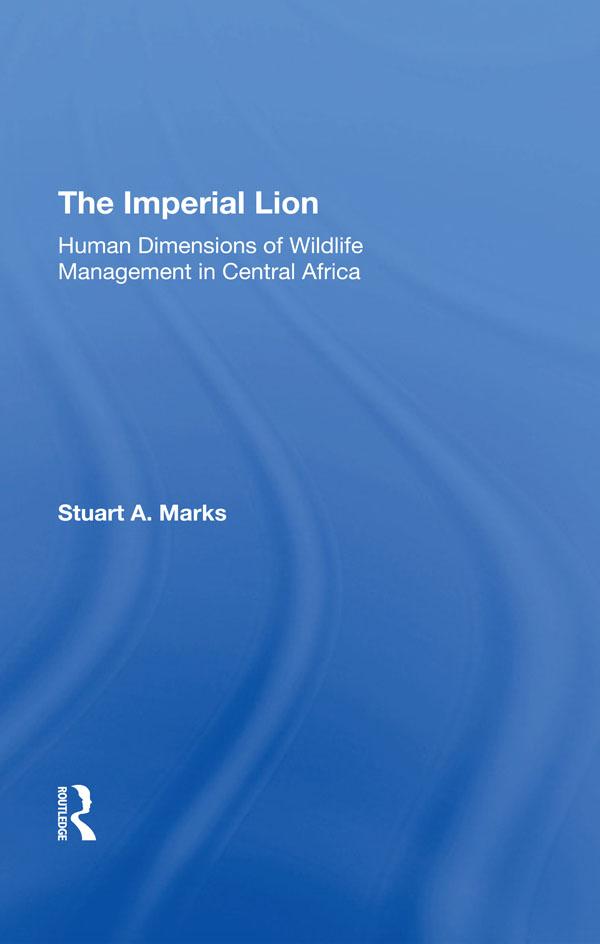
In the 1950s biologists became alarmed by the plight of Africa’s wildlife. Since then they have sought to arrest its decline, but increasing competition between wild fauna and expanding human populations shows that protection alone has been inadequate. The conservationists’ position and strategies have been progressively eroded: large-scale game cropping schemes have failed to produce expected revenues, the consequences of the tourist industry have been unexpectedly detrimental, and educational programs have rarely convinced rural Africans to conserve resources. Dr. Marks argues that the management and conservation of wild animals in Third World countries must include cultural as well as biological dimensions and that changes in human social systems will be necessary to sustain wildlife and the environmental processes. He describes indigenous attempts to manage wildlife and suggests new research initiatives that would lead to wildlife policies more in keeping with human development needs and with the realities of the rural countryside.
Betal nemt med kort, Klarna, Apple Pay eller Google Pay. Ikke tilfreds? Du har altid 14 dages fortrydelsesret. Læs mere i vores vilkår. Har du spørgsmål, så send os en mail på hello@memmo.org.
Memmo gør det nemmere at studere – uanset hvor du er i verden. Hos os samler du dine kursusbøger og smarte studieværktøjer ét sted: resuméer, quizzer, podcasts og flashcards. Og så er der Ted, din studieven, der svarer på alt, du undrer dig over. Over 50 000 studerende studerer allerede her – bygget til at hjælpe dig med at lære hurtigere og stresse mindre.
Du kan måske også lide
Køb bogen0