
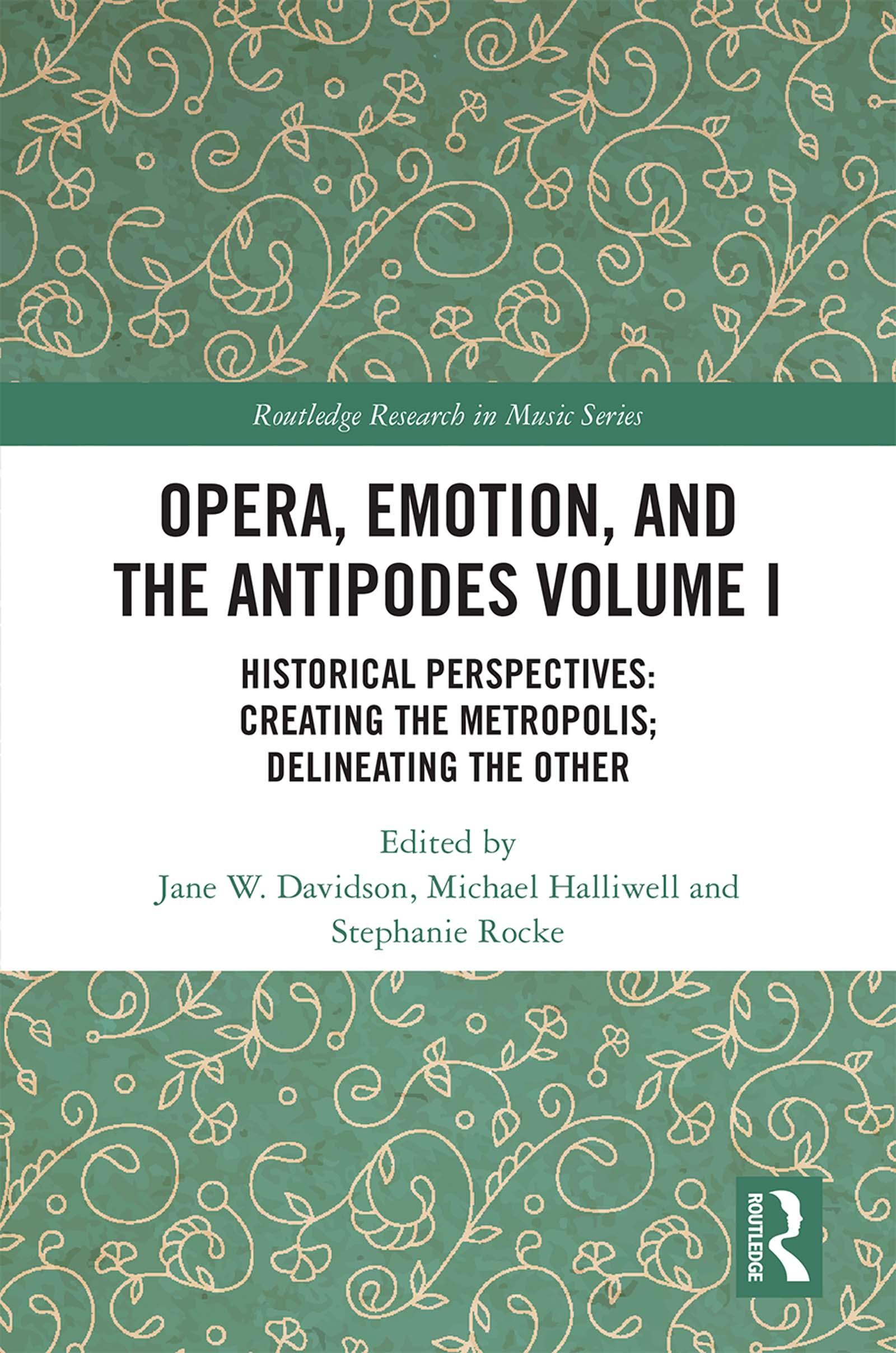
There can be little doubt that opera and emotion are inextricably linked. From dramatic plots driven by energetic producers and directors to the conflicts and triumphs experienced by all associated with opera’s staging to the reactions and critiques of audience members, emotion is omnipresent in opera. Yet few contemplate the impact that the customary cultural practices of specific times and places have upon opera’s ability to move emotions. Taking Australia as a case study, this two-volume collection of extended essays demonstrates that emotional experiences, discourses, displays and expressions do not share universal significance but are at least partly produced, defined, and regulated by culture. Spanning approximately 170 years of opera production in Australia, the authors show how the emotions associated with the specific cultural context of a nation steeped in egalitarian aspirations and marked by increasing levels of multiculturalism have adjusted to changing cultural and social contexts across time. Volume I adopts an historical, predominantly nineteenth-century perspective, while Volume II applies historical, musicological, and ethnological approaches to discuss subsequent Australian operas and opera productions through to the twenty-first century. With final chapters pulling threads from the two volumes together, Opera, Emotion, and the Antipodes establishes a model for constructing emotion history from multiple disciplinary perspectives.
Betal nemt med kort, Klarna, Apple Pay eller Google Pay. Ikke tilfreds? Du har altid 14 dages fortrydelsesret. Læs mere i vores vilkår. Har du spørgsmål, så send os en mail på hello@memmo.org.
Memmo gør det nemmere at studere – uanset hvor du er i verden. Hos os samler du dine kursusbøger og smarte studieværktøjer ét sted: resuméer, quizzer, podcasts og flashcards. Og så er der Ted, din studieven, der svarer på alt, du undrer dig over. Over 50 000 studerende studerer allerede her – bygget til at hjælpe dig med at lære hurtigere og stresse mindre.