
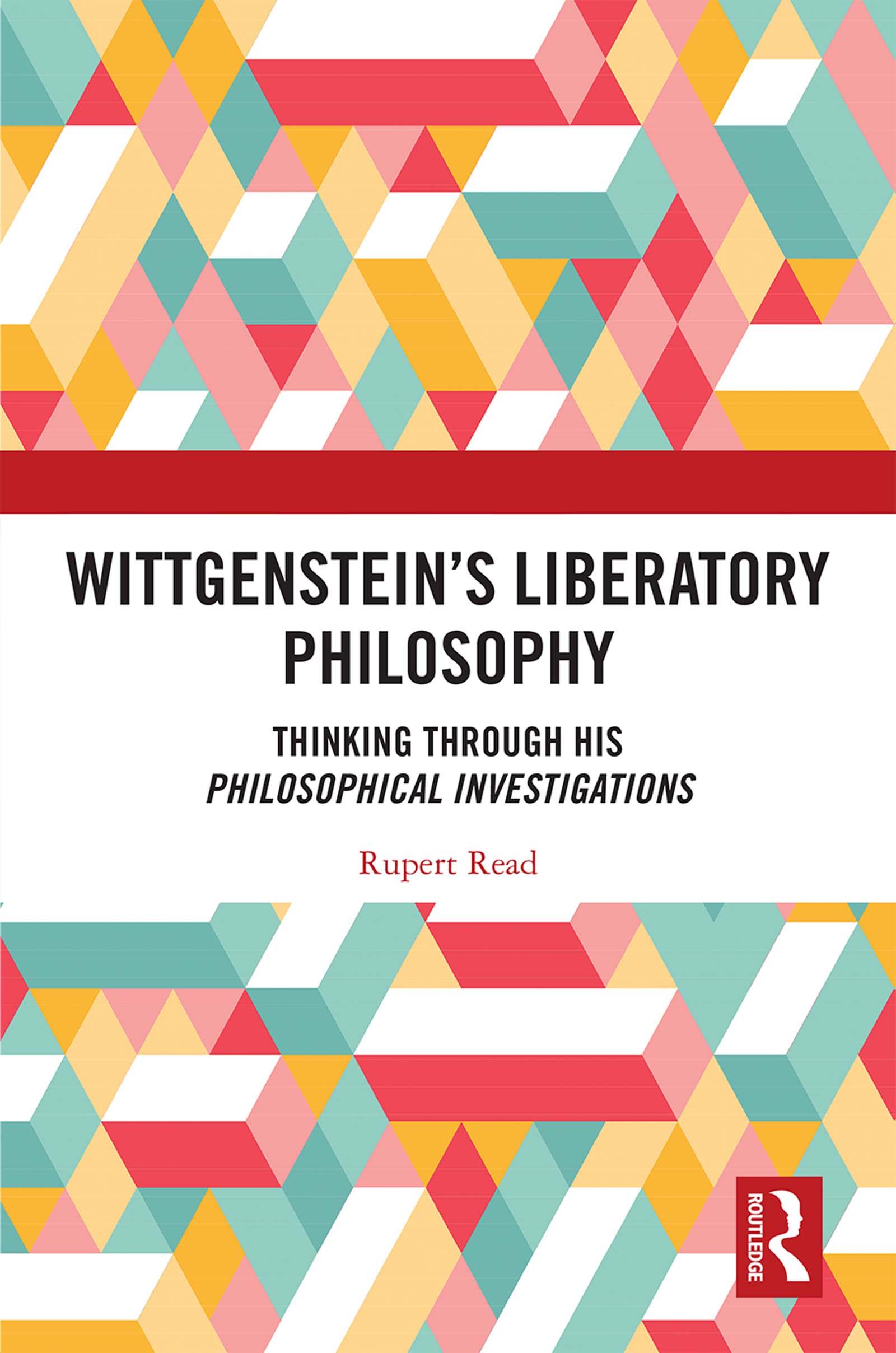
In this book, Rupert Read offers the first outline of a resolute reading, following the highly influential New Wittgenstein ‘school’, of the Philosophical Investigations. He argues that the key to understanding Wittgenstein’s later philosophy is to understand its liberatory purport.
Read contends that a resolute reading coincides in its fundaments with what, building on ideas in the later Gordon Baker, he calls a liberatory reading. Liberatory philosophy is philosophy that can liberate the user from compulsive (and destructive) patterns of thought, freeing one for possibilities that were previously obscured. Such liberation is our prime goal in philosophy. This book consists in a sequential reading, along these lines, of what Read considers the most important and controversial passages in the Philosophical Investigations: 1, 16, 43, 95 & 116 & 122, 130–3, 149–151, 186, 198–201, 217, and 284–6. Read claims that this liberatory conception is simultaneously an ethical conception. The PI should be considered a work of ethics in that its central concern becomes our relation with others. Wittgensteinian liberations challenge widespread assumptions about how we allegedly are independent of and separate from others.
Wittgenstein’s Liberatory Philosophy will be of interest to scholars and advanced students working on Wittgenstein, and to scholars of the political philosophy of liberation and the ethics of relation.
Betal nemt med kort, Klarna, Apple Pay eller Google Pay. Ikke tilfreds? Du har altid 14 dages fortrydelsesret. Læs mere i vores vilkår. Har du spørgsmål, så send os en mail på hello@memmo.org.
Memmo gør det nemmere at studere – uanset hvor du er i verden. Hos os samler du dine kursusbøger og smarte studieværktøjer ét sted: resuméer, quizzer, podcasts og flashcards. Og så er der Ted, din studieven, der svarer på alt, du undrer dig over. Over 50 000 studerende studerer allerede her – bygget til at hjælpe dig med at lære hurtigere og stresse mindre.