
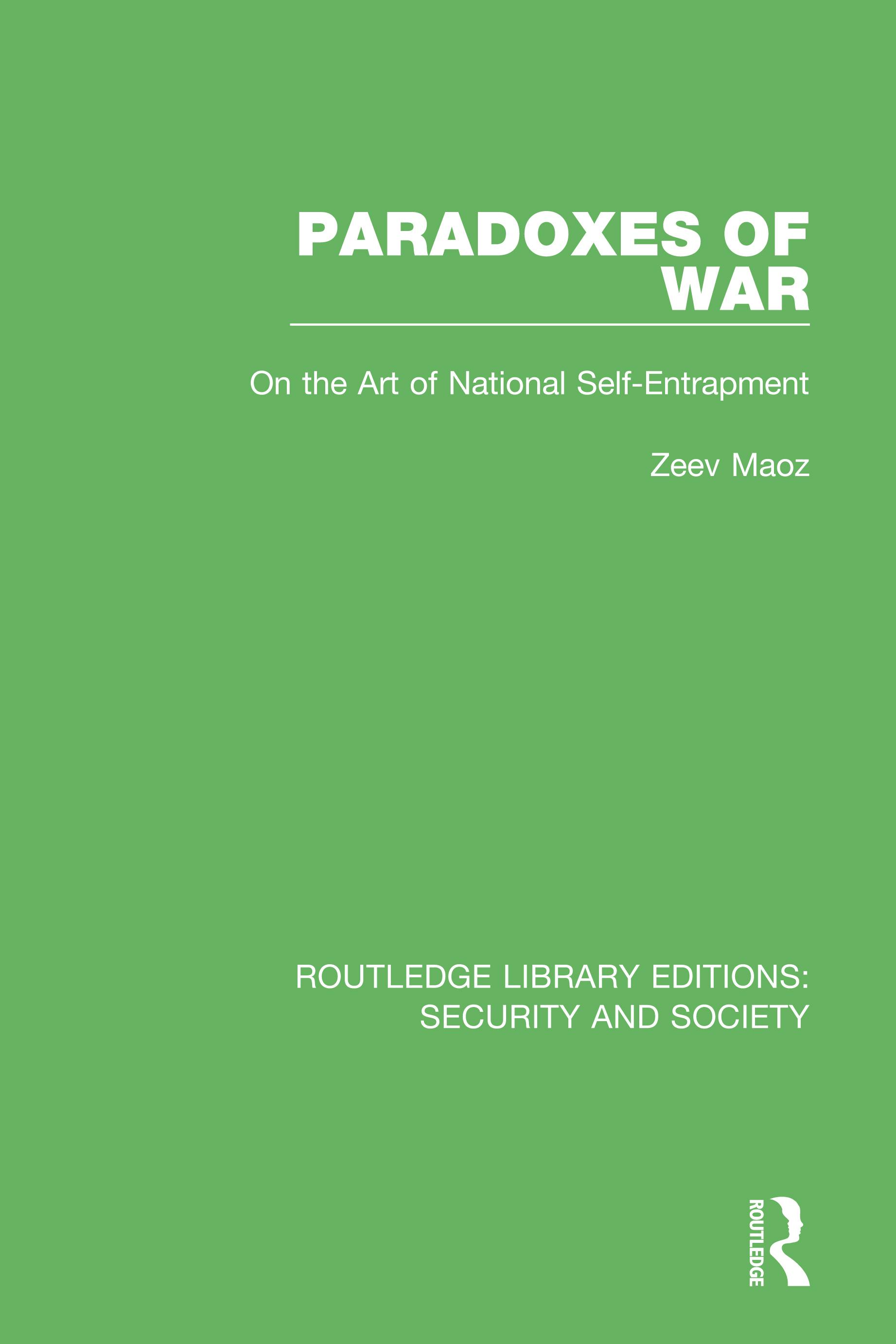
Why do reasonable people lead their nations into the tremendously destructive traps of international conflict? Why do nations then deepen their involvement and make it harder to escape from these traps? In Paradoxes of War, originally published in 1990, Zeev Maoz addresses these and other paradoxical questions about the war process. Using a unique approach to the study of war, he demonstrates that wars may often break out because states wish to prevent them, and continue despite the desperate efforts of the combatants to end them.
Paradoxes of War is organized around the various stages of war. The first part discusses the causes of war, the second the management of war, and the third the short- and long-term implications of war. In each chapter Maoz explores a different paradox as a contradiction between reasonable expectations and the outcomes of motivated behaviour based on those expectations. He documents these paradoxes in twentieth century wars, including the Korean War, the Six Day War, and the Vietnam War. Maoz then invokes cognitive and rational choice theories to explain why these paradoxes arise. Paradoxes of War is essential reading for students and scholars of international politics, war and peace studies, international relations theory, and political science in general.
Betal nemt med kort, Klarna, Apple Pay eller Google Pay. Ikke tilfreds? Du har altid 14 dages fortrydelsesret. Læs mere i vores vilkår. Har du spørgsmål, så send os en mail på hello@memmo.org.
Memmo gør det nemmere at studere – uanset hvor du er i verden. Hos os samler du dine kursusbøger og smarte studieværktøjer ét sted: resuméer, quizzer, podcasts og flashcards. Og så er der Ted, din studieven, der svarer på alt, du undrer dig over. Over 50 000 studerende studerer allerede her – bygget til at hjælpe dig med at lære hurtigere og stresse mindre.