
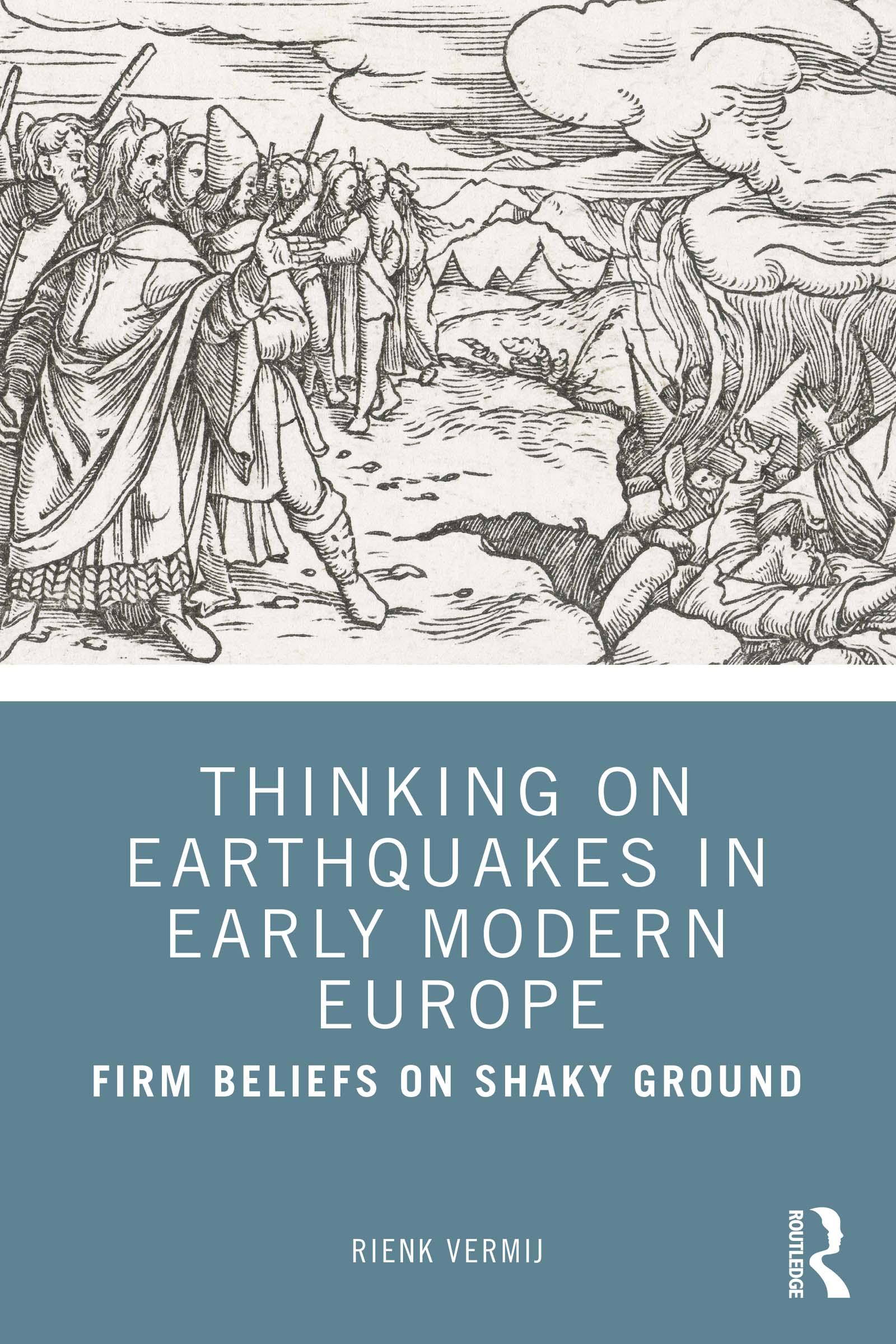
This book is the first extensive study of ideas on earthquakes before the Lisbon earthquake in 1755. The earthquake had a deep impact on European culture, and the reactions to it stood in a long tradition that, before this study, had yet to be explored in detail.
Thinking on Earthquakes investigates both scholarly theories and views that were propagated among the early modern European population. Through a chronological approach, Vermij reveals that in contrast to the Ancient and medieval philosophers who suggested rational explanations for earthquakes, supernatural ideas made a powerful comeback in the sixteenth century. By analysing a variety of sources such as pamphlets, sermons, and treatises, this study shows how changes in the ideas on earthquakes were a result of social and political demands as well as from improvements in the means of communication, rather than from scientific methods. Thus, Vermij presents an illuminating case for the production of knowledge in early modern Europe.
A range of events are explored, including the Ferrara earthquake in 1570 and the Vienna earthquake in 1590, making this study an invaluable source for students and scholars of the history of science and the history of ideas in early modern Europe.
Betal nemt med kort, Klarna, Apple Pay eller Google Pay. Ikke tilfreds? Du har altid 14 dages fortrydelsesret. Læs mere i vores vilkår. Har du spørgsmål, så send os en mail på hello@memmo.org.
Memmo gør det nemmere at studere – uanset hvor du er i verden. Hos os samler du dine kursusbøger og smarte studieværktøjer ét sted: resuméer, quizzer, podcasts og flashcards. Og så er der Ted, din studieven, der svarer på alt, du undrer dig over. Over 50 000 studerende studerer allerede her – bygget til at hjælpe dig med at lære hurtigere og stresse mindre.