
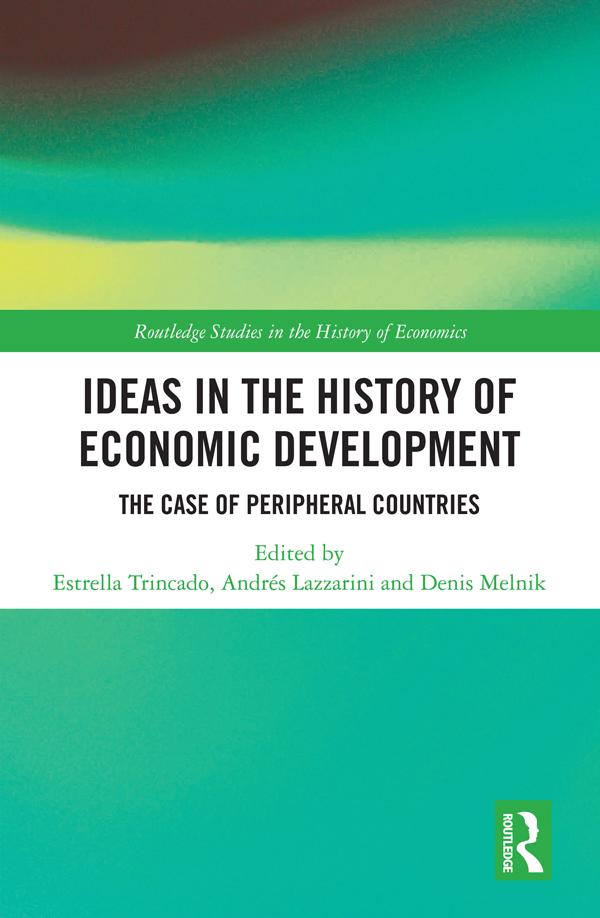
This edited volume examines the relationship between economic ideas, economic policies and development institutions, analysing the cases of 11 peripheral countries in Europe, Latin America and Asia across the nineteenth and twentieth centuries.
It sheds light on the obstacles that have prevented the sustained economic growth of these countries and examines the origins of national and regional approaches to development. The chapters present a fascinating insight into the ideas and visions in the different locations, with the overarching categories of economic nationalism and economic liberalism and how they have influenced development outcomes.
This book will be valuable reading for advanced students and researchers of development economics, the history of economic thought and economic history.
Betal nemt med kort, Klarna, Apple Pay eller Google Pay. Ikke tilfreds? Du har altid 14 dages fortrydelsesret. Læs mere i vores vilkår. Har du spørgsmål, så send os en mail på hello@memmo.org.
Memmo gør det nemmere at studere – uanset hvor du er i verden. Hos os samler du dine kursusbøger og smarte studieværktøjer ét sted: resuméer, quizzer, podcasts og flashcards. Og så er der Ted, din studieven, der svarer på alt, du undrer dig over. Over 50 000 studerende studerer allerede her – bygget til at hjælpe dig med at lære hurtigere og stresse mindre.