
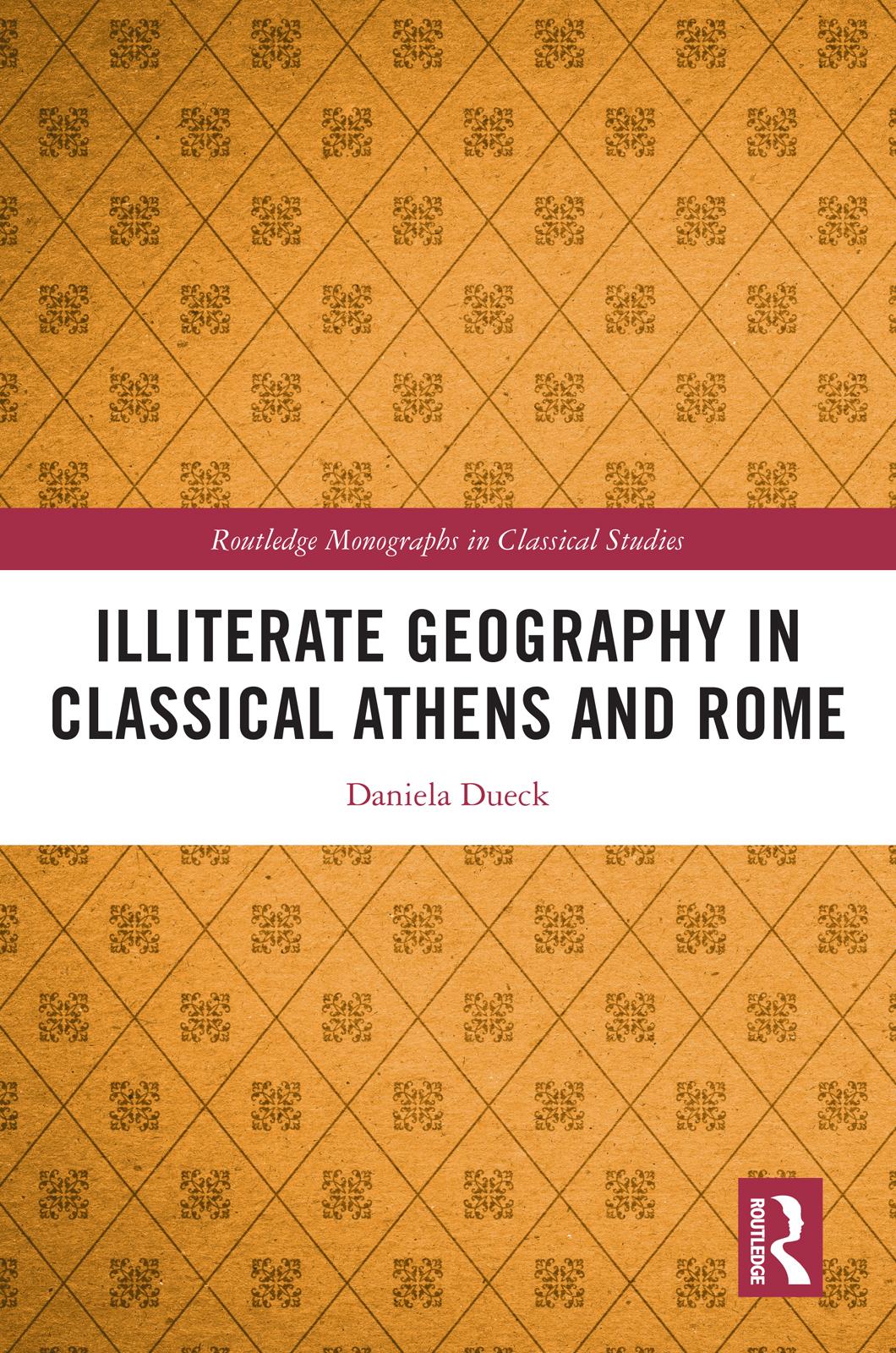
This study is devoted to the channels through which geographic knowledge circulated in classical societies outside of textual transmission. It explores understanding of geography among the non-elites, as opposed to scholarly and scientific geography solely in written form which was the province of a very small number of learned people.
It deals with non-literary knowledge of geography, geography not derived from texts, as it was available to people, educated or not, who did not read geographic works. This main issue is composed of two central questions: how, if at all, was geographic data available outside of textual transmission and in contexts in which there was no need to write or read? And what could the public know of geography? In general, three groups of sources are relevant to this quest: oral communications preserved in writing; public non-textual performances; and visual artefacts and monuments. All of these are examined as potential sources for the aural and visual geographic knowledge of Greco-Roman publics.
This volume will be of interest to anyone working on geography in the ancient world and to those studying non-elite culture.
Betal nemt med kort, Klarna, Apple Pay eller Google Pay. Ikke tilfreds? Du har altid 14 dages fortrydelsesret. Læs mere i vores vilkår. Har du spørgsmål, så send os en mail på hello@memmo.org.
Memmo gør det nemmere at studere – uanset hvor du er i verden. Hos os samler du dine kursusbøger og smarte studieværktøjer ét sted: resuméer, quizzer, podcasts og flashcards. Og så er der Ted, din studieven, der svarer på alt, du undrer dig over. Over 50 000 studerende studerer allerede her – bygget til at hjælpe dig med at lære hurtigere og stresse mindre.