
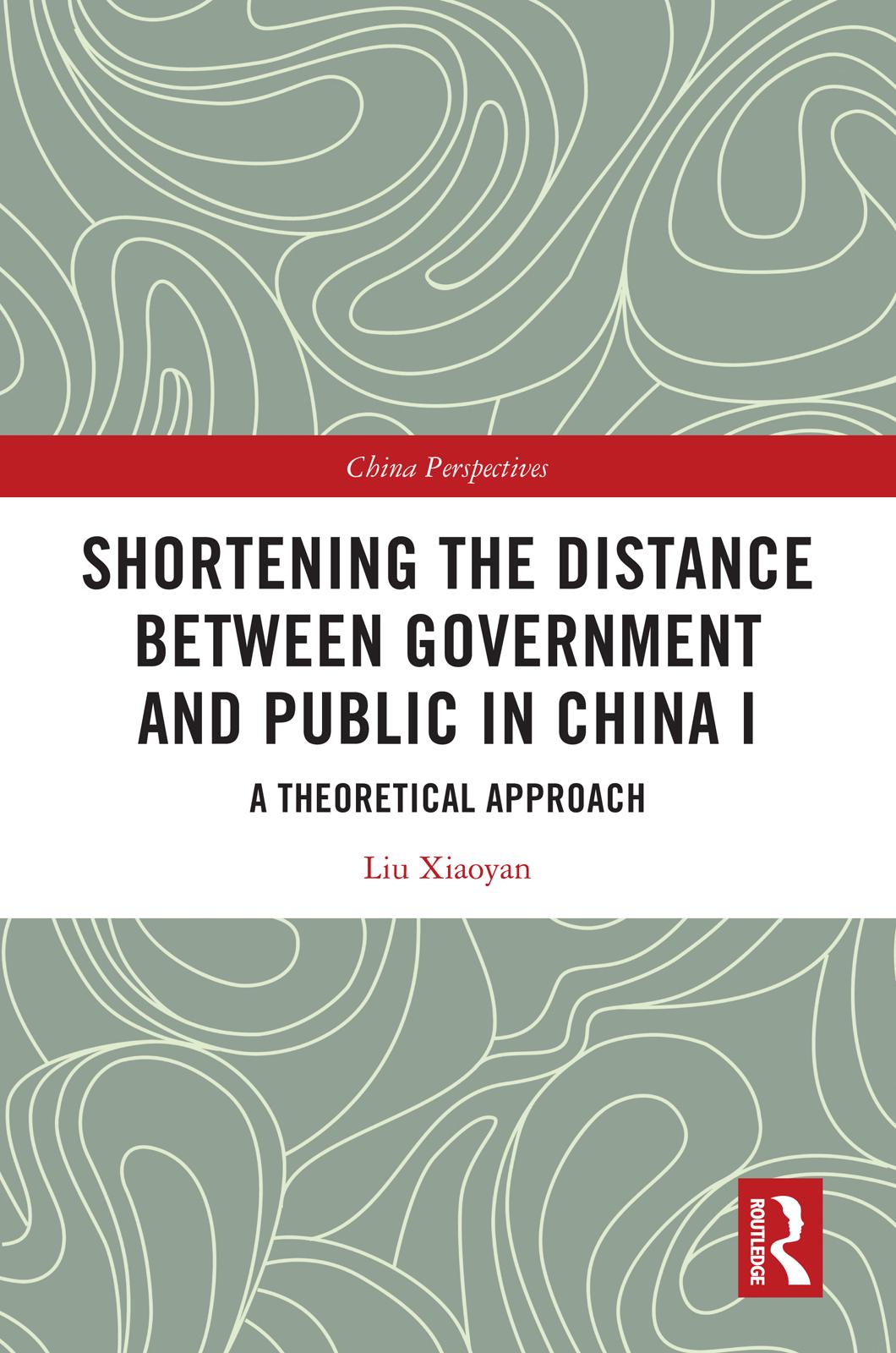
Distance, in its traditional sense, connotates "estrangement" and "division". But in the context of modern political studies, it means a controllable resource that can be manipulated to change the relationship between the government and the public.
Drawing on this concept from Western political science, the author explores the law and mechanisms of China’s political communication. In this volume, the author introduces a creative theoretical framework of distance, which is a dynamic system comprised of physical and psychological distance, ideal distance and real distance, and natural distance and consequent distance. Psychological distance is the core, because it signifies not only whether there is trust between a government and the public, but also whether the political community can maintain a high degree of harmony, stability, unity, and vitality. Events in the past five years in China are used as cases to illustrate the point.
Students and scholars who are interested in political science and political communication, especially Chinese politics, would find this title a useful reference.
Betal nemt med kort, Klarna, Apple Pay eller Google Pay. Ikke tilfreds? Du har altid 14 dages fortrydelsesret. Læs mere i vores vilkår. Har du spørgsmål, så send os en mail på hello@memmo.org.
Memmo gør det nemmere at studere – uanset hvor du er i verden. Hos os samler du dine kursusbøger og smarte studieværktøjer ét sted: resuméer, quizzer, podcasts og flashcards. Og så er der Ted, din studieven, der svarer på alt, du undrer dig over. Over 50 000 studerende studerer allerede her – bygget til at hjælpe dig med at lære hurtigere og stresse mindre.