
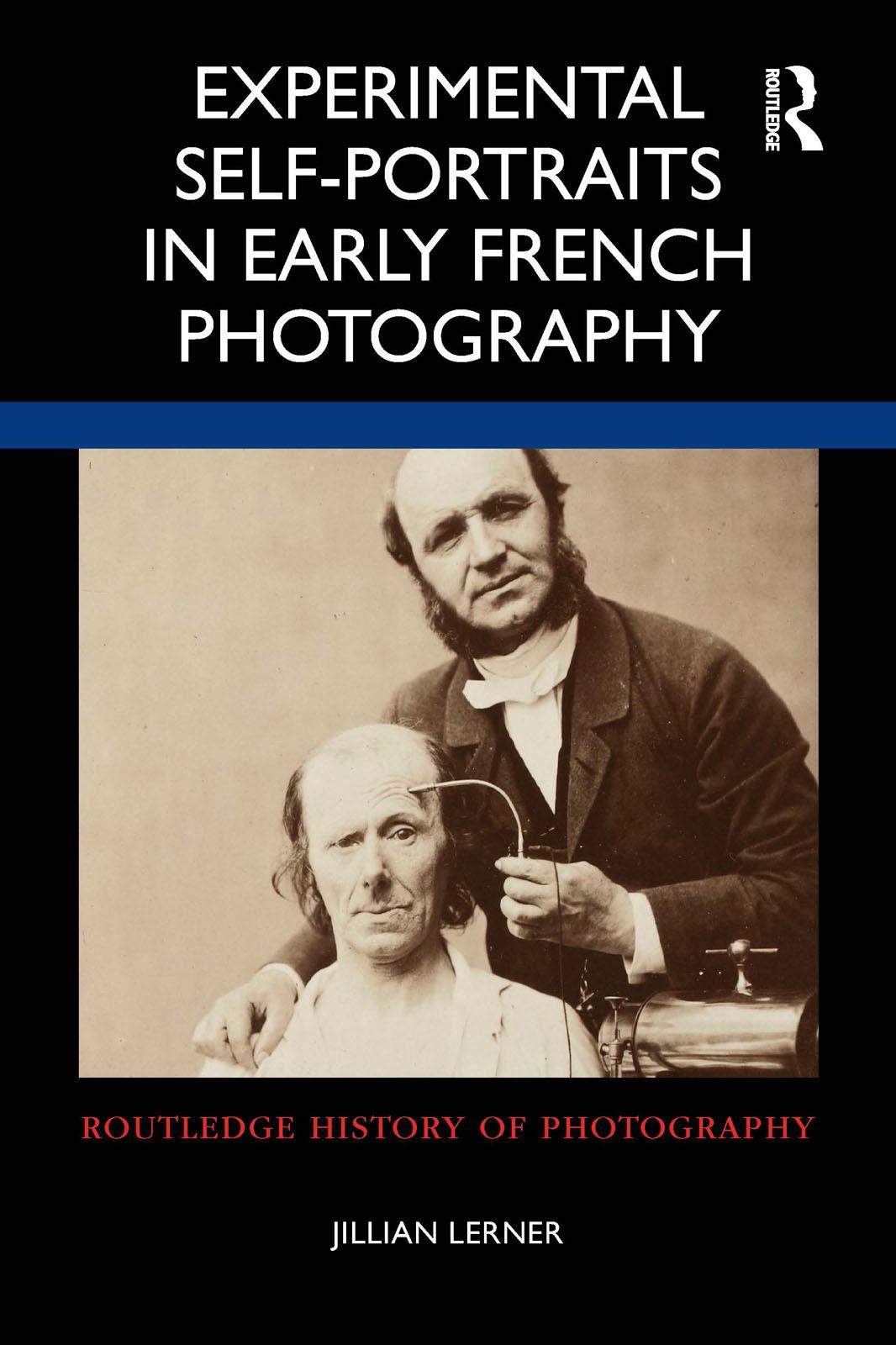
This book explores a range of experimental self-portraits made in France between 1840 and 1870, including remarkable images by Hippolyte Bayard, Nadar, Duchenne de Boulogne, and Countess de Castiglione. Adapting photography for different social purposes, each of these pioneers showcased their own body as a living artifact and iconic attraction.
Jillian Lerner considers performative portraits that exhibit uncanny transformations of identity and embodiment. She highlights the tactical importance of photographic demonstrations, promotions, conversations, and the mongrel forms of montage, painted photographs, and captioned specimens. The author shows how photographic practices are mobilized in diverse cultural contexts and enmeshed with the histories of art, science, publicity, urban spectacle, and private life in nineteenth-century France. Tracing calculated and creative approaches to a new medium, this research also contributes to an archaeology of the present. It furnishes a prehistory of the “selfie” and offers historical perspectives on the forces that reshape human perception and social experience.
This interdisciplinary study will appeal to readers interested in the history of photography, art, visual culture, and media studies.
Betal nemt med kort, Klarna, Apple Pay eller Google Pay. Ikke tilfreds? Du har altid 14 dages fortrydelsesret. Læs mere i vores vilkår. Har du spørgsmål, så send os en mail på hello@memmo.org.
Memmo gør det nemmere at studere – uanset hvor du er i verden. Hos os samler du dine kursusbøger og smarte studieværktøjer ét sted: resuméer, quizzer, podcasts og flashcards. Og så er der Ted, din studieven, der svarer på alt, du undrer dig over. Over 50 000 studerende studerer allerede her – bygget til at hjælpe dig med at lære hurtigere og stresse mindre.