
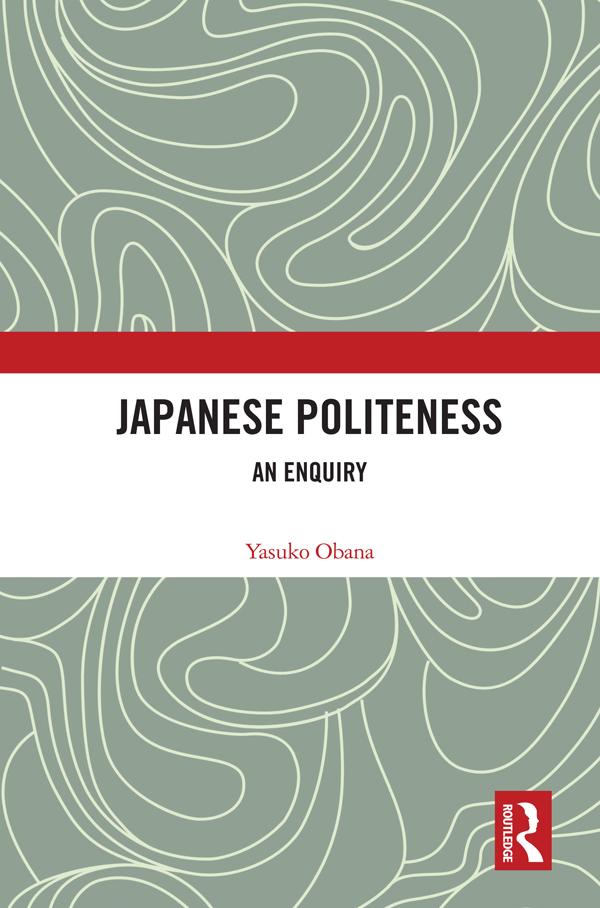
Although the Japanese language is one of the most quoted examples in politeness research, extant publications focus on particular areas of politeness, and very few of them enquire into the varied aspects of Japanese politeness. In this book, Yasuko Obana provides an integrated account of what signifies Japanese politeness.
By examining how far previous assumptions can apply to Japanese, Obana exposes a variety of characteristics of Japanese politeness. By taking a diachronic approach, she probes into what constitutes politeness, extracts key elements of the term ‘polite’ in Japanese, and demonstrates how modern honorifics’ apparent diverse, divergent uses and effects can be integrated into a systematic matrix. Furthermore, by quoting traditional Japanese language scholars’ (kokugo gakusha) studies, Obana brings different views into the open. She also carves out politeness strategies in Japanese that have not been adequately explored to date, and which often conform to the way in which honorifi cs behave because they refl ect social indexicality.
This book is a good reference for scholars in pragmatics, particularly for those who are working on politeness. It is useful for Japanese language teachers who want to know how to teach Japanese politeness to non-native learners. Postgraduate students of Japanese or pragmatics may also find this book useful for self-study.
Betal nemt med kort, Klarna, Apple Pay eller Google Pay. Ikke tilfreds? Du har altid 14 dages fortrydelsesret. Læs mere i vores vilkår. Har du spørgsmål, så send os en mail på hello@memmo.org.
Memmo gør det nemmere at studere – uanset hvor du er i verden. Hos os samler du dine kursusbøger og smarte studieværktøjer ét sted: resuméer, quizzer, podcasts og flashcards. Og så er der Ted, din studieven, der svarer på alt, du undrer dig over. Over 50 000 studerende studerer allerede her – bygget til at hjælpe dig med at lære hurtigere og stresse mindre.