
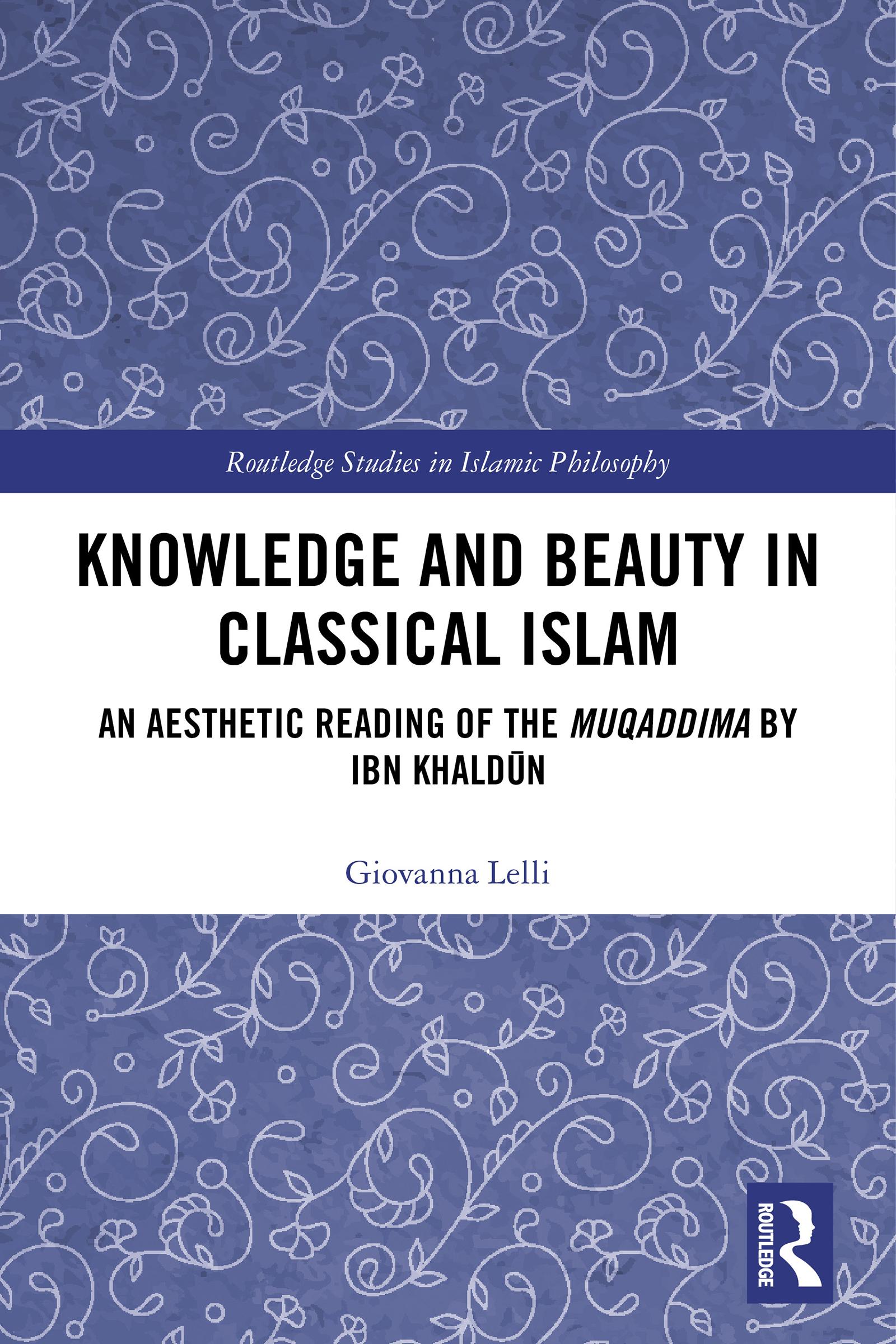
This volume offers an aesthetic reading of the Muqaddima by Ibn Khaldūn (d. 1406), a text that has been studied up to the present as a work on historiography. It argues that the Muqaddima is also a comprehensive treatise on classical Arab-Islamic culture and provides a picture of classical Arab-Islamic aesthetics in its totality.
The theme of the book is the intrinsic connection between beauty and knowledge in the Muqaddima. Whenever Ibn Khaldūn deals with the problem of knowledge and science, he also deals with the problem of sensual beauty as an instrument or an obstacle to attain it. Ibn Khaldūn’s philosophy of history is necessarily also an aesthetics of history. His key-notion of “group feeling”, the physical, ethic and aesthetic virtue of Bedouin societies, is at once the origin of the ascent of centralised States and the cause of their ruin. It represents a tragic contradiction that applies to the history of the Maghreb but then takes a universal value. It reflects a range of other contradictions inherent to the "system" of classical Arab-Islamic aesthetics. These contradictions undermine the aesthetic system of the Muqaddima from within and provide decisive elements for the emergence of modern aesthetics.
Offering a comparative approach, the volume is a key resource to scholars and students interested in Arabic and Islamic studies, philosophy, aesthetics and global history.
Betal nemt med kort, Klarna, Apple Pay eller Google Pay. Ikke tilfreds? Du har altid 14 dages fortrydelsesret. Læs mere i vores vilkår. Har du spørgsmål, så send os en mail på hello@memmo.org.
Memmo gør det nemmere at studere – uanset hvor du er i verden. Hos os samler du dine kursusbøger og smarte studieværktøjer ét sted: resuméer, quizzer, podcasts og flashcards. Og så er der Ted, din studieven, der svarer på alt, du undrer dig over. Over 50 000 studerende studerer allerede her – bygget til at hjælpe dig med at lære hurtigere og stresse mindre.