
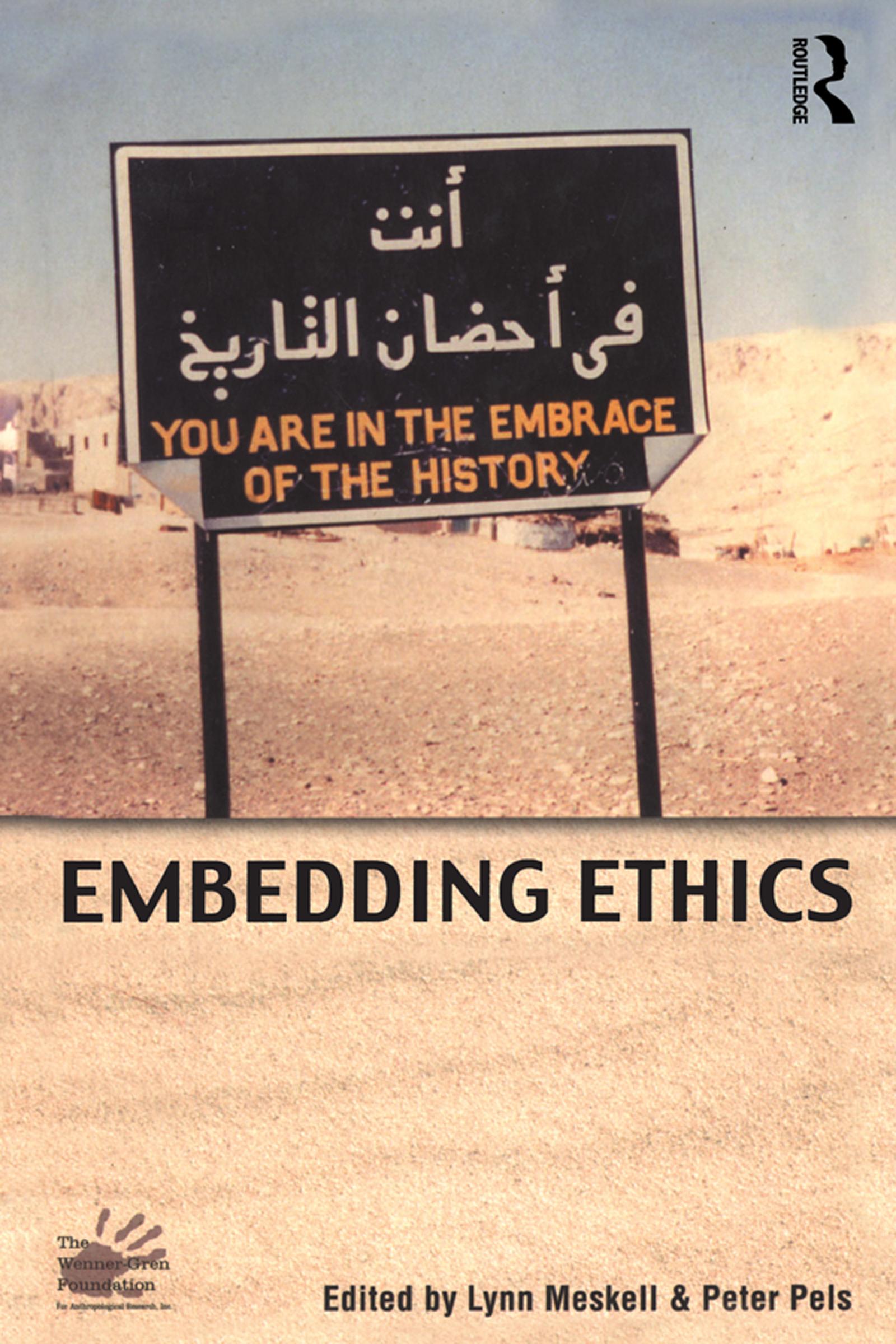
Anthropologists who talk about ethics generally mean the code of practice drafted by a professional association for implementation by its members. As this book convincingly shows, such a conception is far too narrow. A more radical approach is to recognize that moral judgments are made at every juncture of scientific practice and they require a negotiation of responsibility with all stakeholders in the research enterprise.Embedding Ethics questions why ethics have been divorced from scientific expertise. Invoking different disciplinary practices from biological, archaeological, cultural, and linguistic anthropology, contributors show how ethics should be resituated at the heart of, rather than exterior to, scientific activity. Positioning the researcher as a negotiator of significant truths rather than an adjudicator of a priori precepts enables contributors to relocate ethics in new sets of social and scientific relationships triggered by recent globalization processes - from new forms of intellectual and cultural ownership to accountability in governance, and the very ways in which people are studied. Case studies from ethnographic research, museum display, archaeological fieldwork and professional monitoring illustrate both best practice and potential pitfalls.This important book is an essential guide for all anthropologists who wish to be active contributors to the discussion on ethics and the ethical practice of their profession.
Betal nemt med kort, Klarna, Apple Pay eller Google Pay. Ikke tilfreds? Du har altid 14 dages fortrydelsesret. Læs mere i vores vilkår. Har du spørgsmål, så send os en mail på hello@memmo.org.
Memmo gør det nemmere at studere – uanset hvor du er i verden. Hos os samler du dine kursusbøger og smarte studieværktøjer ét sted: resuméer, quizzer, podcasts og flashcards. Og så er der Ted, din studieven, der svarer på alt, du undrer dig over. Over 50 000 studerende studerer allerede her – bygget til at hjælpe dig med at lære hurtigere og stresse mindre.
Du kan måske også lide
Køb bogen0