
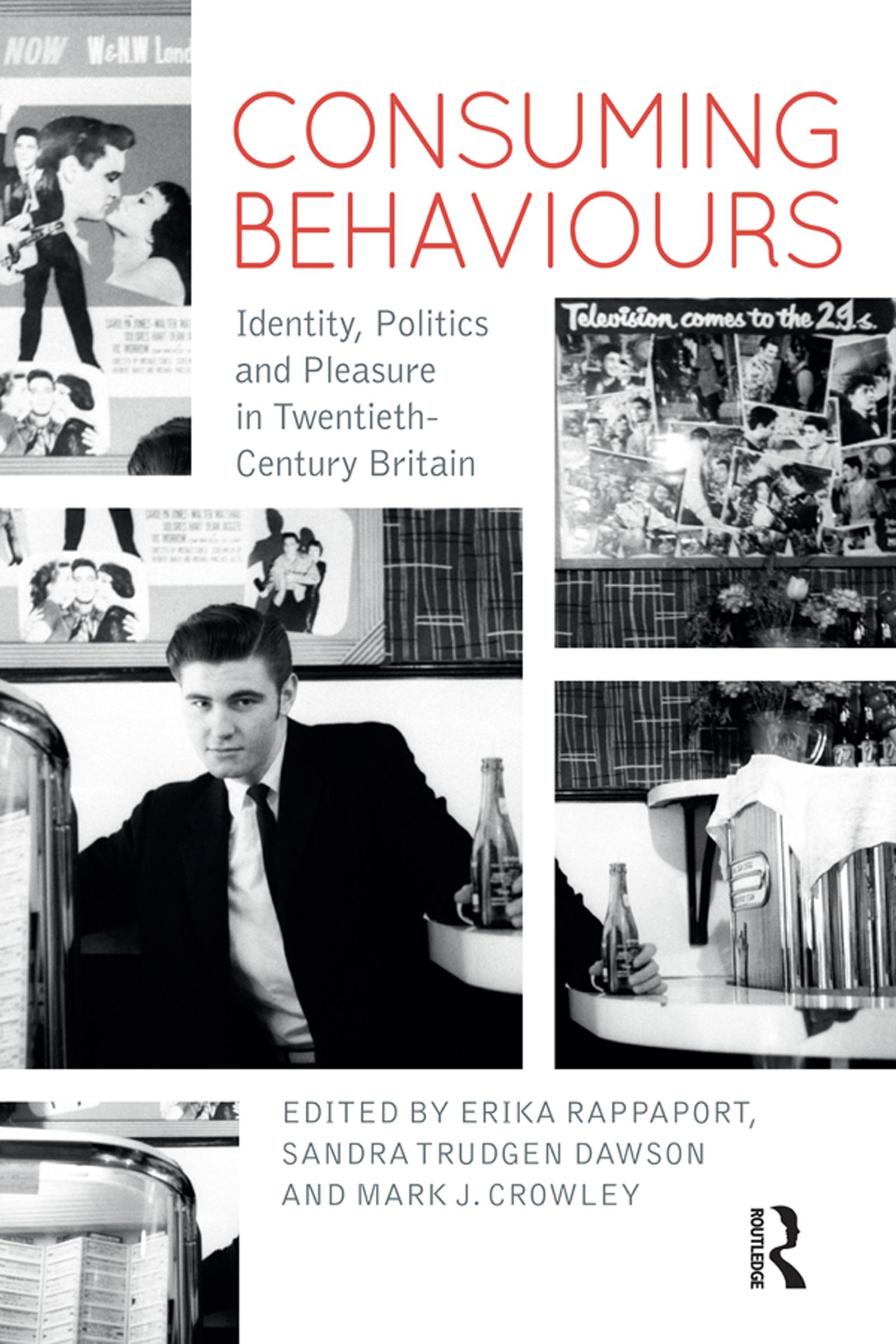
In twentieth-century Britain, consumerism increasingly defined and redefined individual and social identities. New types of consumers emerged: the idealized working-class consumer, the African consumer and the teenager challenged the prominent position of the middle and upper-class female shopper. Linking politics and pleasure, Consuming Behaviours explores how individual consumers and groups reacted to changes in marketing, government control, popular leisure and the availability of consumer goods.From football to male fashion, tea to savings banks, leading scholars consider a wide range of products, ideas and services and how these were marketed to the British public through periods of imperial decline, economic instability, war, austerity and prosperity. The development of mass consumer society in Britain is examined in relation to the growing cultural hegemony and economic power of the United States, offering comparisons between British consumption patterns and those of other nations.Bridging the divide between historical and cultural studies approaches, Consuming Behaviours discusses what makes British consumer culture distinctive, while acknowledging how these consumer identities are inextricably a product of both Britain’s domestic history and its relationship with its Empire, with Europe and with the United States.
Betal nemt med kort, Klarna, Apple Pay eller Google Pay. Ikke tilfreds? Du har altid 14 dages fortrydelsesret. Læs mere i vores vilkår. Har du spørgsmål, så send os en mail på hello@memmo.org.
Memmo gør det nemmere at studere – uanset hvor du er i verden. Hos os samler du dine kursusbøger og smarte studieværktøjer ét sted: resuméer, quizzer, podcasts og flashcards. Og så er der Ted, din studieven, der svarer på alt, du undrer dig over. Over 50 000 studerende studerer allerede her – bygget til at hjælpe dig med at lære hurtigere og stresse mindre.
Du kan måske også lide
Køb bogen0