
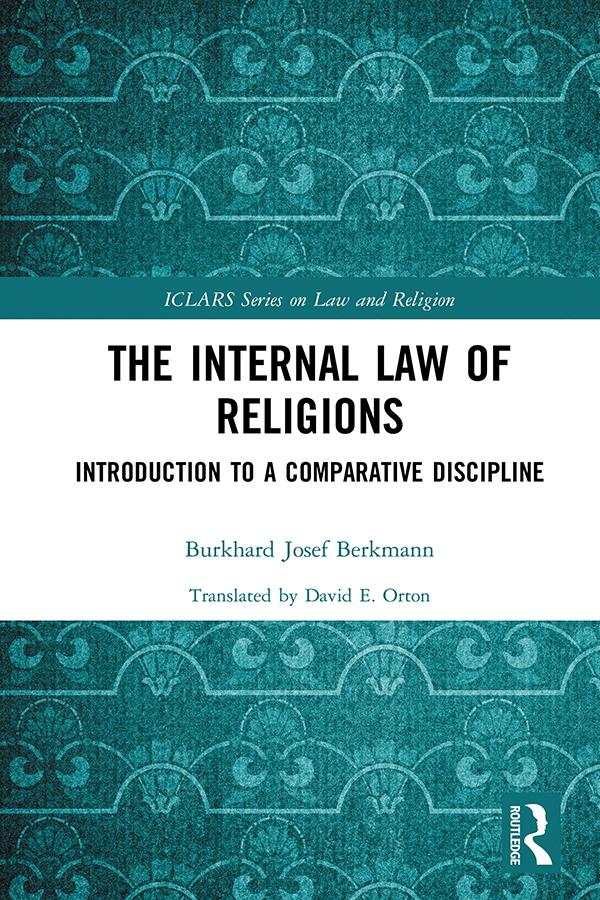
Comparative law of religions has developed in recent years as a new discipline at the intersection of legal and religious science, of theology and anthropology. This book presents a systematic theoretical basis for this new discipline.
While law is mostly associated with the state, many religions also have their own internal law. These internal legal norms are aimed at a particular form of behaviour on the part of believers. They therefore play a particular role in conflicts arising today between certain religious forms of behaviour. The comparison of the internal law of religions serves to establish and explain the commonalities and differences between various religious legal traditions. The religions examined here include: the law of Christian denominations, Jewish law, Islamic law, Hindu law, Buddhist law, and other religious legal systems. The work assesses six current approaches to the comparative law of religions, evaluating their strengths and weaknesses, leading to the development of a new approach. The book discusses the role of religious law in state law and looks to likely future developments.
The work will be essential for those interested in the administration of justice and politics, for those professions where intercultural competence is required, and for interreligious dialogue.
Betal nemt med kort, Klarna, Apple Pay eller Google Pay. Ikke tilfreds? Du har altid 14 dages fortrydelsesret. Læs mere i vores vilkår. Har du spørgsmål, så send os en mail på hello@memmo.org.
Memmo gør det nemmere at studere – uanset hvor du er i verden. Hos os samler du dine kursusbøger og smarte studieværktøjer ét sted: resuméer, quizzer, podcasts og flashcards. Og så er der Ted, din studieven, der svarer på alt, du undrer dig over. Over 50 000 studerende studerer allerede her – bygget til at hjælpe dig med at lære hurtigere og stresse mindre.