
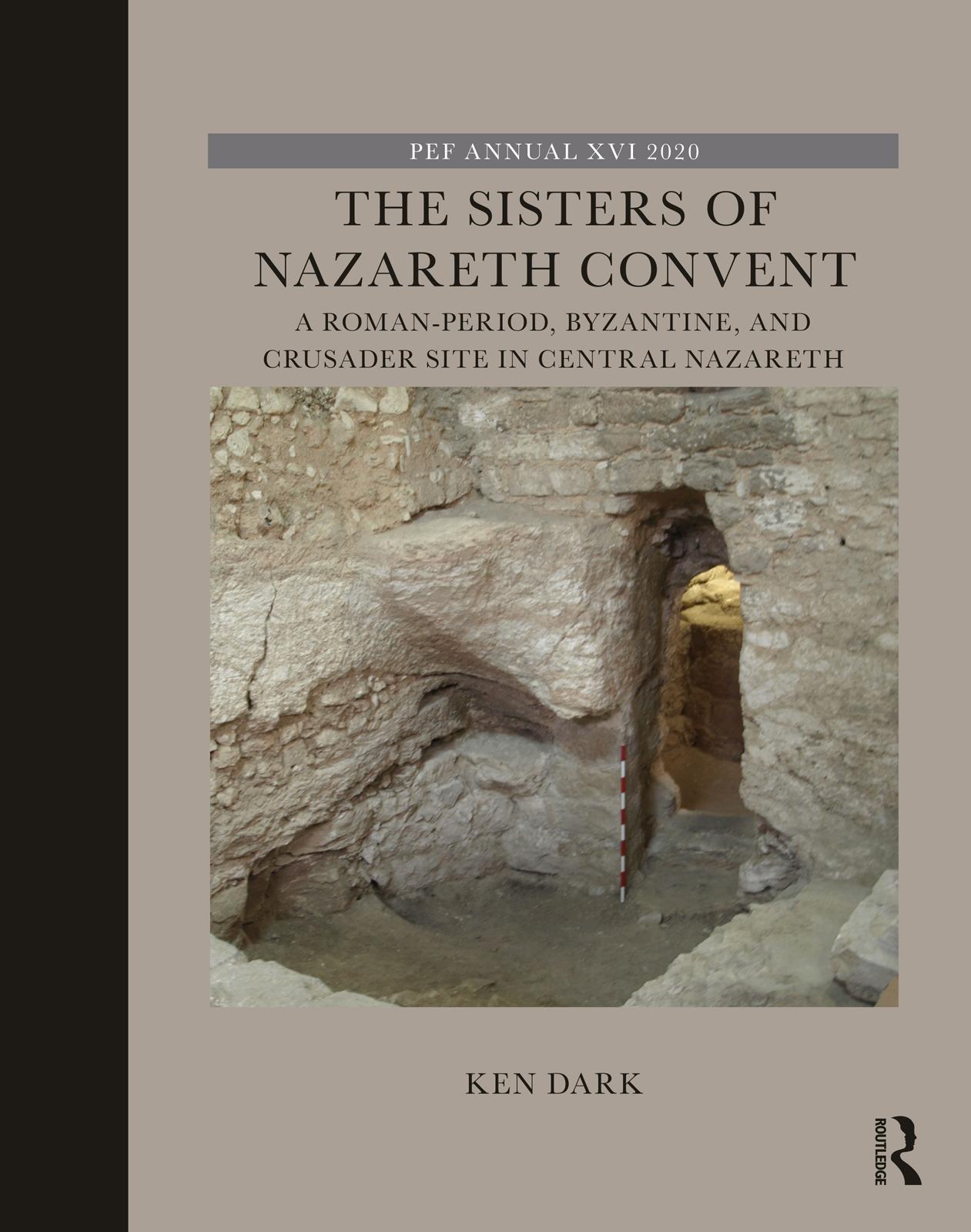
This book transforms archaeological knowledge of Nazareth by publishing over 80 years of archaeological work at the Sisters of Nazareth convent, including a detailed re-investigation in the early twenty-first century under the author's direction.
Although one of the world's most famous places and of key importance to understanding early Christianity, Nazareth has attracted little archaeological attention. Following a chance discovery in the 1880s, the site was initially explored by the nuns of the convent themselves – one of the earliest examples of a major programme of excavations initiated and directed by women – and then for decades by Henri Senès, whose excavations (like those of the nuns) have remained almost entirely unpublished. Their work revealed a complex sequence, elucidated and dated by twenty-first century study, beginning with a partly rock-cut Early Roman-period domestic building, followed by Roman-period quarrying and burial, a well-preserved cave-church, and major surface-level Byzantine and Crusader churches. The interpretation and broader implications of each phase of activity are discussed in the context of recent studies of Roman-period, Byzantine, and later archaeology and contemporary archaeological theory, and their relationship to written accounts of Nazareth is also assessed.
The Sisters of Nazareth Convent provides a crucial archaeological study for those wishing to understand the archaeology of Nazareth and its place in early Christianity and beyond.
Betal nemt med kort, Klarna, Apple Pay eller Google Pay. Ikke tilfreds? Du har altid 14 dages fortrydelsesret. Læs mere i vores vilkår. Har du spørgsmål, så send os en mail på hello@memmo.org.
Memmo gør det nemmere at studere – uanset hvor du er i verden. Hos os samler du dine kursusbøger og smarte studieværktøjer ét sted: resuméer, quizzer, podcasts og flashcards. Og så er der Ted, din studieven, der svarer på alt, du undrer dig over. Over 50 000 studerende studerer allerede her – bygget til at hjælpe dig med at lære hurtigere og stresse mindre.