
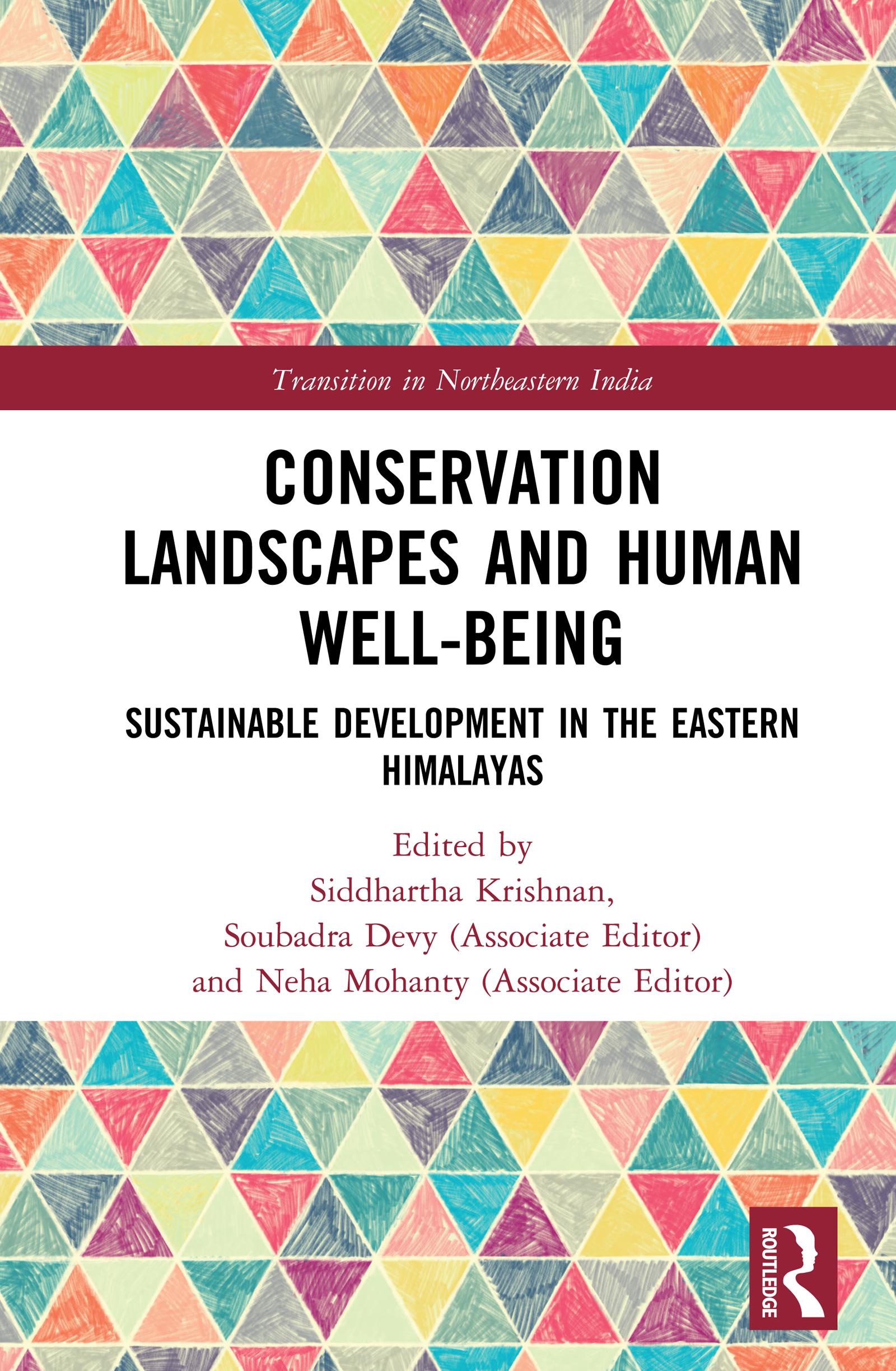
The Himalayas are said to be the youngest mountain ranges in the world. This book studies the well-being of the eastern Himalayan forest-dwellers in terms of their capabilities and functioning. Using Amartya Sen’s and Martha Nussbaum’s Capabilities Approach, it examines the educational and health opportunities and substantial freedoms afforded to farmers and pastoralists living and working in the Senchal and Singalila Protected Areas of North Bengal, India. It also discusses the challenges and potential of the Forest Rights Act as a well-being delivery mechanism. The book adopts a comparative narrative of socio-ecological information generated from interviews, ecological field methods, remote sensing and participatory rural appraisals to provide insight on human development in conservation contexts.
This volume will be of interest to students and researchers of conservation biology, development studies, socio-ecological systems studies, political ecology, human development index, ecological economics, environmental sociology, and South Asian studies. It will also be useful to policy-makers and NGOs in the conservation and livelihoods sector.
Betal nemt med kort, Klarna, Apple Pay eller Google Pay. Ikke tilfreds? Du har altid 14 dages fortrydelsesret. Læs mere i vores vilkår. Har du spørgsmål, så send os en mail på hello@memmo.org.
Memmo gør det nemmere at studere – uanset hvor du er i verden. Hos os samler du dine kursusbøger og smarte studieværktøjer ét sted: resuméer, quizzer, podcasts og flashcards. Og så er der Ted, din studieven, der svarer på alt, du undrer dig over. Over 50 000 studerende studerer allerede her – bygget til at hjælpe dig med at lære hurtigere og stresse mindre.