
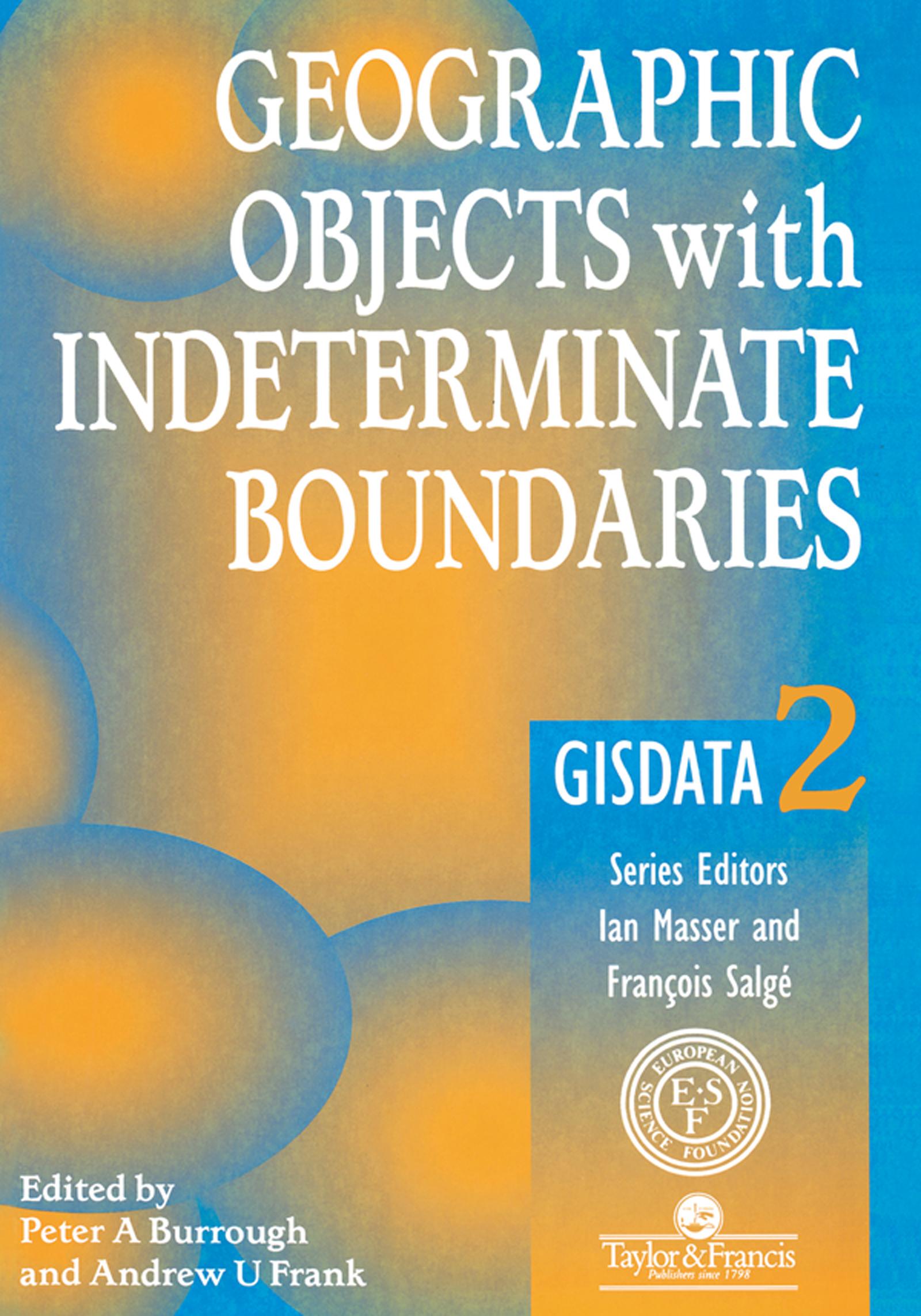
Current geographical information systems GIS deal almost exclusively with well-defined, static geographical objects ranging from physical landscapes to towns and transport systems. Such objects, exactly located in space, can easily be handled by modern GIS, yet form only a small proportion of all the possible geographical objects.; This book challenges the assumption that the world is compsed of exactly defined and bounded geographic objects such as land parcels, rivers and countries. ignoring the essential complexity of the world, current GIS do not adequately address problems as diverse as the resolution of crime between national boundaries, or the interpretation of views of people from different cultures. This work, bringing together a range of specialists from fields such as linguistics, computer science, land surveying, cartography and soil science, examines current research into the challenges of dealing with geographical phenomena that cannot easily be forced into one of the two current standard data models.
Betal nemt med kort, Klarna, Apple Pay eller Google Pay. Ikke tilfreds? Du har altid 14 dages fortrydelsesret. Læs mere i vores vilkår. Har du spørgsmål, så send os en mail på hello@memmo.org.
Memmo gør det nemmere at studere – uanset hvor du er i verden. Hos os samler du dine kursusbøger og smarte studieværktøjer ét sted: resuméer, quizzer, podcasts og flashcards. Og så er der Ted, din studieven, der svarer på alt, du undrer dig over. Over 50 000 studerende studerer allerede her – bygget til at hjælpe dig med at lære hurtigere og stresse mindre.
Du kan måske også lide
Køb bogen0