
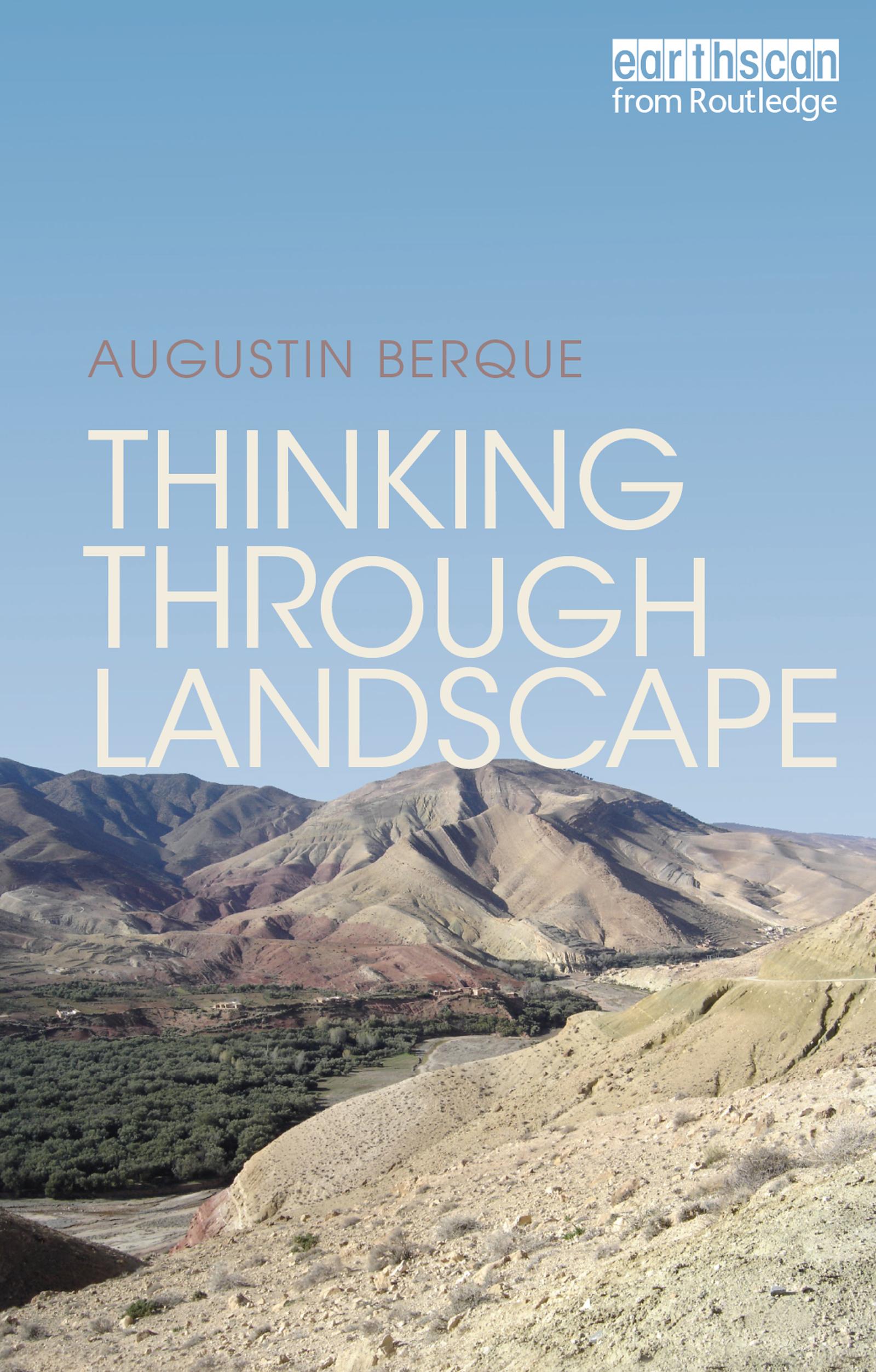
Our attitude to nature has changed over time. This book explores the historical, literary and philosophical origins of the changes in our attitude to nature that allowed environmental catastrophes to happen.The book presents a philosophical reflection on human societies’ attitude to the environment, informed by the history of the concept of landscape and the role played by the concept of nature in the human imagination. It features a wealth of examples from around the world to help understand the contemporary environmental crisis in the context of both the built and natural environment.
Berque locates the start of this change in human labour and urban elites being cut off from nature. Nature became an imaginary construct masking our real interaction with the natural world. He argues that this gave rise to a theoretical and literary appreciation of landscape at the expense of an effective practical engagement with nature. This mindset is a general feature of the world's civilizations, manifested in similar ways in different cultures across Europe, China, North Africa and Australia. Yet this approach did not have disastrous consequences until the advent of western industrialization.
As a phenomenological hermeneutics of human societies’ environmental relation to nature, the book draws on Heideggerian ontology and Veblen’s sociology. It provides a powerful distinction between two attitudes to landscape: the tacit knowledge of earlier peoples engaged in creating the landscape through their work - “landscaping thought”- and the explicit theoretical and aesthetic attitudes of modern city dwellers who love nature while belonging to a civilization that destroys the landscape - “landscape thinking”.
This book gives a critical survey of landscape thought and theory for students, researchers and anyone interested in human societies’ relation to nature in the fields of landscape studies, environmental philosophy, cultural geography and environmental history.
Betal nemt med kort, Klarna, Apple Pay eller Google Pay. Ikke tilfreds? Du har altid 14 dages fortrydelsesret. Læs mere i vores vilkår. Har du spørgsmål, så send os en mail på hello@memmo.org.
Memmo gør det nemmere at studere – uanset hvor du er i verden. Hos os samler du dine kursusbøger og smarte studieværktøjer ét sted: resuméer, quizzer, podcasts og flashcards. Og så er der Ted, din studieven, der svarer på alt, du undrer dig over. Over 50 000 studerende studerer allerede her – bygget til at hjælpe dig med at lære hurtigere og stresse mindre.