
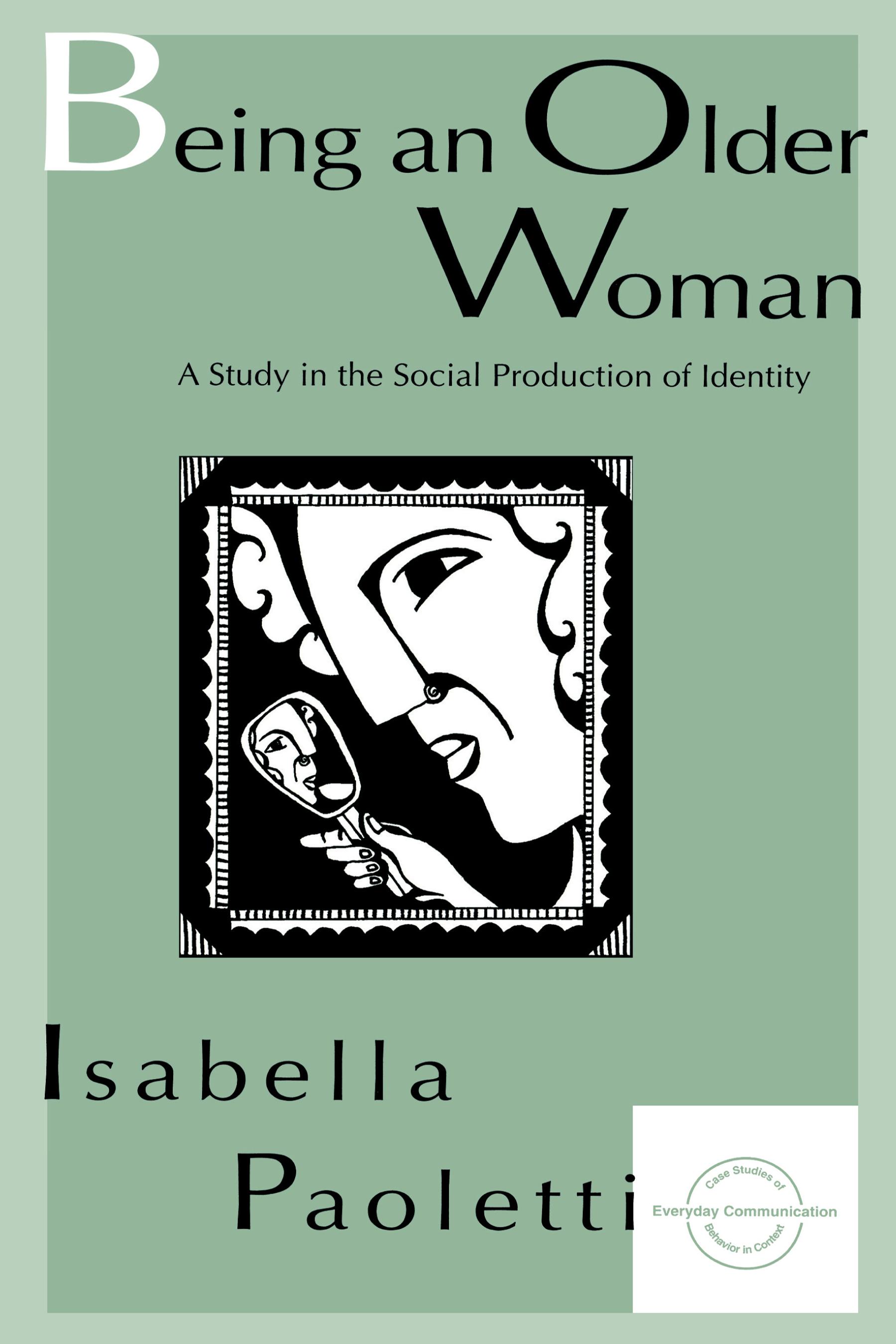
The study presented in this volume examines how older women's identities are socially constructed and, in particular, how they can be influenced by institutional intervention. The interest in identity production is not only theoretical, but also practical. Different perceptions of oneself as an older woman involve considerable differences in the definition of that person's possible sphere of action, and therefore, in her life perspectives. The data -- collected during a four-year project studying older women -- consist of video recordings of the committee meetings of the Older Women's Group of Perugia, Italy. Other video recordings of theater workshops and of the management committee meetings of the Senior Citizen Centers in Perugia are used as a source of comparison. Transcripts of the video material are analyzed through a detailed discourse analysis within an ethnomethodological framework. The data are used to explore how gender and age identities are interactionally constructed in specific institutional contexts.
The first part of the book focuses on the interactional construction of aging. It shows how "being old" is constructed conversationally, in particular, through the use of membership categories. Distancing from the category "old" and denial of aging are frequently encountered conversational moves. However, the category is perceived as acceptable, even desired and invoked, when it becomes an institutionally relevant category, giving access to interesting activities or special benefits. The second part of the book explores gender identification. Conflict among different institutional subjects is shown to fade into gender conflict. The study analyzes how institutional interventions exert a powerful influence on older women's identities, giving them new opportunities for action. It also looks at how the conversational styles, attitudes, and activities of specific women influence the features of those very institutions.
In short, this book describes the discourse and social practices that constitute older women's identities -- helping to identify and deconstruct stereotypes that tend to produce marginalization of older people. The book's existence is itself a contribution to the construction of older women as busy, lively, appealing human beings; it is the first research publication to emerge from The European Older Women's Project.
Of interest to those in any discipline studying the topics of ethnomethodology, gender, aging, and identity.
Betal nemt med kort, Klarna, Apple Pay eller Google Pay. Ikke tilfreds? Du har altid 14 dages fortrydelsesret. Læs mere i vores vilkår. Har du spørgsmål, så send os en mail på hello@memmo.org.
Memmo gør det nemmere at studere – uanset hvor du er i verden. Hos os samler du dine kursusbøger og smarte studieværktøjer ét sted: resuméer, quizzer, podcasts og flashcards. Og så er der Ted, din studieven, der svarer på alt, du undrer dig over. Over 50 000 studerende studerer allerede her – bygget til at hjælpe dig med at lære hurtigere og stresse mindre.