
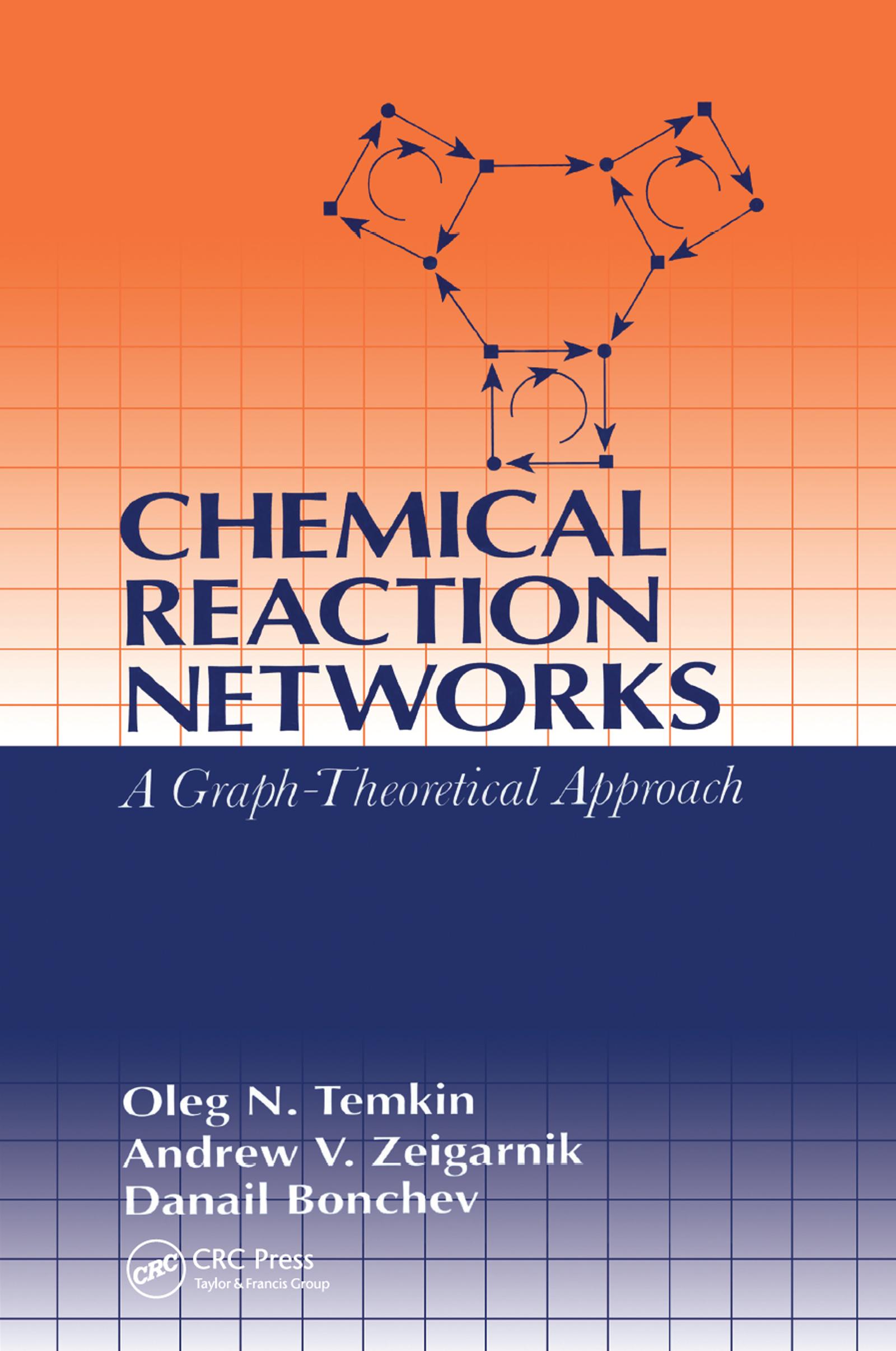
Over the last decade, increased attention to reaction dynamics, combined with the intensive application of computers in chemical studies, mathematical modeling of chemical processes, and mechanistic studies has brought graph theory to the forefront of research. It offers an advanced and powerful formalism for the description of chemical reactions and their intrinsic reaction mechanisms. Chemical Reaction Networks: A Graph-Theoretical Approach elegantly reviews and expands upon graph theory as applied to mechanistic theory, chemical kinetics, and catalysis.
The authors explore various graph-theoretical approaches to canonical representation, numbering, and coding of elementary steps and chemical reaction mechanisms, the analysis of their topological structure, the complexity estimation, and classification of reaction mechanisms. They discuss topologically distinctive features of multiroute catalytic and noncatalytic and chain reactions involving metal complexes.
With it's careful balance of clear language and mathematical rigor, the presentation of the authors' significant original work, and emphasis on practical applications and examples, Chemical Reaction Networks: A Graph Theoretical Approach is both an outstanding reference and valuable tool for chemical research.
Betal nemt med kort, Klarna, Apple Pay eller Google Pay. Ikke tilfreds? Du har altid 14 dages fortrydelsesret. Læs mere i vores vilkår. Har du spørgsmål, så send os en mail på hello@memmo.org.
Memmo gør det nemmere at studere – uanset hvor du er i verden. Hos os samler du dine kursusbøger og smarte studieværktøjer ét sted: resuméer, quizzer, podcasts og flashcards. Og så er der Ted, din studieven, der svarer på alt, du undrer dig over. Over 50 000 studerende studerer allerede her – bygget til at hjælpe dig med at lære hurtigere og stresse mindre.
Du kan måske også lide
Køb bogen0