
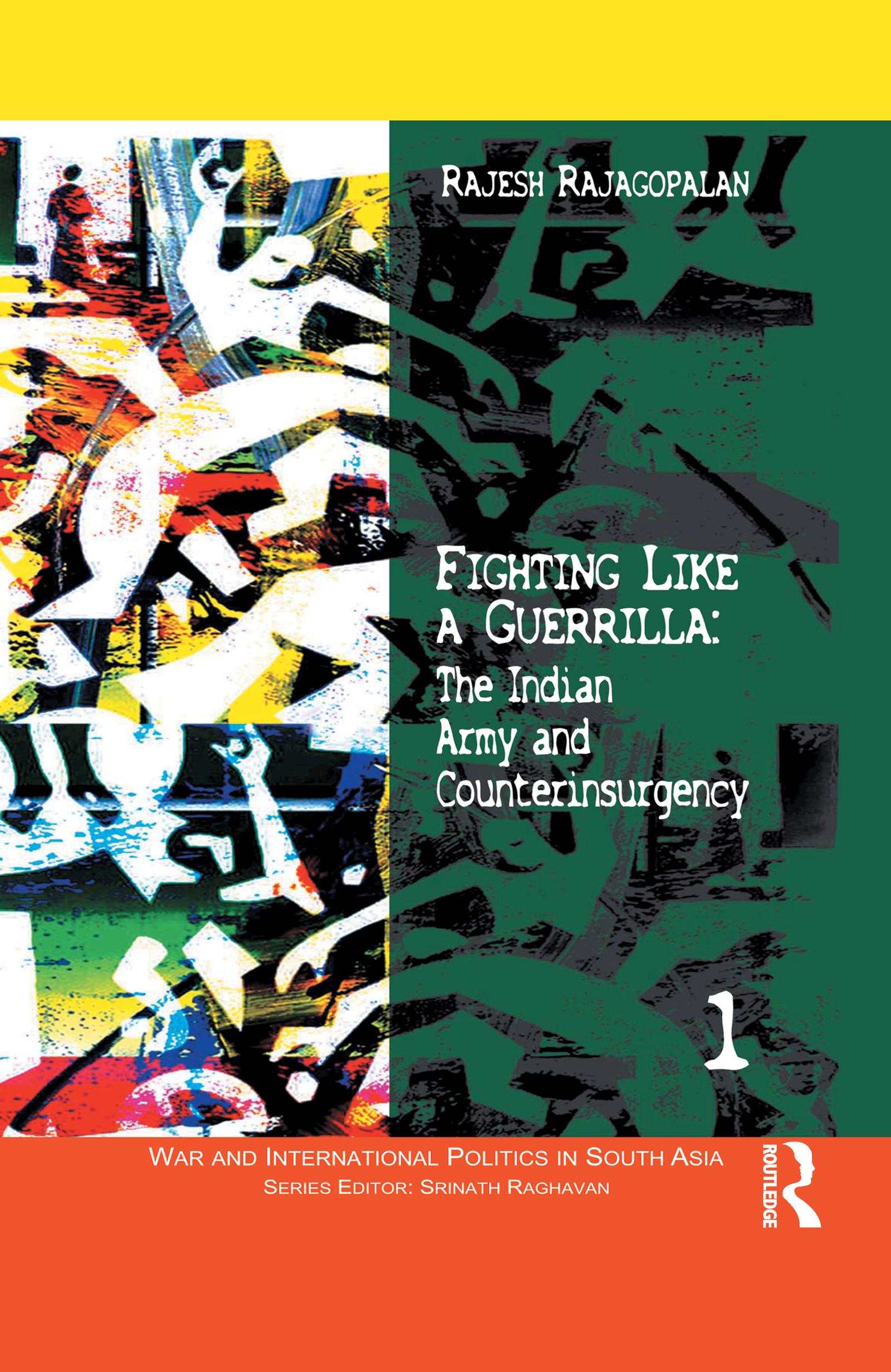
This book deals with two significant issues: the peculiar and paradoxical question of why regular armies, better suited to fighting conventional high-intensity wars, adopt inappropriate measures when fighting guerilla wars; and the evolution of the Indian army’s counterinsurgency doctrine over the last decade. In addition, the book also includes the first detailed analysis of the trajectory of the army’s counterinsurgency doctrine, arguing that while it was consolidated only over the last decade, the essential elements of the doctrine may in fact be traced back to the army’s first confrontation with the Naga guerillas in the 1950s. It outlines the three essential elements that make up the Indian army’s counterinsurgency doctrine:
- that there are no military solutions to an insurgency;
- that military force can only help to reduce levels of violence to enable political solutions; and
- that there should be limited use of military force.
Rajagopalan argues that international circumstances — particularly the need to counter conventional military threats from Pakistan and China — led to a counterinsurgency doctrine that had a strong conventional war bias. This bias also conditioned the organisational culture of the Indian army.
Betal nemt med kort, Klarna, Apple Pay eller Google Pay. Ikke tilfreds? Du har altid 14 dages fortrydelsesret. Læs mere i vores vilkår. Har du spørgsmål, så send os en mail på hello@memmo.org.
Memmo gør det nemmere at studere – uanset hvor du er i verden. Hos os samler du dine kursusbøger og smarte studieværktøjer ét sted: resuméer, quizzer, podcasts og flashcards. Og så er der Ted, din studieven, der svarer på alt, du undrer dig over. Over 50 000 studerende studerer allerede her – bygget til at hjælpe dig med at lære hurtigere og stresse mindre.