
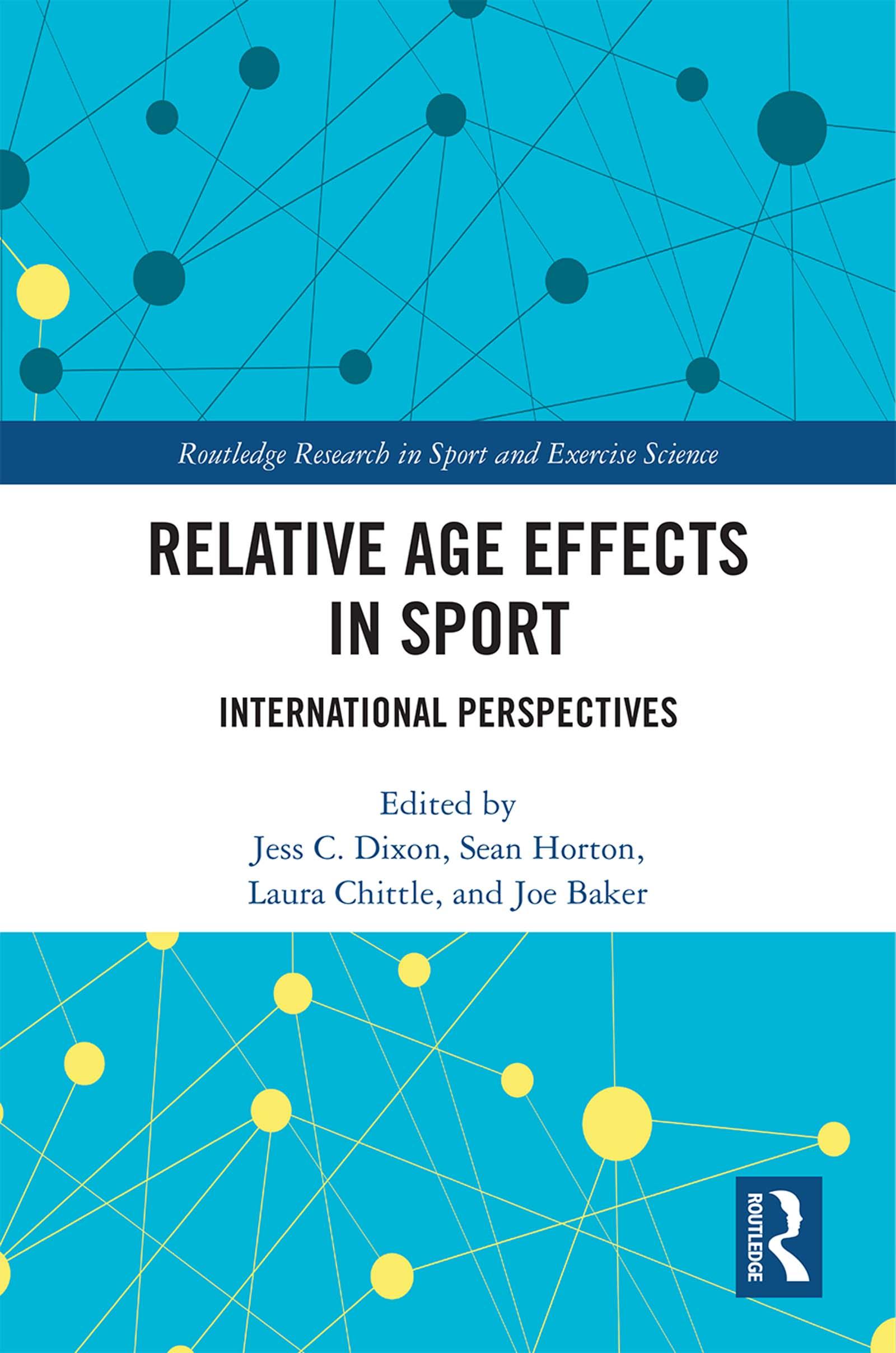
Individual achievement in sport is often constrained by an athlete’s age relative to the peers with whom they participate. A common practice within sport and educational domains is to group youth based on their chronological ages to help promote equal competition, age appropriate instruction, and ensure participant safety. While well intended, such grouping practices can often advantage relatively older children, while disadvantaging those who are relatively younger within the same age cohort. These phenomena are known as Relative Age Effects (RAEs).
Relative Age Effects in Sport: International Perspectives includes chapters from internationally recognized scholars who have examined RAEs from different perspectives (e.g., sport, mental health and wellbeing, youth development). This new volume assists in communicating and mobilizing knowledge and research about RAEs, focusing on developing feasible and attractive solutions that capture the attention of practitioners and policy makers from sport governing bodies and creating a resource that is accessible to professionals within the sport and academic communities.
Relative Age Effects in Sport: International Perspectives is key reading for academics and researchers in the fields of athlete development, talent identification, coaching education, health and wellbeing, mental health and related disciplines, whilst also of interest to sport industry professionals such as coaches and policy makers.
Betal nemt med kort, Klarna, Apple Pay eller Google Pay. Ikke tilfreds? Du har altid 14 dages fortrydelsesret. Læs mere i vores vilkår. Har du spørgsmål, så send os en mail på hello@memmo.org.
Memmo gør det nemmere at studere – uanset hvor du er i verden. Hos os samler du dine kursusbøger og smarte studieværktøjer ét sted: resuméer, quizzer, podcasts og flashcards. Og så er der Ted, din studieven, der svarer på alt, du undrer dig over. Over 50 000 studerende studerer allerede her – bygget til at hjælpe dig med at lære hurtigere og stresse mindre.