
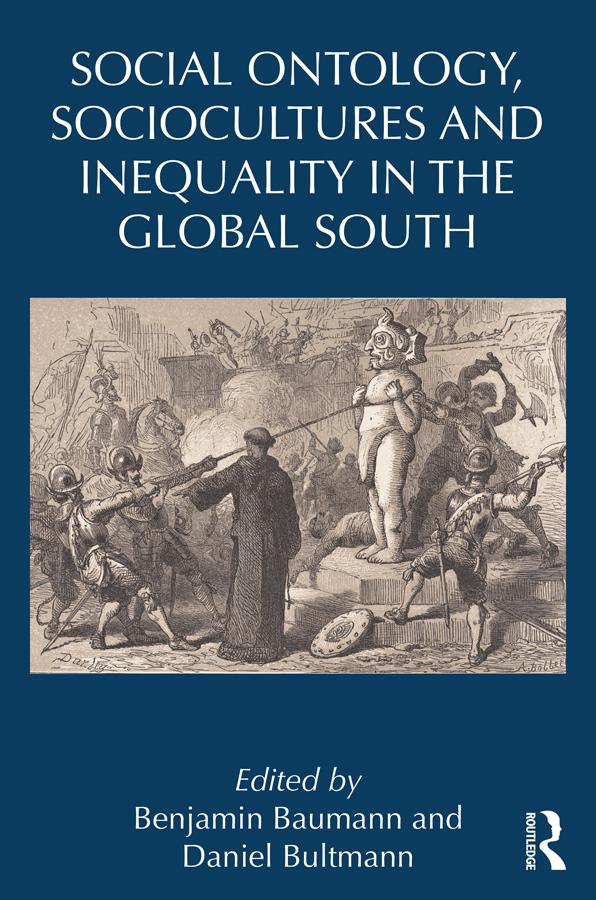
Challenging the assumption that the capitalist transformation includes a radical break with the past, this edited volume traces how historically older forms of social inequality are transformed but persist in the present to shape the social structure of contemporary societies in the global South.
Each social collective comprises an interpretation of itself – including the meaning of life, the concept of a human person, and the notion of a collective. This volume studies the interpretation that various social collectives have of themselves. This interpretation is referred to as social ontology. All chapters of the edited volume focus on the relation between social ontology and structures of inequality. They argue that each society comprises several historical layers of social ontology that correspond to layers of inequality, which are referred to as sociocultures. Thereby, the volume explains why and how structures of inequality differ between contemporary collectives in the global South, even though all of them seem to have similar structures, institutions, and economies.
The volume is aimed at academics, students and the interested public looking for a novel theorization of social inequality pertaining to social collectives in the global South.
Betal nemt med kort, Klarna, Apple Pay eller Google Pay. Ikke tilfreds? Du har altid 14 dages fortrydelsesret. Læs mere i vores vilkår. Har du spørgsmål, så send os en mail på hello@memmo.org.
Memmo gør det nemmere at studere – uanset hvor du er i verden. Hos os samler du dine kursusbøger og smarte studieværktøjer ét sted: resuméer, quizzer, podcasts og flashcards. Og så er der Ted, din studieven, der svarer på alt, du undrer dig over. Over 50 000 studerende studerer allerede her – bygget til at hjælpe dig med at lære hurtigere og stresse mindre.