
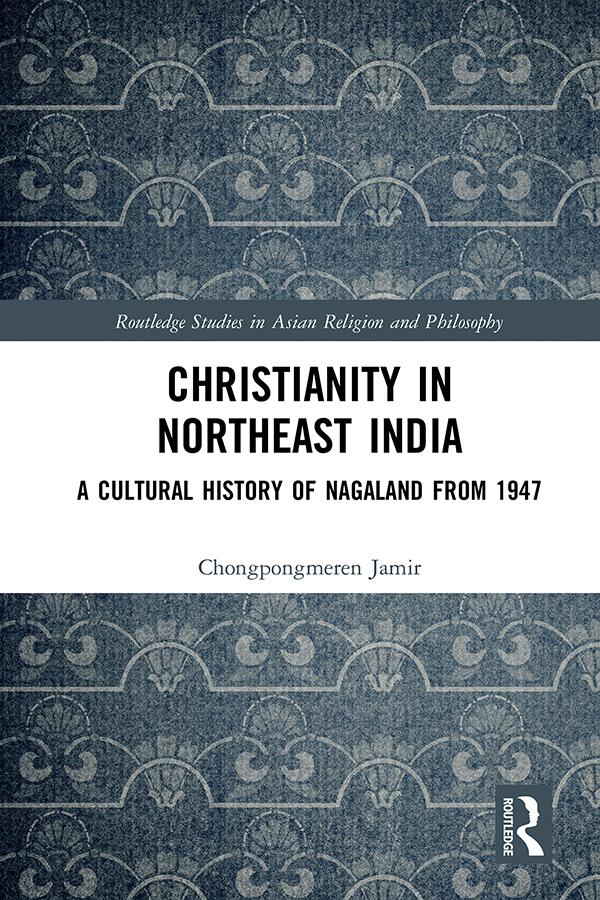
This book examines the distinctive formation of Christianity in Nagaland, Northeast India, since 1947. It argues that an understanding of the history of Christianity in the region can be found in its cultural milieu and the changing political, social and religious environment.
In Nagaland, almost 90 per cent of the population are Christians. This book shows that segmentation as a cultural characteristic of Naga society inspired both unity and divisiveness in the Naga churches, which subsequently shaped the beliefs and practices of the churches in the region. Using the methodology of cultural history, the author examines ecclesiastical events and suggests that the history of Christianity should be examined in the light of its interaction with its cultural context rather than as an isolated phenomenon. The book demonstrates that the ethnic status which the Christian faith assumed, the extent of its identification with the local culture, and the scope of the mission of the Naga churches as key stakeholders in society, offers a new angle on the history of Christianity in India.
This book will be of interest to scholars and researchers of South Asian history, particularly those concerned with Northeast India and Christian history, historiography, cultural history, history of Christianity in India and faith–culture interface, religious studies, history and South Asian Studies.
Betal nemt med kort, Klarna, Apple Pay eller Google Pay. Ikke tilfreds? Du har altid 14 dages fortrydelsesret. Læs mere i vores vilkår. Har du spørgsmål, så send os en mail på hello@memmo.org.
Memmo gør det nemmere at studere – uanset hvor du er i verden. Hos os samler du dine kursusbøger og smarte studieværktøjer ét sted: resuméer, quizzer, podcasts og flashcards. Og så er der Ted, din studieven, der svarer på alt, du undrer dig over. Over 50 000 studerende studerer allerede her – bygget til at hjælpe dig med at lære hurtigere og stresse mindre.