
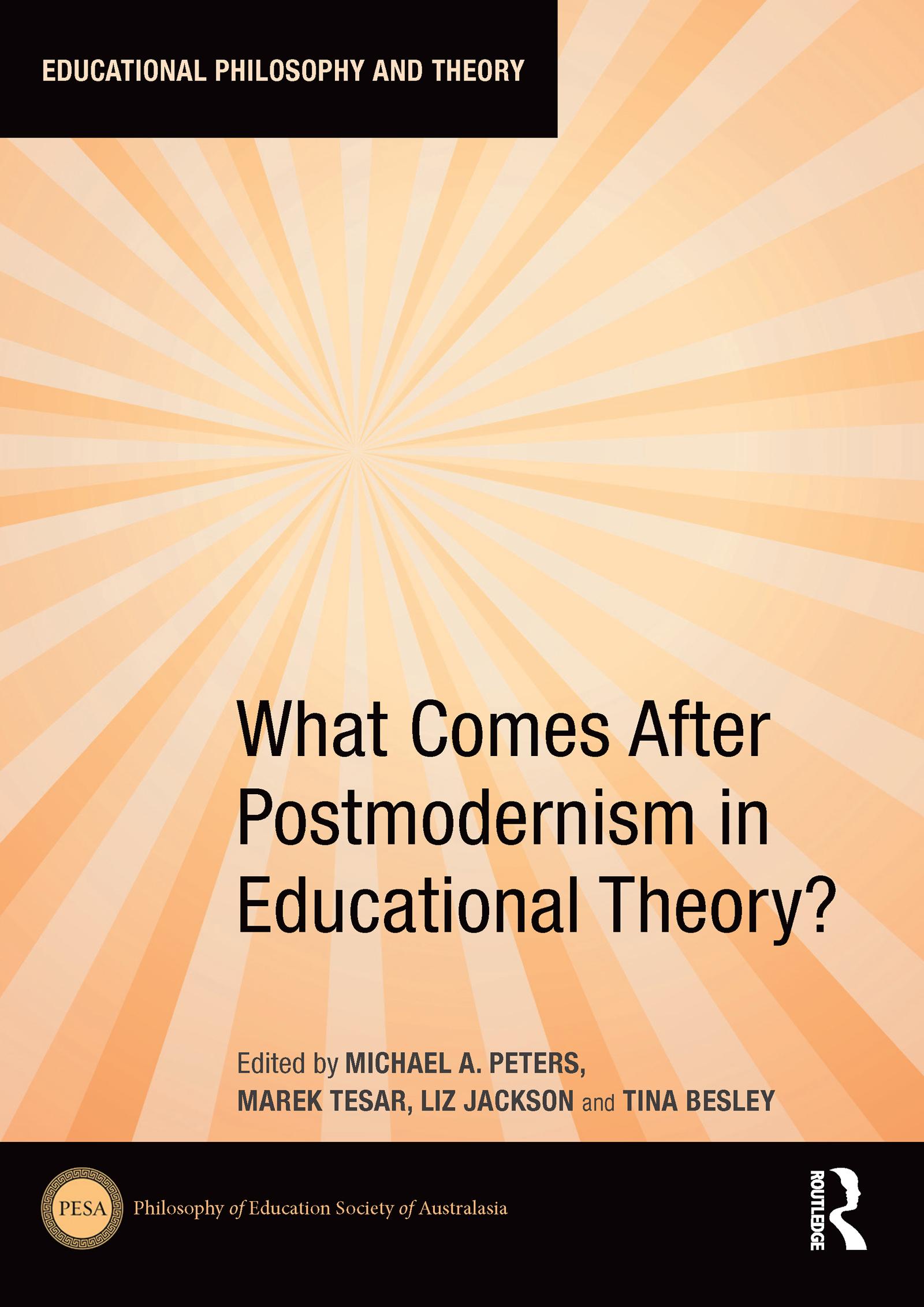
Marking the fiftieth anniversary of the Educational Philosophy and Theory journal, this book brings together the work of over 200 international scholars, who seek to address the question: ‘What happened to postmodernism in educational theory after its alleged demise?’.
Declarations of the death knell of postmodernism are now quite commonplace. Scholars in various disciples have suggested that, if anything, postmodernism is at an end and has been dead and buried for some time. An age dominated by playfulness, hybridity, relativism and the fragmentary self has given way to something else—as yet undefined. The lifecycle of postmodernism started with Derrida’s 1966 seminal paper ‘Structure, Sign and Play in the Discourse of the Human Sciences’; its peak years were 1973–1989; followed by uncertainty and reorientation in the 1990s; and the aftermath and beyond (McHale, 2015). What happened after 2001? This collection provides responses by over 200 scholars to this question who also focus on what comes after postmodernism in educational theory.
This book was originally published as a special issue of the journal Educational Philosophy and Theory.
Betal nemt med kort, Klarna, Apple Pay eller Google Pay. Ikke tilfreds? Du har altid 14 dages fortrydelsesret. Læs mere i vores vilkår. Har du spørgsmål, så send os en mail på hello@memmo.org.
Memmo gør det nemmere at studere – uanset hvor du er i verden. Hos os samler du dine kursusbøger og smarte studieværktøjer ét sted: resuméer, quizzer, podcasts og flashcards. Og så er der Ted, din studieven, der svarer på alt, du undrer dig over. Over 50 000 studerende studerer allerede her – bygget til at hjælpe dig med at lære hurtigere og stresse mindre.