
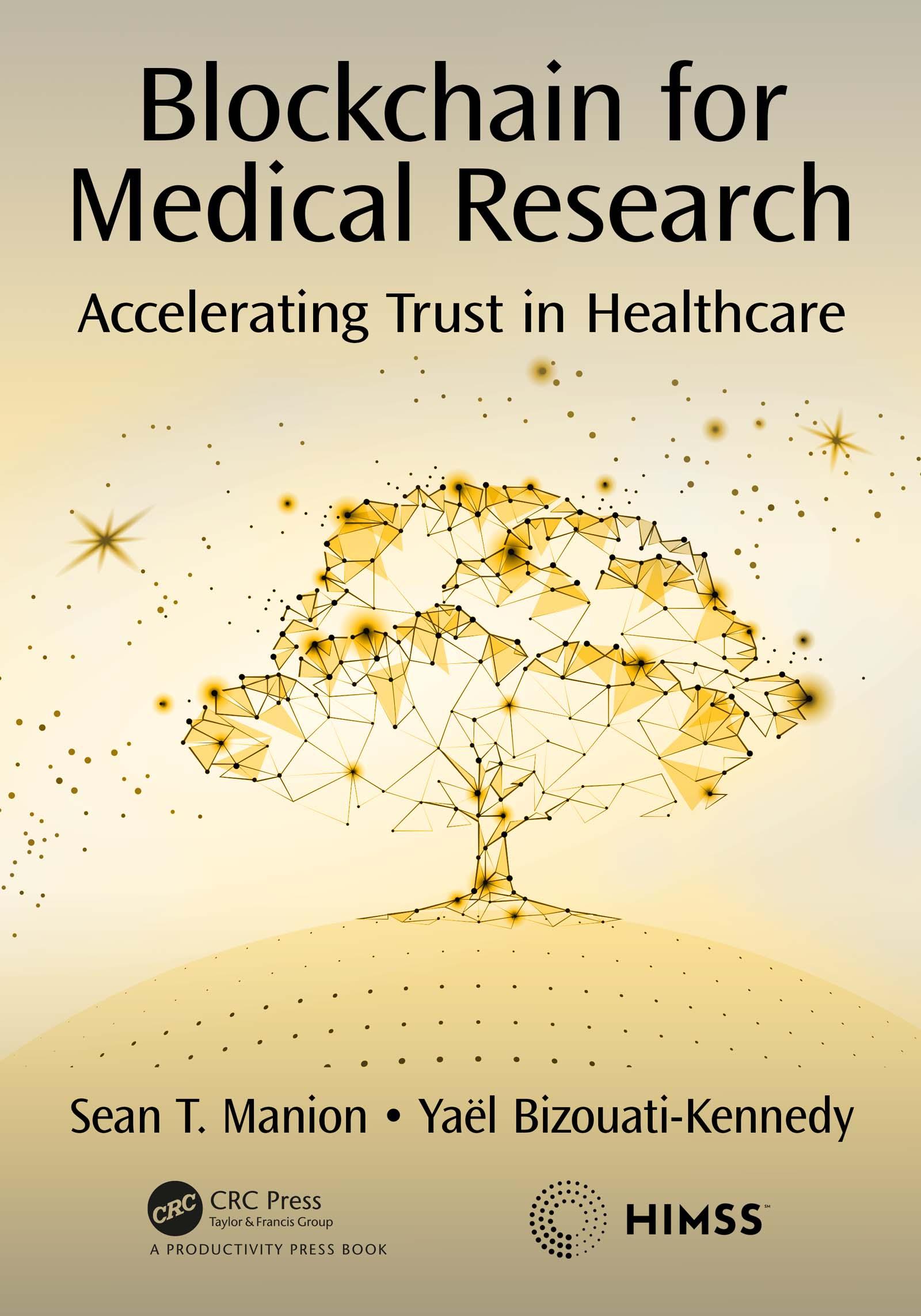
It takes 17 years on average to bring new medical treatments ideas into evidence-based clinical practice. The growing replicability crisis in science further delays these "new miracles." Blockchain can improve science and accelerate medical research while bringing a new layer of trust to healthcare.
This book is about science, its value to medicine, and how we can use blockchain to improve the quality and impact of both. The book looks at science and medicine from an insider’s perspective and describes the processes, successes, shortcomings and opportunities in an accessible way for a broad audience. It weaves this a non-technical look at the emerging world of blockchain technology; what it is, where it is useful, and how it can improve science and medicine. It lays out a roadmap for this application to transform how we develop knowledge about health and medicine to improve our lives.
In the first part, Blockchain isn’t Tech, the authors look at blockchain/distributed ledger technology along with critical trade-offs and current explorations of its utility. They give an overview of use cases for the technology across industries, including finance, manufacturing and healthcare, with interviews and insights from leaders across government, academia, and tech/health industry both big and start-up.
In the second part, Science is Easy, the authors look at science as a process and how this drives advancement in medicine. They shed a light on some of science’s shortcomings, including the reproducibility crisis and problems with misaligned incentives (i.e. publish or perish). They apply a breakdown of critical components to the functional steps in the scientific process and outline how the open science movement is looking to improve these, while highlighting the limit of these fixes with current technology, incentives and structure of science.
In the third part, DAO of Science, the authors look at how blockchain applied to open science can impact medical research. They examine how this distributed approach can provide better quality science, value-based research and faster medical miracles. Finally, they provide a vision of the future of distributed medical research and give a roadmap of steps to get there.
Betal nemt med kort, Klarna, Apple Pay eller Google Pay. Ikke tilfreds? Du har altid 14 dages fortrydelsesret. Læs mere i vores vilkår. Har du spørgsmål, så send os en mail på hello@memmo.org.
Memmo gør det nemmere at studere – uanset hvor du er i verden. Hos os samler du dine kursusbøger og smarte studieværktøjer ét sted: resuméer, quizzer, podcasts og flashcards. Og så er der Ted, din studieven, der svarer på alt, du undrer dig over. Over 50 000 studerende studerer allerede her – bygget til at hjælpe dig med at lære hurtigere og stresse mindre.