
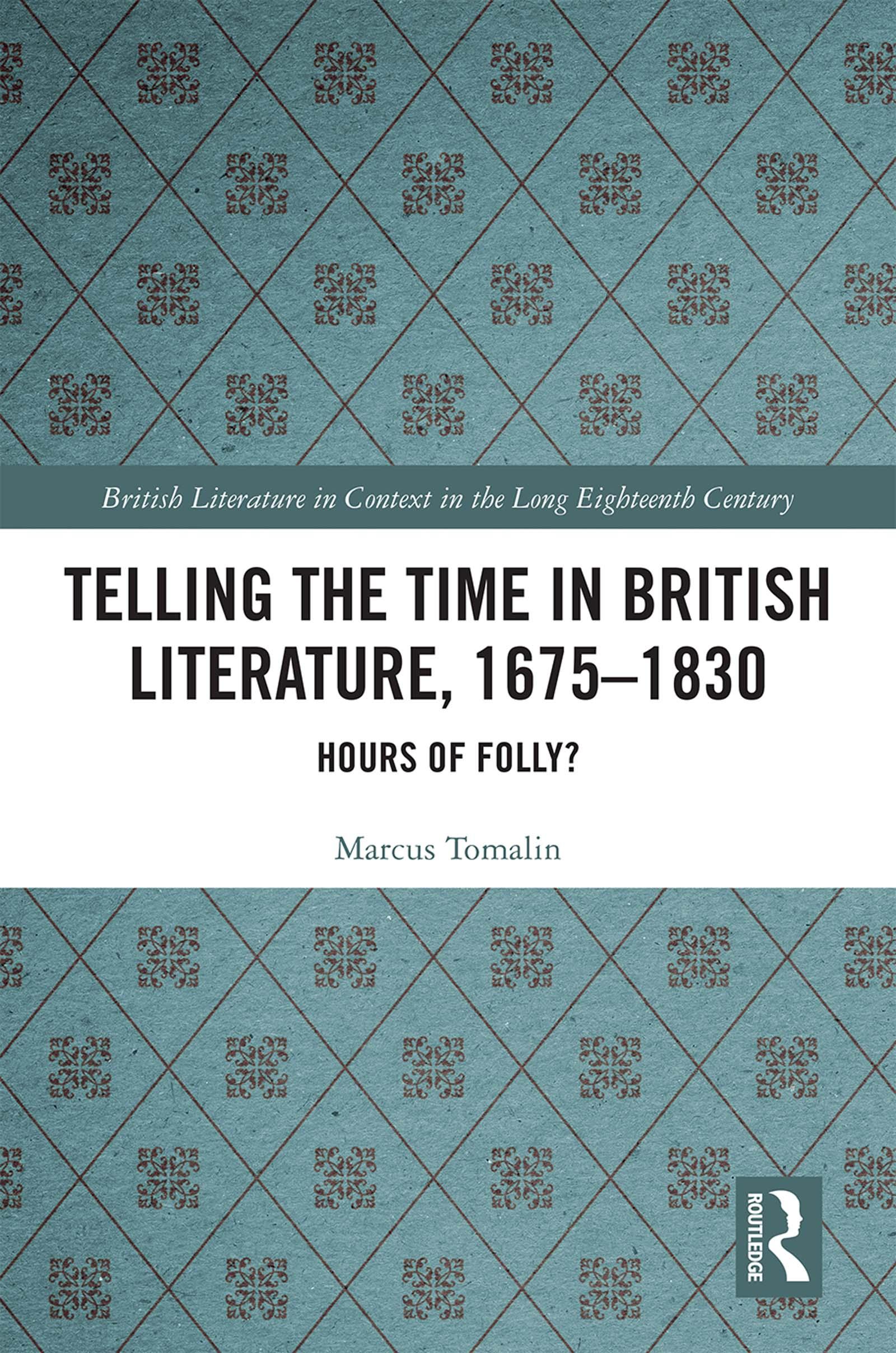
Although the broad topic of time and literature in the long eighteenth century has received focused attention from successive generations of literary critics, this book adopts a radically new approach to the subject. Taking inspiration from recent revisionist accounts of the horological practices of the age, as well as current trends in ecocriticism, historical prosody, sensory history, social history, and new materialism, it offers a pioneering investigation of themes that have never previously received sustained critical scrutiny. Specifically, it explores how the essayists, poets, playwrights, and novelists of the period meditated deeply upon the physical form, social functions, and philosophical implications of particular time-telling objects. Consequently, each chapter considers a different device – mechanical watches, pendulums, sandglasses, sundials, flowers, and bells – and the literary responses of significant figures such as Alexander Pope, Anne Steele, William Wordsworth, Samuel Taylor Coleridge, Charlotte Smith, and William Hazlitt are carefully examined.
Betal nemt med kort, Klarna, Apple Pay eller Google Pay. Ikke tilfreds? Du har altid 14 dages fortrydelsesret. Læs mere i vores vilkår. Har du spørgsmål, så send os en mail på hello@memmo.org.
Memmo gør det nemmere at studere – uanset hvor du er i verden. Hos os samler du dine kursusbøger og smarte studieværktøjer ét sted: resuméer, quizzer, podcasts og flashcards. Og så er der Ted, din studieven, der svarer på alt, du undrer dig over. Over 50 000 studerende studerer allerede her – bygget til at hjælpe dig med at lære hurtigere og stresse mindre.