
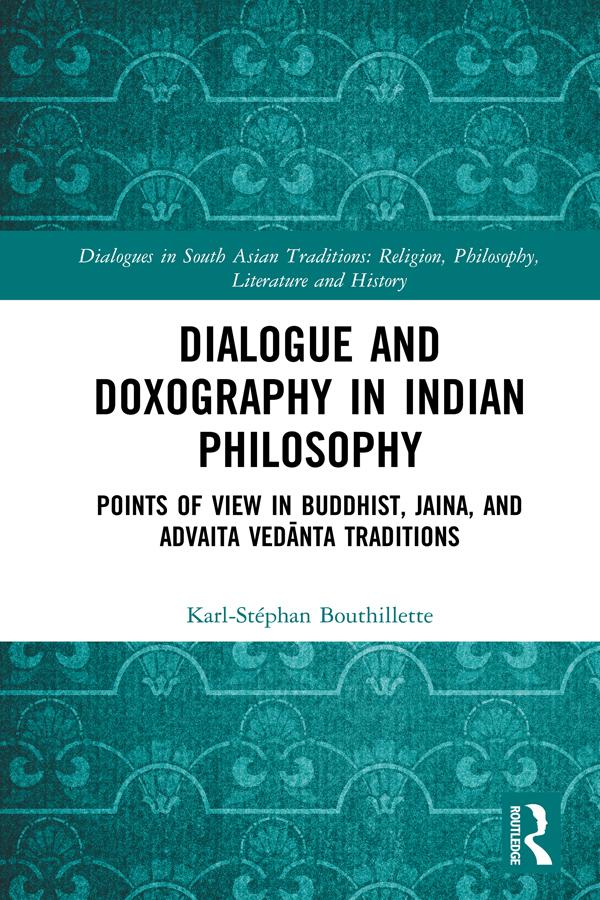
This is the first book fully dedicated to Indian philosophical doxography. It examines the function such dialectical texts were intended to serve in the intellectual and religious life of their public. It looks at Indian doxography both as a witness of inter- and intra-sectarian dialogues and as a religious phenomenon. It argues that doxographies represent dialectical exercises, indicative of a peculiar religious attitude to plurality, and locate these ‘exercises’ within a known form of ‘yoga’ dedicated to the cultivation of ‘knowledge’ or ‘gnosis’ (jñāna).
Concretely, the book presents a critical examination of three Sanskrit doxographies: the Madhyamakahṛdayakārikā of the Buddhist Bhāviveka, the Ṣaḍdarśanasamuccaya of the Jain Haribhadra, and the Sarvasiddhāntasaṅgraha attributed to the Advaitin Śaṅkara, focusing on each of their respective presentation of the Mīmāṃsā view.
It is the first time that the genre of doxography is considered beyond its literary format to ponder its performative dimension, as a spiritual exercise. Theoretically broad, the book reaches out to academics in religious studies, Indian philosophy, Indology, and classical studies.
Betal nemt med kort, Klarna, Apple Pay eller Google Pay. Ikke tilfreds? Du har altid 14 dages fortrydelsesret. Læs mere i vores vilkår. Har du spørgsmål, så send os en mail på hello@memmo.org.
Memmo gør det nemmere at studere – uanset hvor du er i verden. Hos os samler du dine kursusbøger og smarte studieværktøjer ét sted: resuméer, quizzer, podcasts og flashcards. Og så er der Ted, din studieven, der svarer på alt, du undrer dig over. Over 50 000 studerende studerer allerede her – bygget til at hjælpe dig med at lære hurtigere og stresse mindre.