
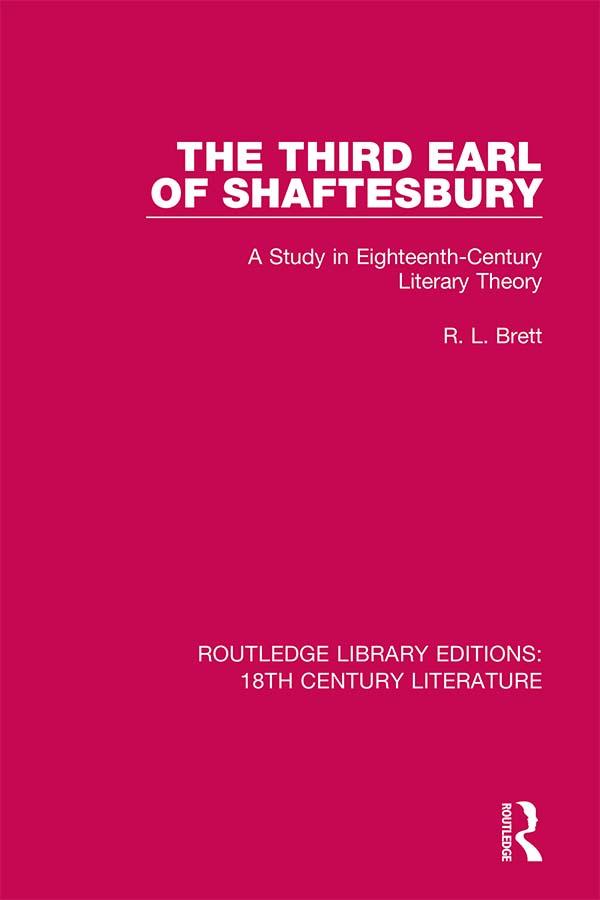
The third Earl of Shaftesbury had generally been known as the forerunner of the Moral Sense school of philosophers in the eighteenth century. Surprisingly little attention had been paid to his importance for literature and yet undoubtedly this had been very great. Originally published in 1951, this study gives an account of Shaftesbury’s aesthetic and literary theory; his discussion of the imagination, ridicule, the aesthetic judgment and the sublime; and his anticipation of later writers such as Burke, Coleridge and Kant. It also considers Shaftesbury’s thought as part of the background of ideas in the Augustan period and his influence in such fields as literature, architecture and landscape gardening. In addition, the author assesses in more general terms Shaftesbury’s attempt to maintain a Platonic viewpoint that would be more congenial to poetry than Locke’s "new way of ideas".
Betal nemt med kort, Klarna, Apple Pay eller Google Pay. Ikke tilfreds? Du har altid 14 dages fortrydelsesret. Læs mere i vores vilkår. Har du spørgsmål, så send os en mail på hello@memmo.org.
Memmo gør det nemmere at studere – uanset hvor du er i verden. Hos os samler du dine kursusbøger og smarte studieværktøjer ét sted: resuméer, quizzer, podcasts og flashcards. Og så er der Ted, din studieven, der svarer på alt, du undrer dig over. Over 50 000 studerende studerer allerede her – bygget til at hjælpe dig med at lære hurtigere og stresse mindre.