
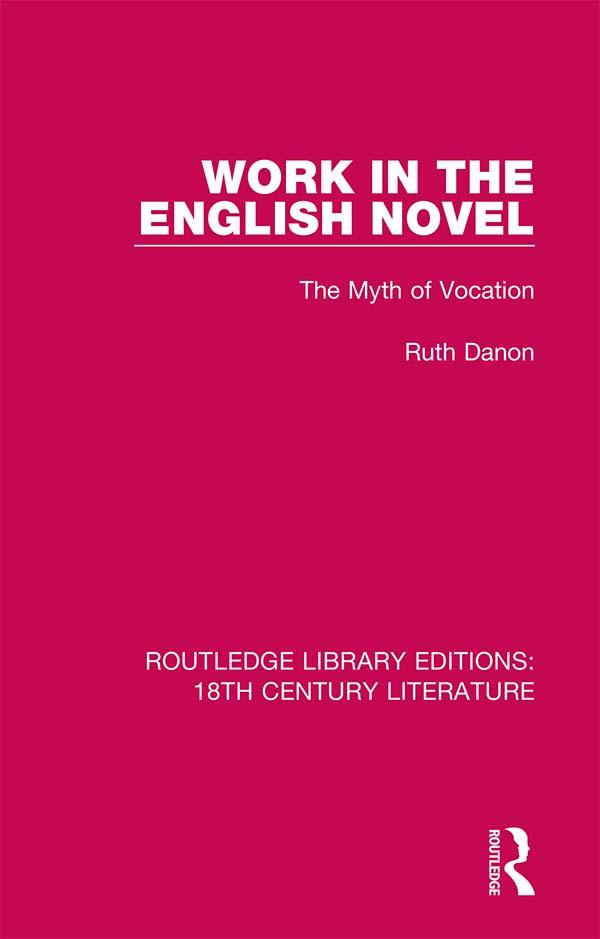
Originally published in 1985, this book traces the development of an ideal of work in English writing which runs parallel to that of the Protestant work ethic. The author has called this the myth of vocation: work is seen as the primary source of self-definition, psychic integration and fulfilment. The root, and the purest form, of the idea is to be found in Robinson Crusoe. This work, so seminal in many ways, presents a prototypical middle-class hero, caught in a conflict between the impulse to adventure and that to create and make profits.
The conflicts articulated in this work are picked up more or less explicitly by more than one of the great Victorian novelists. This book treats in detail several paradigmatic examples, deriving its terms of reference from modern sociological treatments of work and its effects on persons. The gospel of work need not result in capitalistic or protestant attitudes, but is compatible also with communistic ideas. This study serves to revalue the concept of work as a humanistic activity as well as offering a subtle reading of major works of literature.
Betal nemt med kort, Klarna, Apple Pay eller Google Pay. Ikke tilfreds? Du har altid 14 dages fortrydelsesret. Læs mere i vores vilkår. Har du spørgsmål, så send os en mail på hello@memmo.org.
Memmo gør det nemmere at studere – uanset hvor du er i verden. Hos os samler du dine kursusbøger og smarte studieværktøjer ét sted: resuméer, quizzer, podcasts og flashcards. Og så er der Ted, din studieven, der svarer på alt, du undrer dig over. Over 50 000 studerende studerer allerede her – bygget til at hjælpe dig med at lære hurtigere og stresse mindre.