
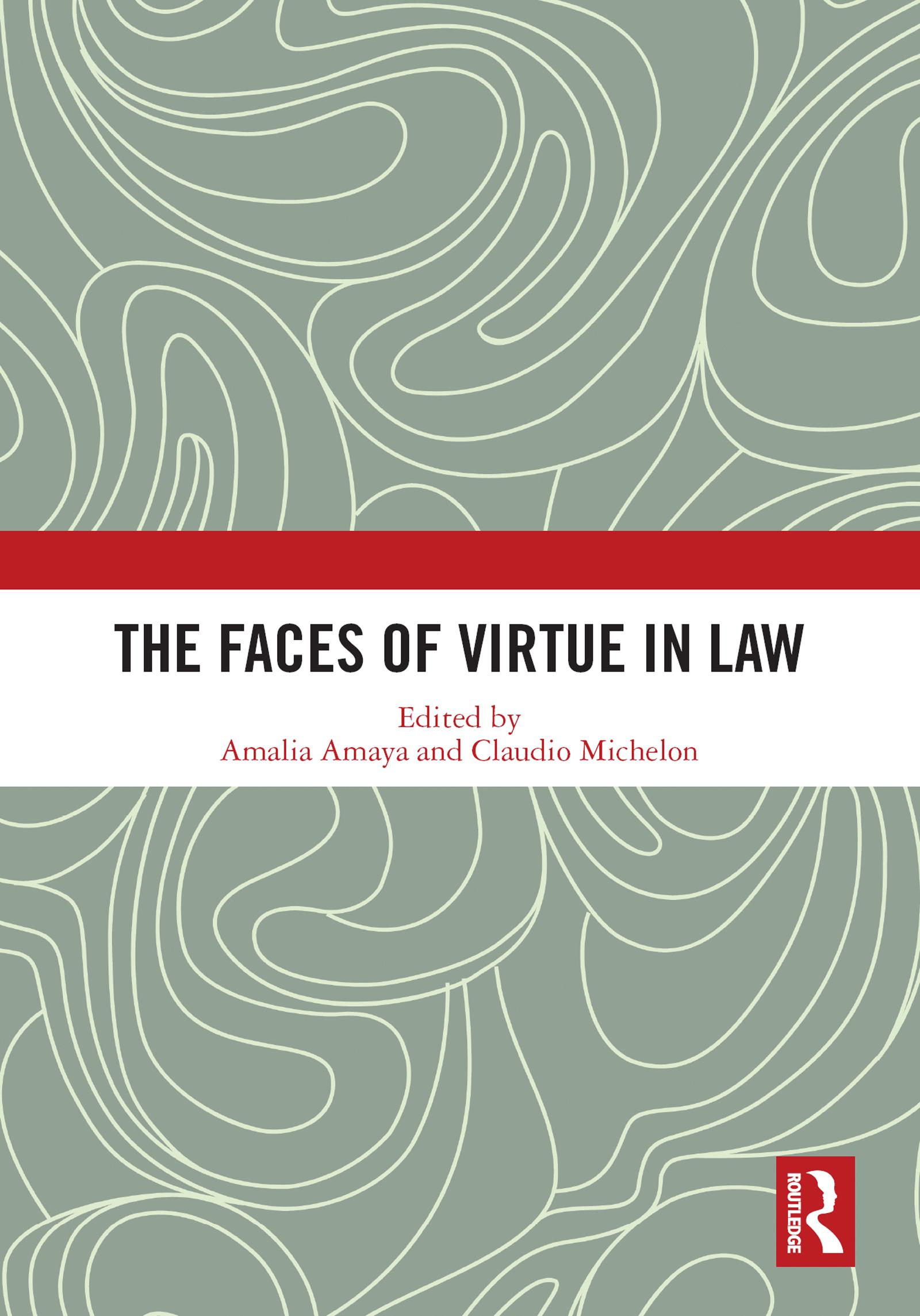
This book gathers together leading voices in virtue theory—an increasingly influential aspect of legal theory in the 21st century—to take stock of virtue jurisprudence’s evolution and suggest ways in which this approach can be further developed.
The contributions address the three main axes along which virtue jurisprudence has unfolded in the past decades: the quest to provide a suitable virtue-based foundation for the law (in general) or for some aspects of it (in particular, but not exclusively, criminal law); the investigation of the role played by character traits in legal decision-making; and the investigation of how the law can be part of a virtuous life. As will become apparent for readers of this volume, those lines are converging and, as they do so, a general virtue-based approach to the study of law is starting to emerge.
Crucial in addressing problems with legal experience for which the resources of traditional legal theory are insufficient, this book’s investigation of virtue theory and virtue jurisprudence will be of interest to all of those studying legal decision-making and the philosophy of law, as well as those studying virtue ethics more widely.
It was originally published as a special issue of Jurisprudence.
Betal nemt med kort, Klarna, Apple Pay eller Google Pay. Ikke tilfreds? Du har altid 14 dages fortrydelsesret. Læs mere i vores vilkår. Har du spørgsmål, så send os en mail på hello@memmo.org.
Memmo gør det nemmere at studere – uanset hvor du er i verden. Hos os samler du dine kursusbøger og smarte studieværktøjer ét sted: resuméer, quizzer, podcasts og flashcards. Og så er der Ted, din studieven, der svarer på alt, du undrer dig over. Over 50 000 studerende studerer allerede her – bygget til at hjælpe dig med at lære hurtigere og stresse mindre.